
Allies Offered $790 Rate: Kremlin Proposes Locking Serbia's Soaring Gas Price Into Contract
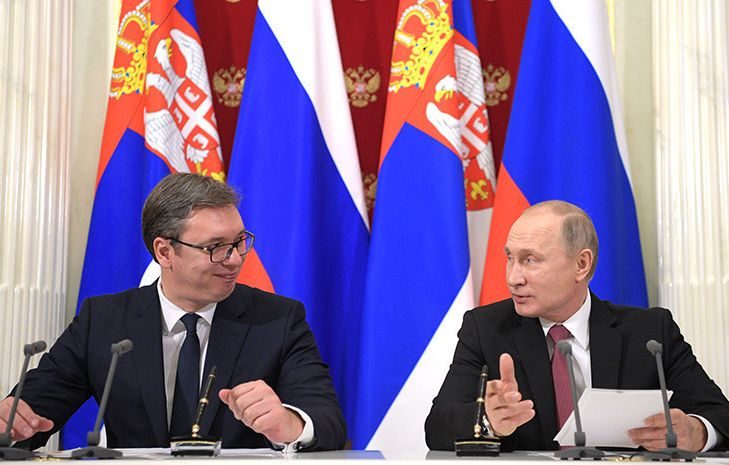
Serbian President Aleksandar Vucic has unprecedentedly expressed dissatisfaction with Russia's actions.
The Kremlin proposed that its ally Serbia sign a gas supply contract from 2022, with 70% of the price determined by the current market price on the European exchange, which was manipulatively driven up by none other than Russia's Gazprom.
Notably, the 2021 contract for gas supplies to Serbia was calculated 100% using the oil-indexed formula, so the price was set at $270 per thousand cubic metres.
Under the Kremlin's new proposal, Serbia would have to pay three times more, based on the latest gas futures quotes on the European exchange. Under the established formula, 70% based on quotes and 30% on the oil formula, the price came to $790 per thousand cubic metres.
The Kremlin has not explained why such a harsh policy was applied to a state so friendly to Russia. After all, it is known that the cost of gas for Russia itself does not depend on quotes on the European exchange.
However, as history shows, cooperation with the official Kremlin on its terms has repeatedly led to ruinous consequences for many states.
Serbian President Aleksandar Vucic, a staunch admirer of Putin even before this, expressed dissatisfaction with Gazprom's new proposal and asked Russia to reconsider it.
At the moment, negotiations between Serbia and Gazprom on a 2022 contract are ongoing.
Aleksandar Vucic
President of SerbiaFor the first time I will say what the Russians proposed to us. I said we cannot pay this. The Russians said to calculate the price 70% on the exchange value and 30% on the oil formula, that is, $790 instead of $270, which we currently pay 100% under the oil formula.
According to the president, Serbia is asking that the price be calculated at least in reverse order, 70% under the oil formula and 30% on the exchange value, but even that would not be a feasible condition for Belgrade.
Aleksandar Vucic
President of SerbiaThat would be $510, but we cannot pay that either. I will ask that the price remain fully on the oil formula at least until the end of the heating season.
It is also notable that until 2021 Serbia received gas in transit via Ukraine and Hungary, and from January 1 the first supplies began through the bypass pipeline "TurkStream", when the country was lured under the full influence of the monopolist Gazprom.
The Serbian president still hopes that his meeting with his Russian counterpart Vladimir Putin on November 25 will help solve the problem of high gas prices.
It is likely that at this meeting Vucic will have to partially give up Serbia's sovereignty in return, given the Kremlin's desire to comprehensively expand its influence.

Russian Attacks in Dnipropetrovsk Region: Two Killed, Seven Injured

Defense Forces Strike Four Russian Drone Control Points in Past Day, Including in Berdiansk

Britain Threatens Sanctions on Kremlin-Linked People; Poland Ready to Hand Ukraine Ammunition

Russia says it has completed "planned exercises" in the Black Sea

MVD: Fake Riots With Prop Blood Were Being Prepared Near Presidential Office

Law Enforcers Name Another Klitschko Deputy as Suspect

Berlin Holds Protest Against War in Ukraine; EU Prepares for Possible Russian Halt of Gas Supplies
North Korea Fires Ballistic Missile Over Record Distance in Five Years
Irish Fishermen Force Russia to Postpone Naval Drills

US sanctions in case of invasion of Ukraine could completely destroy Russia's economy, NYT reports
