
Belarus Protests to Ukraine Over Bandera March as Russia Proposes Sanctions
The Israeli embassy in Ukraine also condemned the torch march.
Belarus's embassy in Ukraine sent a note to Ukraine's Foreign Ministry condemning a torch march held in Kyiv on January 1 in honor of the birthday of Stepan Bandera, ideologue of the Organization of Ukrainian Nationalists.
The embassy spoke of the “silent connivance of Ukrainian authorities in the mass participation of activists of the fugitive Belarusian extremist opposition” and accused Ukrainian television of covering the event.
The statement reads: “The embassy expresses a resolute protest over the growing radicalization of Ukraine’s anti-Belarusian stance, expressed in encouraging the demonstrative glorification of collaborators and executioners of the Belarusian people, and demands an end to attempts to heroize crimes against humanity, which have no statute of limitations and cannot be forgiven by the Belarusian people.”
In addition, State Duma Speaker Vyacheslav Volodin said that “sanctions should be imposed for encouraging nationalism in Ukraine,” and that the European Parliament, PACE and the OSCE should condemn “what is happening.”
Earlier, the Israeli embassy in Ukraine also condemned the torch march in honor of the 113th anniversary of Stepan Bandera’s birth.
The embassy said: “Israel condemns the nationalist march in honor of Bandera.” It noted that “anti-Semitic manifestations” were present at the event and called for an investigation.
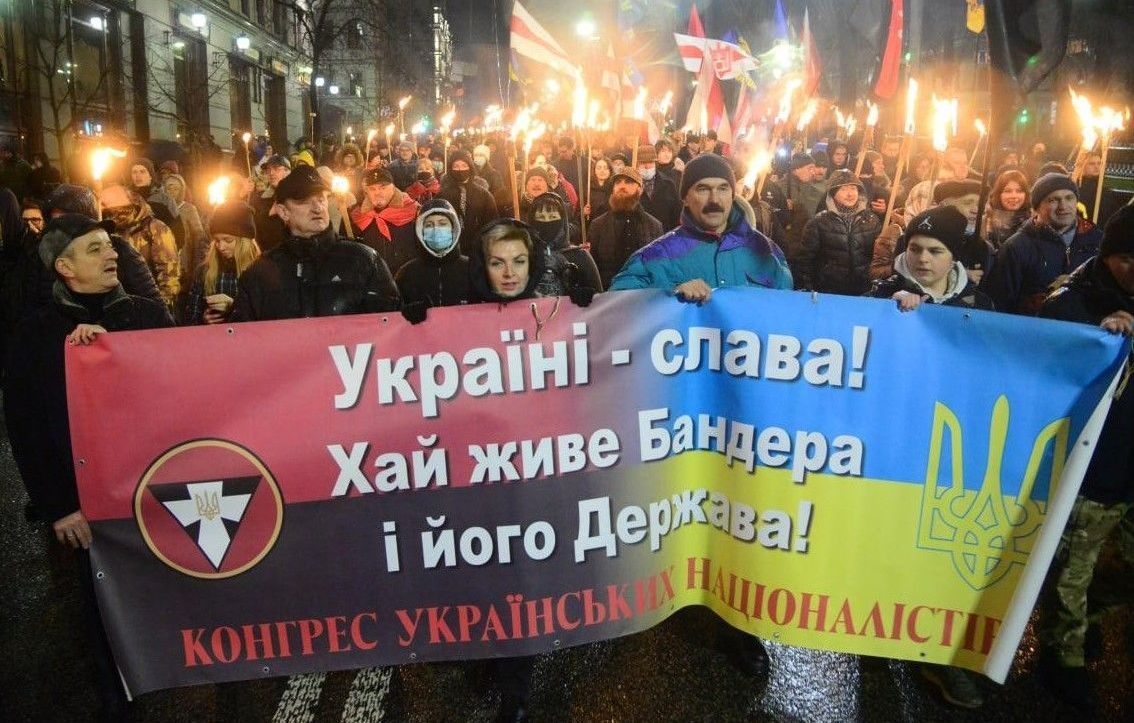
On January 1, the traditional annual torch march took place in honor of the 113th anniversary of the birth of Stepan Bandera, leader and ideologue of the Organization of Ukrainian Nationalists.
The event was scheduled for 5 p.m. in Taras Shevchenko Park. The route was as follows: Volodymyrska Street – Taras Shevchenko Boulevard – Khreshchatyk Street – Maidan Nezalezhnosti. According to police estimates, 500–600 people took part in the action.
Participants carried torches, Ukrainian flags, OUN revolutionary flags and a banner bearing Bandera’s image. In the middle of the column they carried placards with the image of the leader of Ukrainian nationalists, the slogans “Glory to Ukraine” and other slogans.
They also sang the song “Batko nash — Bandera, Ukraina — maty” (“Our Father Bandera, Ukraine Our Mother”), which became popular due to a flash mob by Ukrainian TikTok users.
On the bridge over Instytutska Street they lit flares and chanted patriotic slogans. The column reached Bankova Street, but law enforcement did not let it reach the Office of the President building because of a New Year fair held there.
The march lasted about two hours and ended with the singing of the national anthem. In total, around 3,500 people took part in events in 20 regions of Ukraine. Law enforcement said they passed without violations.
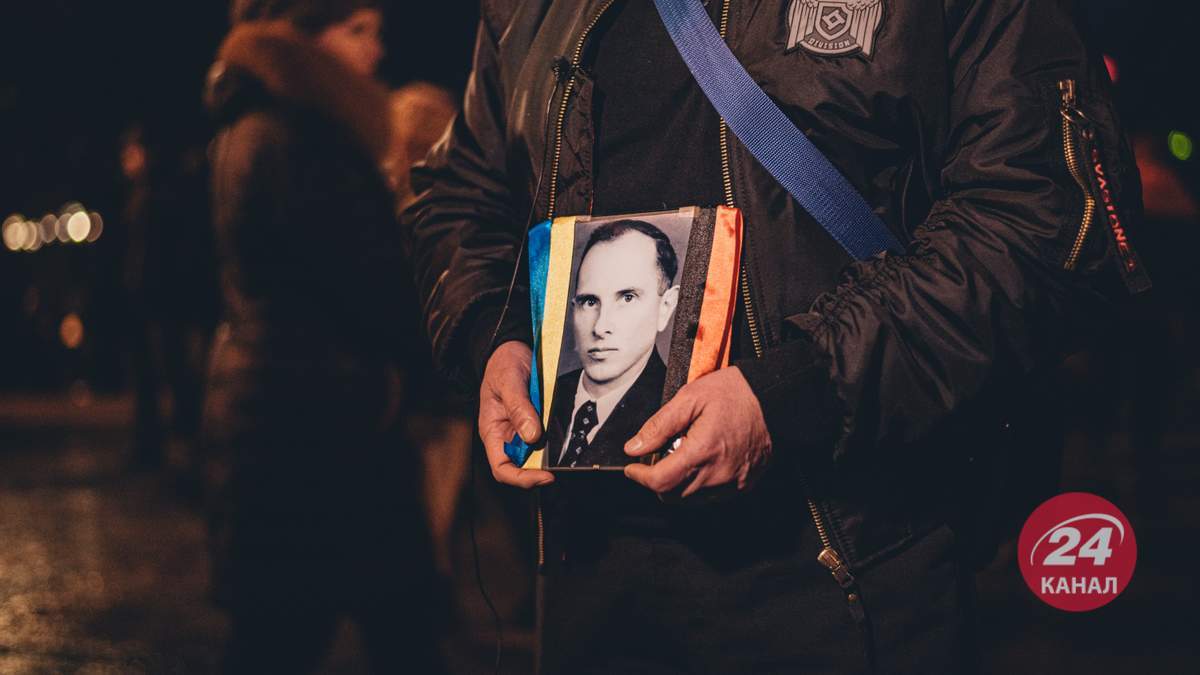
On January 1, the 113th anniversary of the birth of Stepan Bandera was marked. He was the leader of the Organization of Ukrainian Nationalists, one of the main ideologues and theorists of the Ukrainian nationalist movement of the 20th century.
Bandera and Yaroslav Stetsko were authors of the Act of Restoration of the Ukrainian State, which was proclaimed on June 30, 1941. On July 5, 1941, Bandera was placed under house arrest, and from September 15 in the central Berlin prison.
From early 1942 until August 1944 he was held in the Sachsenhausen concentration camp. In September he was released and offered to take part in leading the anti-Soviet armed movement in the rear of the Red Army, but he refused. Bandera was killed by KGB agent Bohdan Stashynsky in Munich on October 15, 1959.

Russian Attacks in Dnipropetrovsk Region: Two Killed, Seven Injured

Defense Forces Strike Four Russian Drone Control Points in Past Day, Including in Berdiansk

Britain Threatens Sanctions on Kremlin-Linked People; Poland Ready to Hand Ukraine Ammunition

Russia says it has completed "planned exercises" in the Black Sea

MVD: Fake Riots With Prop Blood Were Being Prepared Near Presidential Office

Law Enforcers Name Another Klitschko Deputy as Suspect

Berlin Holds Protest Against War in Ukraine; EU Prepares for Possible Russian Halt of Gas Supplies
North Korea Fires Ballistic Missile Over Record Distance in Five Years
Irish Fishermen Force Russia to Postpone Naval Drills

US sanctions in case of invasion of Ukraine could completely destroy Russia's economy, NYT reports
