
Blinken-Lavrov Talks: Russia Threatens “Most Serious Consequences” if US Ignores Its Demands
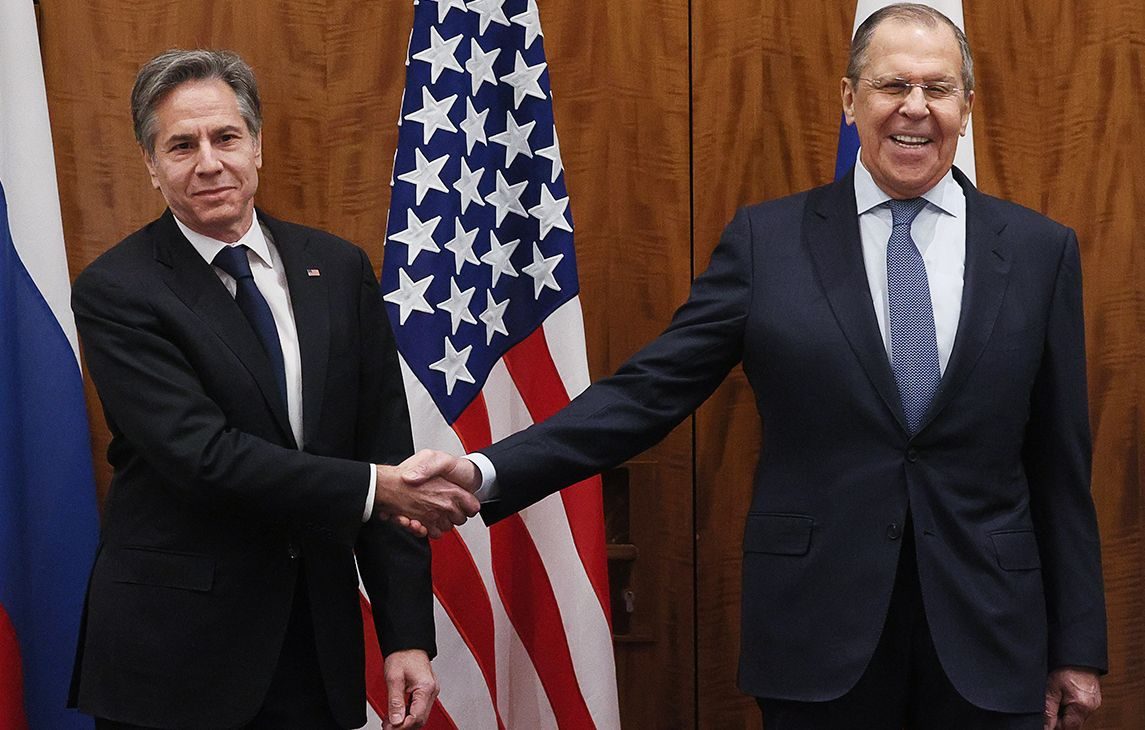
The talks lasted less than planned.
On 21 January in Geneva, US Secretary of State Antony Blinken and Russian Foreign Minister Sergei Lavrov held talks. They lasted 1.5 hours.
Two hours had been scheduled for the Blinken-Lavrov meeting, but the talks lasted less than planned. On Thursday, Blinken was in Berlin, where he said he did not expect a breakthrough in talks with Lavrov, but hoped to hear what Moscow had decided following consultations with the US and NATO.
Written Response
Lavrov said Blinken promised to provide a written response to the Kremlin's security ultimatums next week.
Sergei Lavrov
Russian Foreign MinisterI told you that this is not the end of our dialogue. Next week we will receive, as Antony Blinken emphasized several times, a written reaction.
According to him, at the meeting he reiterated to the US Secretary of State the demand for no NATO expansion to the east: “Well, on our fundamental issue of no NATO expansion. This bloc was created against the USSR, and now it is working against the Russian Federation.”
Lavrov expects the US to mention Ukraine in its written response, but “one should not reduce the entire problem of the European security architecture to it.”
What Blinken Said
Antony Blinken said Russia could still convince the world not by words but by actions, in the absence of plans to seize Ukraine.
Antony Blinken
US Secretary of StateWe have heard what Russian officials say, that they do not intend to seize Ukraine. Mr. Lavrov repeated this to me today. But we look at things that are visible to everyone. And those are deeds and actions, not words.
He noted that the best step for Russia now would be withdrawing troops from Ukraine: “I told Lavrov that if Russia wants to convince the world that it has no aggressive intentions toward Ukraine, a very good start would be de-escalation by pulling its forces back from Ukraine's borders and engaging in diplomatic negotiations and dialogue.”
According to him, Russia now faces a choice: negotiations or escalation. Washington is now ready for two scenarios, and in the event of any invasion, the US will introduce tough measures against Russia.
Blinken confirmed Lavrov's words that the US will provide a written response next week to the demand for so-called “security guarantees.” The US expects further contacts with Moscow after it reviews Washington's response.
Threats to Russia
Lavrov told Blinken that ignoring Moscow's demands regarding so-called “security guarantees” would have the most serious consequences.
“Antony Blinken has been clearly told that further ignoring the legitimate concerns of the Russian Federation, primarily related to the ongoing military development of Ukraine's territory by the United States and its NATO allies against the backdrop of a large-scale deployment of Alliance forces and assets near our borders, will have the most serious consequences,” the Russian Foreign Ministry said in a statement, without specifying the nature of the threat.
The Russian ministry noted that this could be avoided if Washington positively responds to Russian draft agreements on security guarantees in its written article-by-article reply, which Russia expects to receive next week.
US Asked Russia Not to Publish Written Response
The US asked Russia not to publish its response to the demands on security guarantees, reports The Washington Post, citing sources.
It is noted that the State Department does not rule out that Moscow will still decide to make the letter public. As expected, the US response will make clear that it is interested in continuing dialogue, but will exclude NATO's renunciation of its open-door policy, and will also set out counterproposals.
Sources told the publication that, although the US letter will reject Russia's main demands, the White House believes sending it will still be useful, since President Vladimir Putin will personally review it.
“It is in our interest for the person who makes sole decisions in Russia to review our position and decide how to move forward,” a source at the White House said.

Russian Attacks in Dnipropetrovsk Region: Two Killed, Seven Injured

Defense Forces Strike Four Russian Drone Control Points in Past Day, Including in Berdiansk

Britain Threatens Sanctions on Kremlin-Linked People; Poland Ready to Hand Ukraine Ammunition

Russia says it has completed "planned exercises" in the Black Sea

MVD: Fake Riots With Prop Blood Were Being Prepared Near Presidential Office

Law Enforcers Name Another Klitschko Deputy as Suspect

Berlin Holds Protest Against War in Ukraine; EU Prepares for Possible Russian Halt of Gas Supplies
North Korea Fires Ballistic Missile Over Record Distance in Five Years
Irish Fishermen Force Russia to Postpone Naval Drills

US sanctions in case of invasion of Ukraine could completely destroy Russia's economy, NYT reports
