
Single-Party Majority in Moldova: Priorities of Sandu's Party After the Election
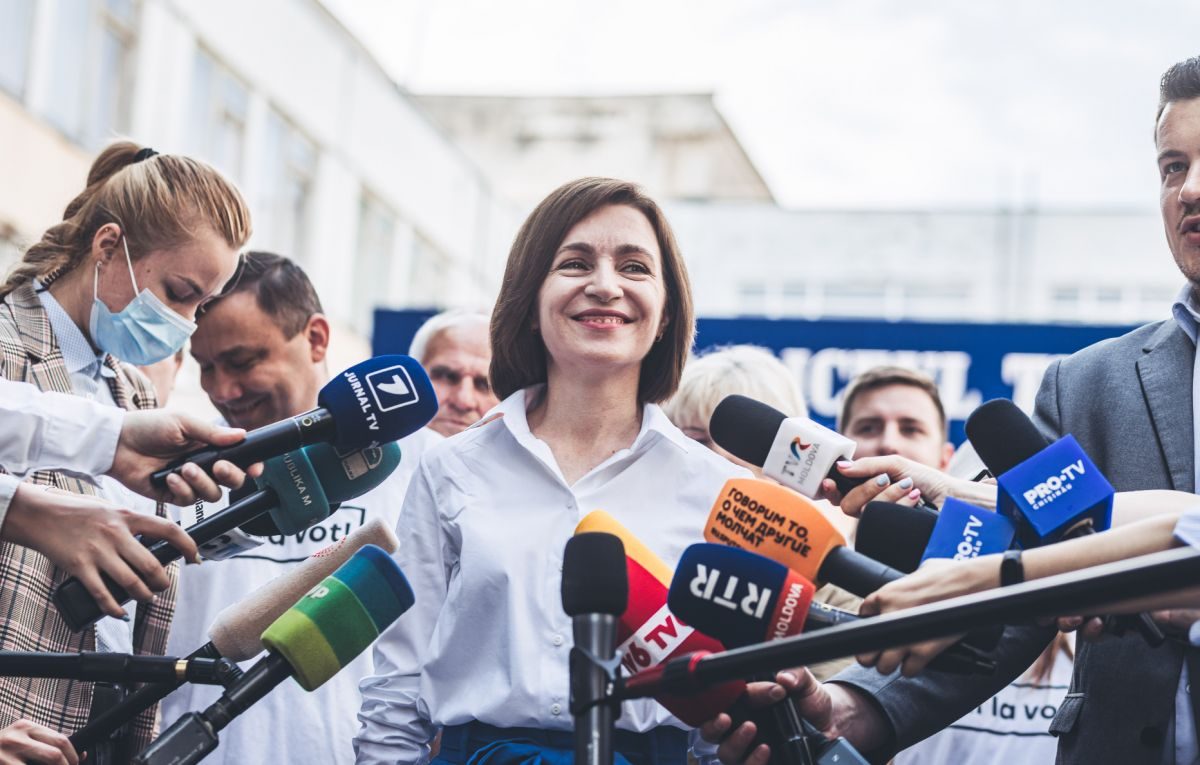
Parliamentary elections were held in Moldova.
After 100% of the votes were counted in Moldova's parliamentary election, the Central Election Commission reported that President Maia Sandu's Party of Action and Solidarity won almost 53%, a constitutional majority. The second place, with 27%, went to the Bloc of Communists and Socialists of former President Igor Dodon. The Shor Party of businessman Ilan Shor also entered parliament with 6%.
Pro-European Maia Sandu, much like Ukrainian President Volodymyr Zelensky before her, managed to secure a single-party majority in parliament. As a result, any initiative of the president or her party will receive the necessary number of votes.
How will the results of Moldova's parliamentary election affect relations with Ukraine? Will Russia start "stirring up" Transnistria after the defeat of its supporters? Ukrainian experts answered these questions for TK Media.
Ilia Kusa
expertIn the next two years, the single-party majority and President Sandu will focus on domestic politics. Major "tilts" toward Europe or Russia should not be expected, especially after the Biden-Putin summit.
Speaking to TK Media, Ilia Kusa, an expert at the Ukrainian Institute for the Future, said that Sandu lacks the Western support needed to break away from the Kremlin at the legislative level, as Ukraine has done. The expert added that deep trade ties between Chisinau and Moscow also stand in the way.
Ilia Kusa
expertParliament will also have to reckon with the party of former President Igor Dodon, which will be something like a Moldovan version of Ukraine's Opposition Platform — For Life, and with its pro-Russian electorate, since it makes up a third of the country's population. One should also not forget the internal feuds within the pro-presidential Party of Action and Solidarity itself. If the government formation process drags on, this will further limit Maia Sandu's political maneuvering.
Kusa described Shor as a populist project of the businessman. In his view, the party will trade its votes and support the pro-government majority or the opposition depending on the situation.
Speaking to TK Media, Dmitry Levus, director of the Ukrainian Meridian public research center, said that relations between Kyiv and Chisinau will gradually begin to warm.
He added that the leaders of both countries are open to dialogue, and Maia Sandu plans to build joint regional projects to reduce Russian influence in Moldova. The expert also doubts that the situation in Transnistria will escalate.
Dmitry Levus
expertMoldova is too economically dependent on Russia, so there will be no abrupt moves toward the West that could provoke the Kremlin into aggression. However, Moscow will most likely step up this issue on the political front, using its puppets in Tiraspol and Igor Dodon's party in parliament.

Russian Attacks in Dnipropetrovsk Region: Two Killed, Seven Injured

Defense Forces Strike Four Russian Drone Control Points in Past Day, Including in Berdiansk

Britain Threatens Sanctions on Kremlin-Linked People; Poland Ready to Hand Ukraine Ammunition

Russia says it has completed "planned exercises" in the Black Sea

MVD: Fake Riots With Prop Blood Were Being Prepared Near Presidential Office

Law Enforcers Name Another Klitschko Deputy as Suspect

Berlin Holds Protest Against War in Ukraine; EU Prepares for Possible Russian Halt of Gas Supplies
North Korea Fires Ballistic Missile Over Record Distance in Five Years
Irish Fishermen Force Russia to Postpone Naval Drills

US sanctions in case of invasion of Ukraine could completely destroy Russia's economy, NYT reports
