
Navalny's First Interview After Poisoning: On That Day, the Perpetrators, Putin, Merkel and Returning to Russia
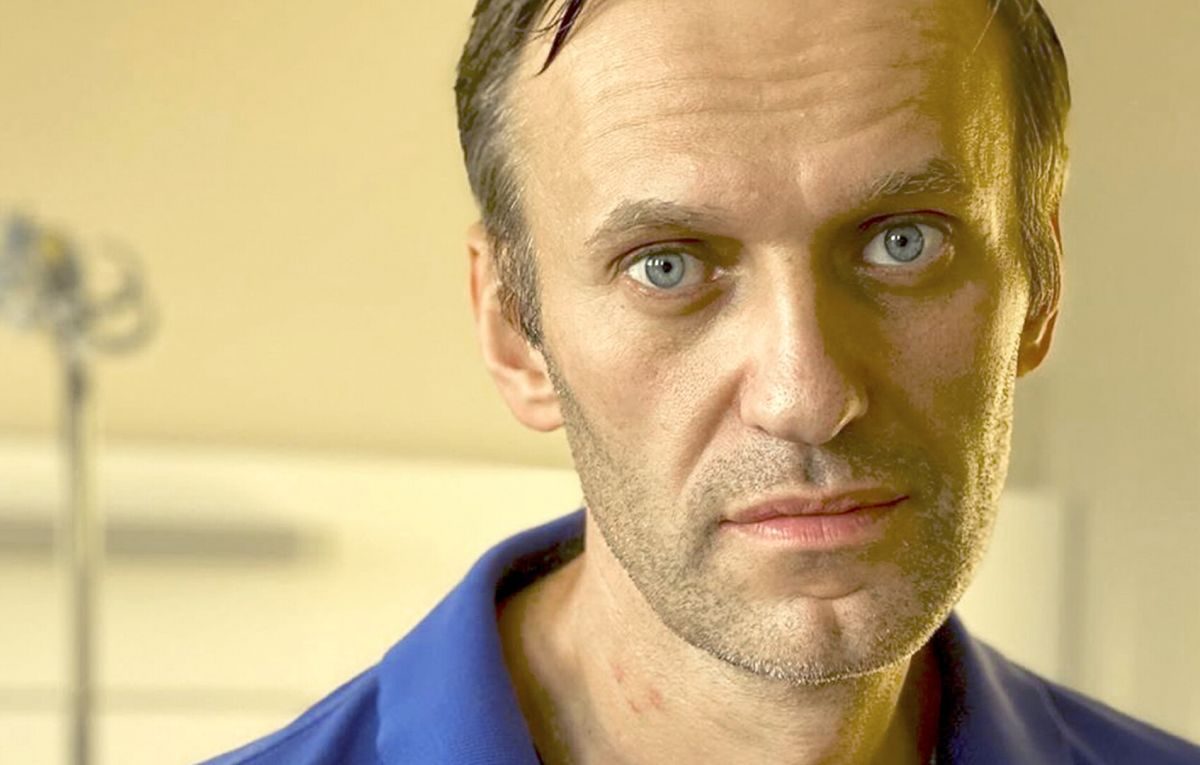
Navalny believes the decision to poison him could not have been made without Putin's instructions.
Russian opposition figure Alexei Navalny has publicly accused Russian President Vladimir Putin of involvement in his poisoning. The politician made the statement in an interview with the German publication Der Spiegel.
Alexei Navalny
Russian opposition figureI claim that Vladimir Putin is behind the poisoning, and I have no other version. I say this based on facts, and the main one is Novichok. Only two people can order its use or production: the head of the FSB or the SVR. Maybe also the GRU. Obviously, they could not make such a decision without Putin's instructions.
In response to this statement, the Kremlin accused Navalny of insulting Putin and suspected him of cooperating with the Central Intelligence Agency of the United States.
"It is not the patient who works with Western intelligence services, but the Western intelligence services who work with him. Indeed, there is such information," said Kremlin spokesman Dmitry Peskov.
In response to the accusations, Navalny promised to sue Peskov. "If government authorities have evidence of the nonsense he is spouting, then this is a matter of Russia's state security, and I demand that this evidence be published," the politician wrote on his website.
On the day of the poisoning
Navalny said he felt well both at the airport and at the start of the flight, and that what happened afterward is hard to describe. The politician compared the poisoning to a DDoS attack on a computer: "An overload that breaks the nervous system." At first he could not concentrate and felt cold sweat, then he asked for a handkerchief and water and decided to go to the toilet.
Alexei Navalny
Russian opposition figureI was sitting on the toilet and washing my face with cold water, and then I realized that if I did not open the door now, I would die right here. There was no pain, but I understood that I was dying. I left the toilet and told the flight attendant: "I've been poisoned, I'm dying." <...> I remember they asked me about heart problems. But nothing hurt at all — I just knew I was dying.
The opposition figure suggests he received the poison through his skin by touching something. Traces of poison appeared on the water bottle because he drank from it, but "these traces were not dangerous, there was a minimal amount of poison, it could not harm anyone."
According to Navalny, it was important for Putin that the opposition figure not gain the status of a victim and political capital, even posthumously, and that is the only reason he was allowed to leave the country for treatment in Germany. "And I think they waited 48 hours because they hoped the poison would not be detected in the end," Navalny added.
On Angela Merkel's visit
"It was completely unexpected — the door of the ward opened and my doctor and Merkel walked in," Navalny recalls. The politician declined to disclose details of the conversation, but clarified that "we did not discuss anything secret, her visit was simply a demonstrative gesture."
The opposition figure was impressed by the chancellor's understanding of Russia's domestic politics. "When I talked to her, I understood why she has been at the top of German politics for so long," Navalny added.
The Russian politician also spoke of a crisis in relations between Russia and Germany. According to him, the German government has taken a very clear position, and not so much because of the poisoning but because of "awareness of the dangerous path Russia is on."
Alexei Navalny
Russian opposition figureFor a long time it was considered impossible that Putin would risk a conflict with Berlin, but now that time has come, as has the time of political murders in Russia. <....> Whether to stop Nord Stream 2 is Germany's business, but sanctions against Russia as a whole are useless. What is needed are targeted punishments for the beneficiaries of the corrupt system, so that they can no longer enjoy life in the West.
On returning to Russia
"I will return to Russia, because otherwise it would mean that Putin has achieved his goal. I will not give Putin such a gift as my emigration," Navalny said.
At the same time, the politician expressed concern for his family, but added that they are not afraid. In response to a question about the safety of Navalny's return to Russia, Peskov said he had "said everything he wanted to on this issue" and declined further comment.
According to Navalny, Putin usually deals with the opposition differently (through arrests and beatings), and uses combat toxic agents against traitors. "But now, apparently, something has changed in Putin's head," the opposition figure believes.
The politician plans to continue traveling to regions, staying in hotels and drinking water in hotel rooms. "From a political point of view little will change — the struggle will continue between those who fight for freedom and those who want to throw us back into the past," Navalny said.
The opposition figure believes he has been under constant surveillance since 2012, and often very openly. According to him, this may be officers of the FSB, the Center "E" (Main Directorate for Combating Extremism of the Russian Interior Ministry) and other agencies.
"I think the article in Moskovsky Komsomolets is a public statement by the security services responsible for the surveillance about their non-involvement in the poisoning. There was certainly no order across the entire FSB to kill Navalny," the politician said.
Among other things, Navalny said he feels much better with each passing day. His main problem now is being unable to sleep without sleeping pills. The politician considers himself to be "in the position of a laboratory rat" and suggests that he may one day be written about in medical journals.

Russian Attacks in Dnipropetrovsk Region: Two Killed, Seven Injured

Defense Forces Strike Four Russian Drone Control Points in Past Day, Including in Berdiansk

Britain Threatens Sanctions on Kremlin-Linked People; Poland Ready to Hand Ukraine Ammunition

Russia says it has completed "planned exercises" in the Black Sea

MVD: Fake Riots With Prop Blood Were Being Prepared Near Presidential Office

Law Enforcers Name Another Klitschko Deputy as Suspect

Berlin Holds Protest Against War in Ukraine; EU Prepares for Possible Russian Halt of Gas Supplies
North Korea Fires Ballistic Missile Over Record Distance in Five Years
Irish Fishermen Force Russia to Postpone Naval Drills

US sanctions in case of invasion of Ukraine could completely destroy Russia's economy, NYT reports
