
Protests in the Netherlands: riots and police use of weapons
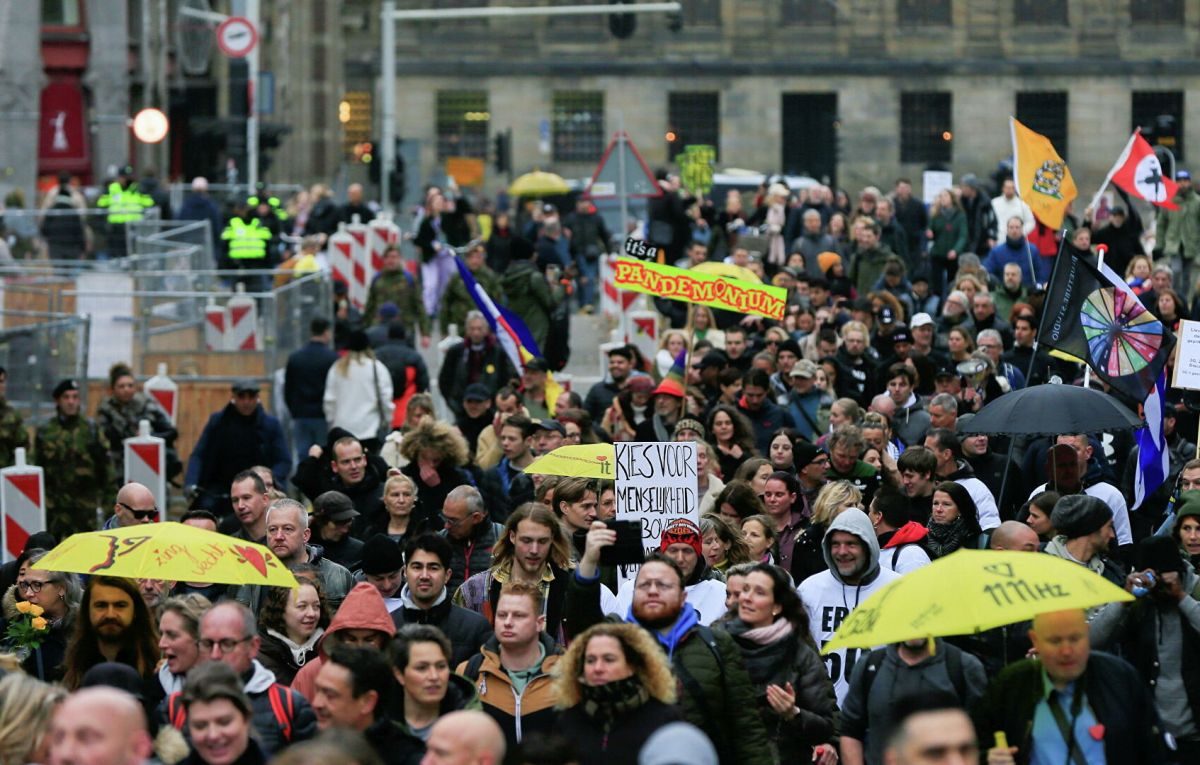
Protesters are angry about mandatory COVID certificates and a ban on fireworks on New Year's Eve.
Protests continue in the Netherlands over restrictions introduced amid the coronavirus pandemic. We explain how, within a few days, the protests escalated into riots.
Restrictions
In early November, the Dutch government decided to reinstate restrictive measures aimed at slowing the latest surge in coronavirus infections.
From November 6, face masks again became mandatory in all indoor public places where 'health passes' are not used. This applies to supermarkets, public transport, airports and amusement parks.
Where necessary for contact professions, this applies to both the customer and the service provider. The fine for non-compliance is €95. The scope of the 'health pass' has also been expanded. It is now required for visiting cafes and restaurants, theaters, concert halls and cinemas, and sporting and cultural events.
From November 3, recommendations to work from home were resumed. They were tightened to 'work from home for at least half of working hours'. In December, the government will offer an additional vaccine dose to all people aged 80 and older. Starting in January, people aged 60 to 80 will be vaccinated.
The number of new infections in the Netherlands grew throughout October, reaching its highest level since July. On September 25, the Netherlands lifted most restrictions, and the 'health pass' was introduced as a requirement for visitors to bars, restaurants, clubs and cultural events.
According to the government, at the start of November about 84% of the adult population was fully vaccinated against coronavirus.
Police used weapons
On November 19, police fired shots and used water cannons after riots broke out in Rotterdam during COVID protests. Protesters threw stones and incendiary devices at police officers and set fire to their vehicles.
Hundreds of protesters gathered to voice their anger over government pandemic restrictions, which include mandatory COVID certificates and a ban on fireworks on New Year's Eve.
A police spokesperson said officers fired warning shots and direct shots because the situation posed a threat to life. As a result of the gunfire, at least two people were wounded.
A state of emergency was declared in Rotterdam, and the central station was closed due to the violence. Two police cars were burned after incendiary devices were thrown.
Under the new restrictions, restaurants and shops must close earlier, and sporting events must be held behind closed doors. After the restrictions were announced, clashes between demonstrators and police broke out in The Hague.
In Rotterdam, protesters expressed their disapproval of the government's proposal to introduce a 'health pass' for those who have been vaccinated or have recovered from illness. The ban on fireworks on December 31 is meant to prevent an 'additional burden on healthcare'.
Second night of riots
On the night of November 21, protests against the authorities' decision took place again in the Netherlands, in The Hague, Roermond, Urk, Steyn and Beuningen. In Rotterdam, where police had previously used weapons and detained more than 50 people, it was calm this time.
In The Hague, riots occurred in two districts: protesters set small objects on fire in the streets and launched heavy fireworks. Someone hit an ambulance carrying a patient with a stone, smashing its window. Five police officers were reportedly injured.
In Urk, police officers were pelted with fireworks, and eight people were detained for launching them or carrying them.
In Roermond, in one of the districts, dozens of young people pelted police with fireworks. Police dispersed the crowd and detained at least 12 people who had fireworks and firecrackers or who did not show identification documents.
In Steyn, about 60 young people took part in the riots, throwing firecrackers at the police. One person was reportedly detained. In Beuningen, about 20 people launched fireworks and set a garbage bin on fire.
In Eindhoven, law enforcement officers began patrolling the streets because of calls for protests on social media, but the city ultimately remained calm.
Incidents were also reported at two stadiums, as matches with spectators had been banned. In one case, fans broke into the stadium during a game and ran onto the pitch, forcing the match to be stopped, and in another, they began throwing fireworks at police.
Third night of riots
On the night of November 22, coronavirus protests with riots continued in Dutch cities, including Leeuwarden, Groningen, Enschede and Tilburg. People set fires and threw stones in protest.
In Enschede, police used batons to disperse the crowd. In Leeuwarden, police vans were pelted with stones, while groups dressed in black chanted and lit flares.

Russian Attacks in Dnipropetrovsk Region: Two Killed, Seven Injured

Defense Forces Strike Four Russian Drone Control Points in Past Day, Including in Berdiansk

Britain Threatens Sanctions on Kremlin-Linked People; Poland Ready to Hand Ukraine Ammunition

Russia says it has completed "planned exercises" in the Black Sea

MVD: Fake Riots With Prop Blood Were Being Prepared Near Presidential Office

Law Enforcers Name Another Klitschko Deputy as Suspect

Berlin Holds Protest Against War in Ukraine; EU Prepares for Possible Russian Halt of Gas Supplies
North Korea Fires Ballistic Missile Over Record Distance in Five Years
Irish Fishermen Force Russia to Postpone Naval Drills

US sanctions in case of invasion of Ukraine could completely destroy Russia's economy, NYT reports
