
NYT publishes map of Russian troop positions on Ukraine's border. NATO members doubt Russia's readiness for de-escalation
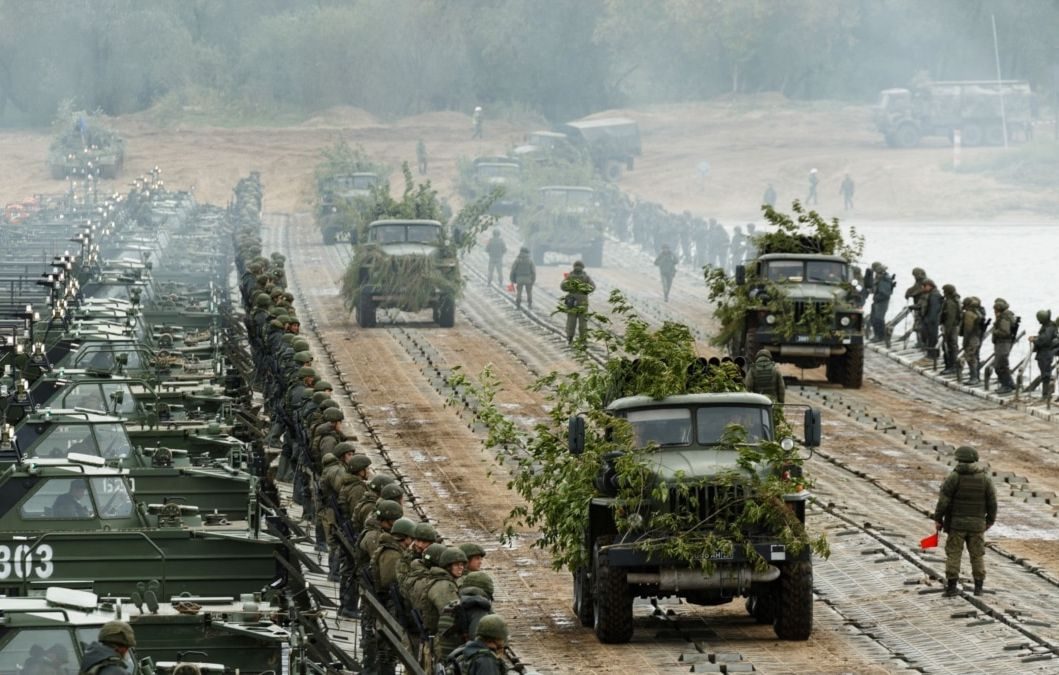
Many NATO members are skeptical about the upcoming talks with Russia on de-escalation.
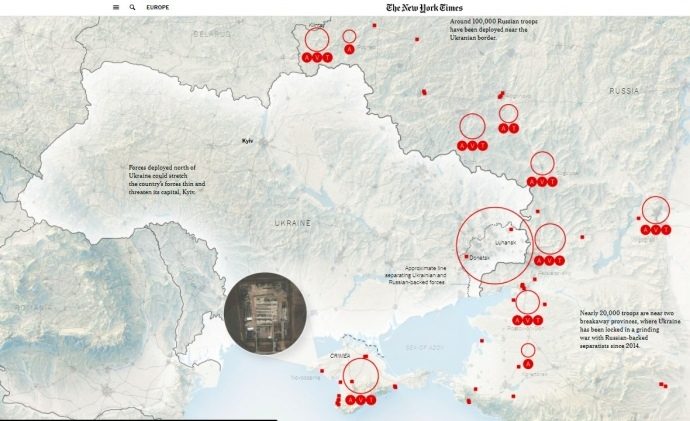
The The New York Times published a map showing Russian troop positions on the border with Ukraine.
The paper notes that these troops pose a threat of escalating the conflict with the neighboring state and "opening a new front." The newspaper writes that they surround Ukraine on three sides.
The map shows the branches of the military, their numbers, and types of equipment. The map was compiled based on data from Ukrainian and Western sources, independent military experts and satellite images.
According to NYT estimates, based on data from US intelligence services, the Kremlin has developed an operation involving 175,000 military personnel. Russia is "on its way" to acquiring everything necessary to begin an invasion.
Two groups of troops are positioned at the border with Belarus, near the cities of Yelnya (Smolensk Region) and Klintsy (Bryansk Region). Three more groups are located near Voronezh. These troops could directly threaten Kyiv in the event of a military operation.
One group is located in the Volgograd area, and two are at the border with the so-called LPR and DPR. There are also military positions near the city of Korenovsk (Krasnodar Krai) and in Crimea.
According to The New York Times, many NATO members are skeptical about the upcoming talks with Russia on de-escalation, believing that Russia simply wants to buy time.
"NATO officials say that many member states are not very optimistic about diplomatic de-escalation and believe that Russia may simply be trying to buy time and be able to tell its citizens that the West does not want to talk, and thus find a pretext to back away," the newspaper reports.
The meeting of NATO foreign ministers on Friday reportedly took place "against a backdrop of general skepticism about Moscow's readiness for de-escalation and serious negotiations."
The newspaper writes that NATO views the upcoming week of talks as a dialogue rather than negotiations, to see whether substantive talks on issues of concern to both sides make sense, but only if Russia reduces escalation around Ukraine.
NBC News, citing a current US administration representative and two former US national security officials, reported that the US is ready to discuss with Russia reducing troops and exercises in Eastern Europe, if it also agrees to cut its forces.
Sources said the discussions could potentially cover the scale of military exercises conducted by both countries, the number of American troops deployed in the Baltic states and Poland, advance notification of force movements, and Russian Iskander nuclear missiles in the Kaliningrad region.
A US administration representative said it "is drawing up a list of options for changing the posture of armed forces in Europe to discuss with Russia at the talks." The official said that if Russia wants to discuss reducing its presence in the region, the US will be ready to discuss specific steps.
Former US officials said the US is working with other NATO members to organize the delivery of portable Stinger anti-aircraft missiles requested by Ukraine.
However, US State Department spokesperson Ned Price said that information about the withdrawal of troops from Eastern Europe is incorrect.
Ned Price
US State Department spokespersonThe information that the administration is developing options for withdrawing US troops from Eastern Europe as part of preparations for next week's talks with Russia is inaccurate.
He clarified that the US "made clear that if Russia invades Ukraine," they are ready to strengthen defenses with NATO.

Russian Attacks in Dnipropetrovsk Region: Two Killed, Seven Injured

Defense Forces Strike Four Russian Drone Control Points in Past Day, Including in Berdiansk

Britain Threatens Sanctions on Kremlin-Linked People; Poland Ready to Hand Ukraine Ammunition

Russia says it has completed "planned exercises" in the Black Sea

MVD: Fake Riots With Prop Blood Were Being Prepared Near Presidential Office

Law Enforcers Name Another Klitschko Deputy as Suspect

Berlin Holds Protest Against War in Ukraine; EU Prepares for Possible Russian Halt of Gas Supplies
North Korea Fires Ballistic Missile Over Record Distance in Five Years
Irish Fishermen Force Russia to Postpone Naval Drills

US sanctions in case of invasion of Ukraine could completely destroy Russia's economy, NYT reports
