
Omicron Strain: Netherlands Announces Lockdown as Britain Faces Catastrophic Epidemic Wave
Germany tightens travel restrictions from the United Kingdom.
The Netherlands has announced a lockdown, and Britain faces a catastrophic epidemic wave. We bring you the latest news on the Omicron strain.
Lockdown in the Netherlands
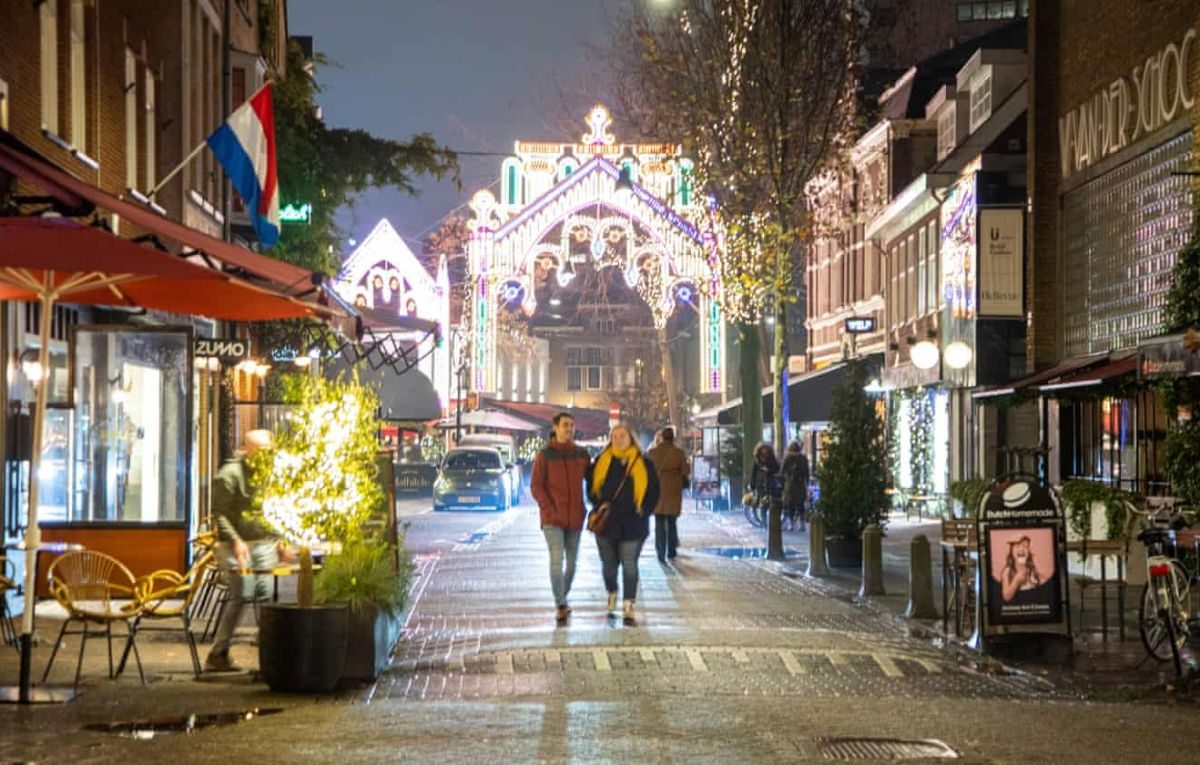
The Netherlands became the first country in the European Union to impose a lockdown amid the spread of the new Omicron coronavirus variant.
From December 19 to January 14, the country will be under a regime of general self-isolation. During this period, non-food stores, bars, restaurants, hair salons, museums, cinemas and gyms will not operate.
Schools will be closed until January 9 at the earliest. Local residents are prohibited from inviting more than two people to their homes (for Christmas, up to four guests may be invited). In public places, no more than two people may be together.
The first cases of the Omicron strain in the Netherlands were detected three weeks ago. According to medical forecasts, this strain will become the dominant coronavirus variant in the country by the New Year and Christmas holidays.
In total, 2.9 million cases of coronavirus infection have been recorded in the Netherlands, and more than 20,000 people have died.
Britain faces an epidemic wave
A group of analysts who work together with the expert advisory group under the British government concluded in their modeling that, if no stricter restrictions are introduced to counter the spread of Omicron, the country faces a surge in infections of unprecedented scale and up to 6,000 deaths of patients daily.
This refers to the conclusions of the SPI-M-O group, analysts who provide data to the Scientific Advisory Group for Emergencies (SAGE) advisory group under the British government, whose opinion is relied upon in decision-making.
According to the modeling results, if stricter restrictions are not introduced immediately, within a month the United Kingdom, with its population of 67.2 million people, may see between 600,000 and 2 million coronavirus infections daily.
In this scenario, between 3,000 and 10,000 coronavirus patients may be admitted to hospitals daily, and the number of deaths among them could range from 600 to as many as 6,000 daily.
Earlier, the advisory group noted that restrictions are needed now, and postponing this step until early 2022 would significantly reduce their effect and fail to prevent a serious increase in the burden on the healthcare system.
The advisers stated that although vaccination is a critically important factor, as it reduces the severity of the disease, a set of measures is required to contain the spread of the virus. In their words, the greatest risk factor is mass events.
By the end of the week, Britain had recorded new records of coronavirus infections three days in a row. For example, on December 17, 93,045 new cases were reported in a single day.
Germany restricts entry
Germany is tightening restrictions on travel from the United Kingdom in an attempt to contain the spread of the Omicron strain.
Starting at midnight, airlines are prohibited from carrying tourists from Britain to Germany. Only German citizens and residents, their partners and children, as well as transit passengers will be allowed to travel to the country from Britain.
Everyone entering Germany from Britain will need a negative PCR test. In addition, the arriving person must quarantine for 14 days, regardless of vaccination status.
The Robert Koch Institute announced the new rules after classifying the United Kingdom as a variant of concern with a high level of coronavirus risk.
Germany's Health Ministry said the restrictions could last until January 3 at the earliest. This comes amid concern over the rapid spread of the Omicron strain in Britain.

Russian Attacks in Dnipropetrovsk Region: Two Killed, Seven Injured

Defense Forces Strike Four Russian Drone Control Points in Past Day, Including in Berdiansk

Britain Threatens Sanctions on Kremlin-Linked People; Poland Ready to Hand Ukraine Ammunition

Russia says it has completed "planned exercises" in the Black Sea

MVD: Fake Riots With Prop Blood Were Being Prepared Near Presidential Office

Law Enforcers Name Another Klitschko Deputy as Suspect

Berlin Holds Protest Against War in Ukraine; EU Prepares for Possible Russian Halt of Gas Supplies
North Korea Fires Ballistic Missile Over Record Distance in Five Years
Irish Fishermen Force Russia to Postpone Naval Drills

US sanctions in case of invasion of Ukraine could completely destroy Russia's economy, NYT reports
