
About 200 Ukrainians Request Evacuation from Afghanistan as Humanitarian Crisis Looms and Fighting Breaks Out in Panjshir
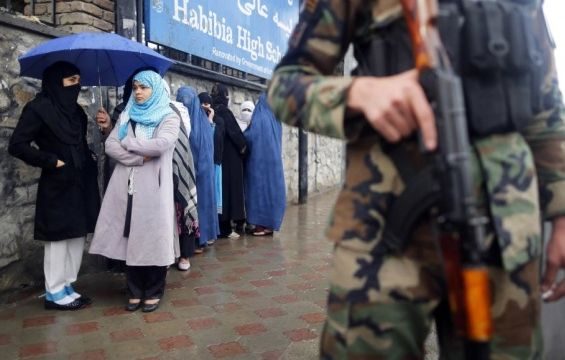
Four other countries have also asked Ukraine for help in evacuating their citizens.
About 200 more Ukrainians are asking to be evacuated from Afghanistan, the country faces a humanitarian catastrophe, and fighting has broken out in the Panjshir Valley between Afghan resistance forces and the Taliban.
Here is what is known about the situation in Afghanistan as of September 1.
Ukrainians again request evacuation
About 200 more Ukrainians are asking to be evacuated from Afghanistan. Four other countries have also asked for help in evacuating their citizens from Ukraine.
Foreign Minister Dmytro Kuleba said this during his working visit to the United States as part of the Ukrainian delegation.
He noted that the number of people wishing to evacuate is constantly changing.
Dmytro Kuleba
Foreign Minister of UkraineBecause someone, for example, did not make themselves known for two weeks, and then did. And someone registered, then flew on another plane because the opportunity arose. So this figure fluctuates, but no one will be left to their fate.
Asked whether Ukraine's assistance in evacuating citizens of other countries could be used as a geopolitical advantage and a plus in relations with other states, Kuleba replied: "We should not trade in human grief, try to sell it or turn it into marketing. We are not engaged in self-promotion, we are simply doing our job. Our partners value this." .
He noted that people, including children and women, remain in Afghanistan, for whom leaving the country now is a way to avoid threats to their lives and safety.
Risk of humanitarian catastrophe in Afghanistan
UN Secretary-General warned of an impending humanitarian catastrophe and the collapse of basic services in Afghanistan, where about half the population needs aid to survive.
António Guterres
UN Secretary-GeneralOn the day Afghanistan enters a new phase, I want to express serious concern about the worsening humanitarian and economic crisis in the country and the threat of a complete collapse of basic services.
Drought, conflict and the COVID-19 pandemic have left 18 million people (nearly a third of the population) in Afghanistan facing food shortages.
More than half of children under the age of five are expected to suffer from acute malnutrition next year.
Food has become too expensive for many families, and basic services have become inaccessible, the UN Secretary-General said.
Shortly afterwards, the World Health Organization published a report on Afghanistan that practically confirmed Guterres's words.
It states that even before the Taliban seized power, 12 million people were already experiencing malnutrition, and the situation will worsen due to the loss of about 40% of the country's annual harvest because of drought.
Fighting in the Panjshir Valley
In northeastern Afghanistan, in the Panjshir Valley, the only region of the country not under Taliban control, armed clashes between the Taliban and Afghan resistance forces led by Ahmad Massoud broke out on August 31.
Global media, citing local sources, report at least seven dead.
Reports of the fighting come the day after American forces completely left Afghanistan.
It is not yet clear whether the Taliban have launched an offensive on Panjshir or whether these are local skirmishes.
Massoud is the son of the well-known field commander Ahmad Shah Massoud, who was killed in 2001. Earlier he said he was ready to negotiate with the Taliban on forming a coalition government in Afghanistan that would include representatives of the main ethnic groups and political factions.

Russian Attacks in Dnipropetrovsk Region: Two Killed, Seven Injured

Defense Forces Strike Four Russian Drone Control Points in Past Day, Including in Berdiansk

Britain Threatens Sanctions on Kremlin-Linked People; Poland Ready to Hand Ukraine Ammunition

Russia says it has completed "planned exercises" in the Black Sea

MVD: Fake Riots With Prop Blood Were Being Prepared Near Presidential Office

Law Enforcers Name Another Klitschko Deputy as Suspect

Berlin Holds Protest Against War in Ukraine; EU Prepares for Possible Russian Halt of Gas Supplies
North Korea Fires Ballistic Missile Over Record Distance in Five Years
Irish Fishermen Force Russia to Postpone Naval Drills

US sanctions in case of invasion of Ukraine could completely destroy Russia's economy, NYT reports
