
UN Climate Report: Even Hotter, Wetter and More Dangerous
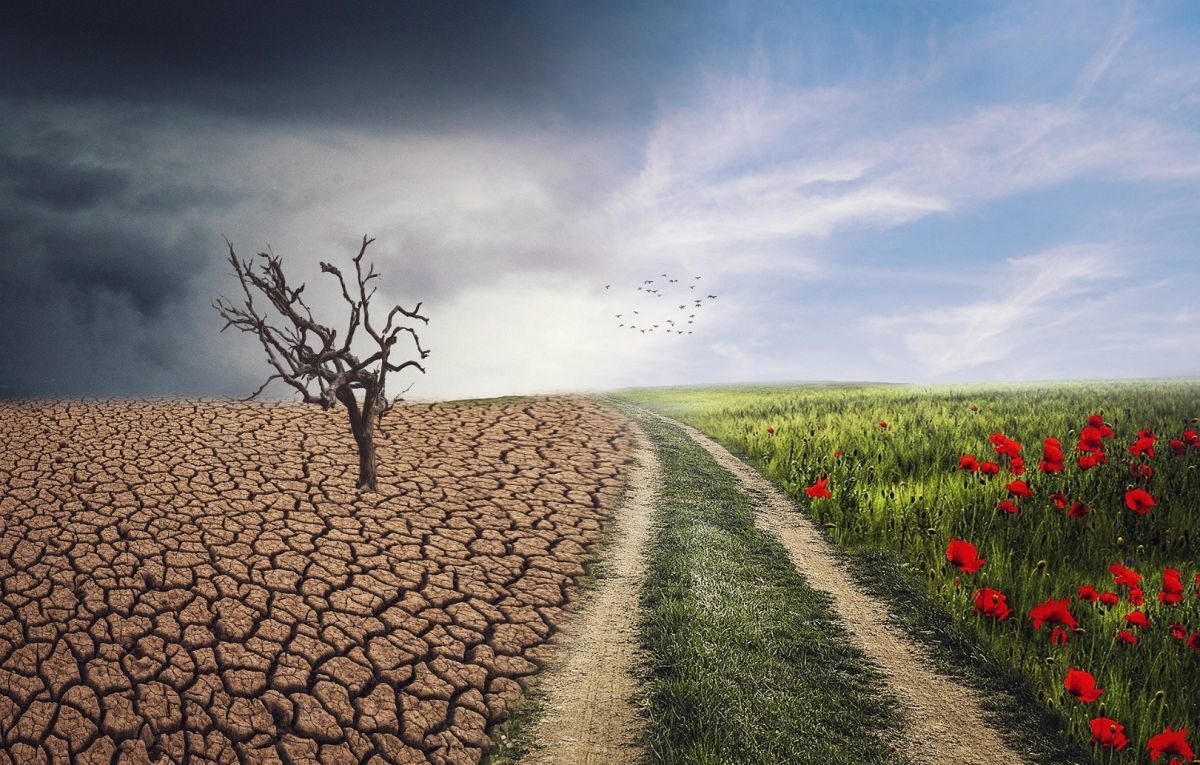
The impact of industry on warming is a fact.
On August 9, 2021, the Intergovernmental Panel on Climate Change (IPCC) at the UN published the first part of its report on changes in Earth's climate. This is the sixth report since 1988 and the first in seven years.
In the first part of the report, scientists described how the climate is changing, its causes and possible consequences. The second part (due in winter 2022) will focus on how humanity can adapt to the new climate. The third part (due in spring 2022) will explain how and by how much greenhouse gas emissions need to be cut.
Ukrainian climatologists Svetlana Krakovska and Mykola Shlapak took part in preparing the report. We briefly retell the report with their comments.
It has never been this hot before
The temperature of the last five years is the highest since the mid-19th century, when observations began. Over the past 50 years, temperatures have risen faster than in any other 50-year period of the last two millennia.
The period from 2010 to 2019 was possibly the hottest in the last 12,000 years, since the start of the current interglacial period.
According to Krakovska, to obtain accurate data, global temperatures over the last 2,000 years were reconstructed from various sources: sediment in oceans, bogs and rivers, ice cores from the poles, historical records and observations.
Svetlana Krakovska
climatologistThe reconstruction showed that fluctuations in global average annual temperature did not exceed half a degree. Until a sharp jump in the mid-19th century, at the start of the industrial era.
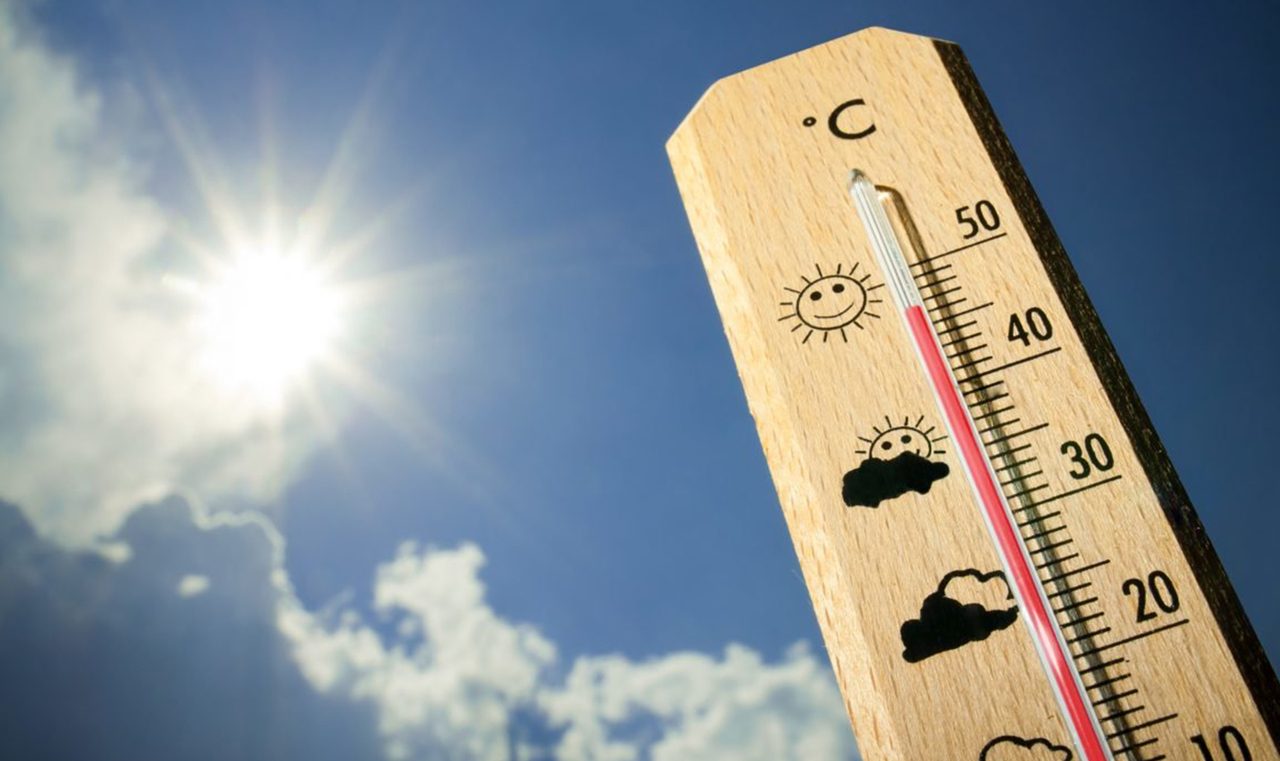
The impact of industry on warming is a fact
The report states that the impact of industry on warming is a fact, not a hypothesis, although many climate skeptics consider warming to be purely a natural process.
Over the last 10 years, global temperature on the planet averaged 1.09 degrees Celsius above the second half of the 19th century. Natural warming due to solar and volcanic activity amounted to 0.02 degrees, while human activity accounted for 1.07 degrees.
By early 2019, people had released up to 2,400 billion tons of carbon dioxide into the atmosphere, and if another 500 billion tons are emitted, the warming threshold will rise from 1.09 to 1.5 degrees. Given current industrial capacity, this could happen in just 15 years.
Krakovska said the report contains five scenarios of climate change through 2100, ranging from the most optimistic to one that can be called a "real hell." Even in the most optimistic scenario, temperatures will still rise.
Svetlana Krakovska
climatologistThe climate system has high inertia: the oceans have warmed significantly and will release this heat for a long time, their levels will rise, and ice will melt. But if emissions are stopped, the situation will gradually stabilize.
On the 2015 Paris Climate Agreement
The agreement set a critical threshold for warming at 2 degrees. Beyond that, irreversible climate changes threatening Earth's ecosystem will begin. Warming must be held at 1.5 degrees, which requires reducing emissions of carbon dioxide, methane and other greenhouse gases.
In the third part of the report, scientists will explain how this can be done. Mykola Shlapak is currently working on one of the chapters of this part. According to him, it will include general sections on the impact of emissions on the climate, as well as separate sections on the impact of transport, construction, energy, industry, cities and agriculture.
Each chapter will also answer questions about the level of emissions, what they depend on, how to reduce them, what technologies exist and how much they cost.
Mykola Shlapak
climatologistThere will also be a chapter that was absent from previous reports, on socio-behavioral factors: how changes in demand for products and services, consumer behavior and household habits can affect emission reductions.
Consequences of warming: floods, fires and droughts
Scientists predict that periods of extreme heat in various regions (like the summer 2021 heat in Canada) will occur on average seven times more often in the next 30 years.
In recent years, climatologists have encountered a new phenomenon: several extreme weather events occurring almost simultaneously in one region.
Svetlana Krakovska
climatologistThere is no contradiction in droughts and heavy rains becoming more frequent at the same time. As the temperature of the atmosphere rises, its capacity to hold moisture increases. I recently saw a good example. Water parks have an attraction where a bucket fills with water up to a certain level and then tips over onto you. When the bucket is small, it fills faster and dumps water more often. A large bucket takes longer to fill, but when it tips, it releases a lot of water at once. The atmosphere works the same way.
Rising sea levels and melting Arctic ice are another consequence of warming. The report says the rate of sea level rise is now the fastest in the last 3,000 years, while Arctic sea ice area is the smallest in 1,000 years.
Sea ice protects against warming because it increases the planet's reflectivity. The smaller the ice area, the more the temperature will rise.
Interactive atlas
The report features an interactive atlas that shows how the climate of individual regions of the planet has changed in the past and provides forecasts through 2100.
Svetlana Krakovska
climatologistWe are preparing and nearly finishing the main climate change scenarios specifically for Ukraine. We are also preparing a more detailed atlas where data for Ukrainian regions can be viewed. But even from the large atlas that already exists, you can find some specific data if you calculate the coordinates.

Russian Attacks in Dnipropetrovsk Region: Two Killed, Seven Injured

Defense Forces Strike Four Russian Drone Control Points in Past Day, Including in Berdiansk

Britain Threatens Sanctions on Kremlin-Linked People; Poland Ready to Hand Ukraine Ammunition

Russia says it has completed "planned exercises" in the Black Sea

MVD: Fake Riots With Prop Blood Were Being Prepared Near Presidential Office

Law Enforcers Name Another Klitschko Deputy as Suspect

Berlin Holds Protest Against War in Ukraine; EU Prepares for Possible Russian Halt of Gas Supplies
North Korea Fires Ballistic Missile Over Record Distance in Five Years
Irish Fishermen Force Russia to Postpone Naval Drills

US sanctions in case of invasion of Ukraine could completely destroy Russia's economy, NYT reports
