
China Built Prisons for Uyghurs to Change Their Identity, Leaked Documents Show
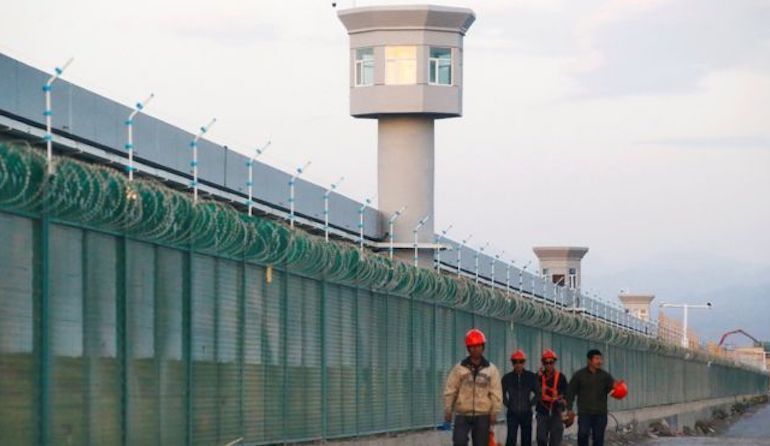
About a million people have been affected.
A leak of documents shows that the Chinese government is using prison camps in the western region of Xinjiang to break the identity of people of Uyghur ethnicity, BBC Panorama reports. While Beijing had previously said that camps built over the past three years are intended solely for voluntary re-education aimed at countering extremism.
Around a million people — mostly members of the Muslim Uyghur community — were detained without trial. Some 15,000 people from southern Xinjiang were sent to camps in just one week of 2017.
In 2017, camp managers received instructions from a senior official of the Communist Party of Xinjiang, which stated that:
- escapes must not be allowed
- discipline must be strengthened and violations of conduct rules punished
- repentance and confession must be promoted
- “students” (as all detainees were called) must be encouraged to fully transform
- there must be full video surveillance of dormitories with no blind spots
Each “student” must have a fixed place in bed, in line, in class and during work. Changes are strictly prohibited. The Chinese government introduced behavioral and disciplinary requirements so that detainees could stand up, be counted, wash, use the toilet, eat, sleep, study and so on.
Detainees earned points for ideological transformation, studying and observing discipline. The system of punishments and rewards determined whether detainees were allowed to contact their families and when they could be released.
They could only be released after four Communist Party committees saw evidence of transformation.
The leak also showed that Chinese authorities used mass surveillance and a predictive policing programme to analyse personal data. One document shows that the system flagged 1.8 million people simply because their phone had the Zapya file-sharing app installed.
Authorities also ordered individual investigations of 40,000 people. The document said that “if suspicions cannot be eliminated, they should be sent for conversion training.”
It contained clear instructions to arrest Uyghurs with foreign citizenship and track down those living abroad.
Human rights organisations condemned China’s actions, but Chinese Ambassador to the UK Liu Xiaoming says the measures protected local residents and there has not been a single terrorist attack in the past three years.
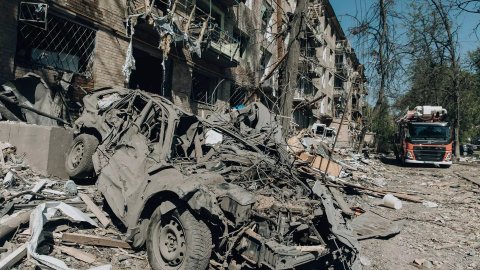
Zelensky: Russia Used 115 Missiles, Nearly 1,900 Guided Bombs and Over 3,000 Drones in a Week
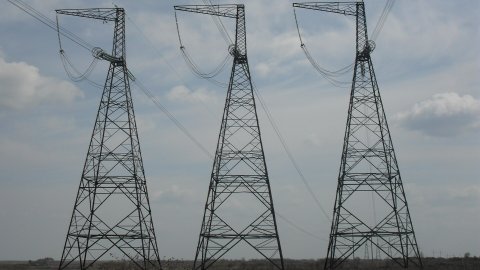
Attack on Major DTEK Energy Facility in Northern Odesa Region Leaves Some Families Without Power

Britain Threatens Sanctions on Kremlin-Linked People; Poland Ready to Hand Ukraine Ammunition

Russia says it has completed "planned exercises" in the Black Sea

MVD: Fake Riots With Prop Blood Were Being Prepared Near Presidential Office

Law Enforcers Name Another Klitschko Deputy as Suspect

Berlin Holds Protest Against War in Ukraine; EU Prepares for Possible Russian Halt of Gas Supplies
North Korea Fires Ballistic Missile Over Record Distance in Five Years
Irish Fishermen Force Russia to Postpone Naval Drills

US sanctions in case of invasion of Ukraine could completely destroy Russia's economy, NYT reports
