
Scientists Find Huge Black Hole in Our Galaxy
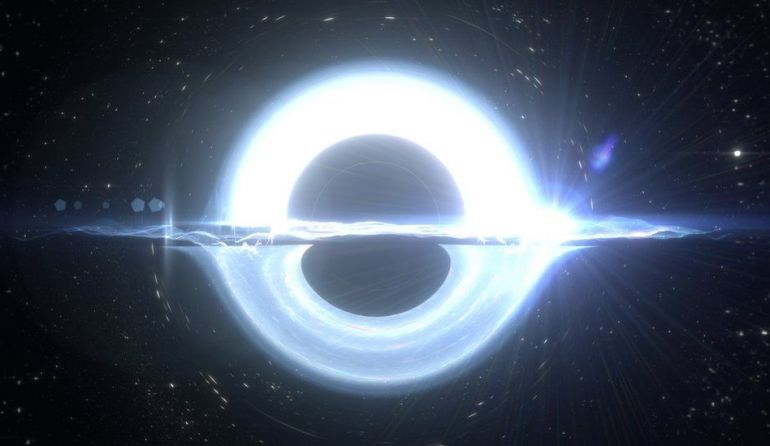
It should not have existed at all under any laws of stellar evolution.
Chinese astronomers have discovered a huge black hole in our galaxy, whose existence does not fit any of the theories of stellar evolution. Reports the BBC.
The object, named LB-1, is located about 15,000 light years from Earth and belongs to stellar-mass black holes. It is a former star that exhausted its thermonuclear fuel and sharply collapsed under the action of its own gravity.
During gravitational collapse, a star explodes and loses most of its mass. That is, if the calculations are to be believed, a black hole formed as a result of such compression can be no more than about 20 times heavier than the Sun. However, the mass of LB-1 exceeds the solar mass by about 70 times, and scientists cannot explain how this is possible.
The lead professor on this black hole said: “Black holes of this mass should not exist in our galaxy at all, according to most of the star evolution models established today. LB-1 weighs twice as much as we considered possible. Now theorists will have to work hard to explain how it formed.”
At present, Chinese scientists have 2 main theories:
- LB-1 was formed not as a result of the gravitational collapse of a single star, but as a result of the merger of 2 less massive black holes, the existence of which can be explained within existing models.
- After the explosion, most of the ejected matter for some reason was not carried away by the stellar wind as usual, but fell back onto the star, turning it into a black hole. In theory this is possible, but so far astronomers have never encountered such cases.
However, LB-1 is not the largest black hole in principle, but only the most massive in its class. Supermassive black holes can be billions of times heavier than the Sun, but they have a completely different formation mechanism.
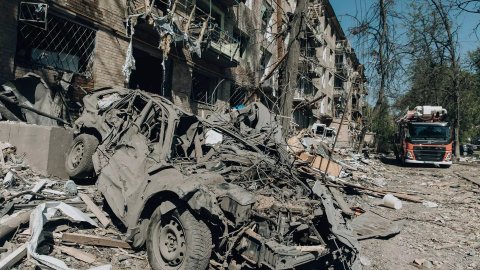
Zelensky: Russia Used 115 Missiles, Nearly 1,900 Guided Bombs and Over 3,000 Drones in a Week
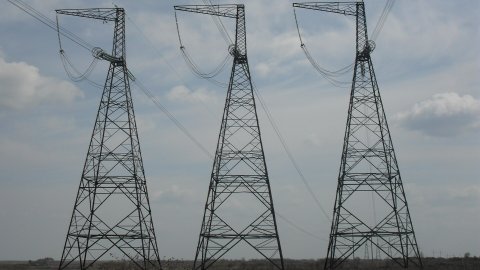
Attack on Major DTEK Energy Facility in Northern Odesa Region Leaves Some Families Without Power

Britain Threatens Sanctions on Kremlin-Linked People; Poland Ready to Hand Ukraine Ammunition

Russia says it has completed "planned exercises" in the Black Sea

MVD: Fake Riots With Prop Blood Were Being Prepared Near Presidential Office

Law Enforcers Name Another Klitschko Deputy as Suspect

Berlin Holds Protest Against War in Ukraine; EU Prepares for Possible Russian Halt of Gas Supplies
North Korea Fires Ballistic Missile Over Record Distance in Five Years
Irish Fishermen Force Russia to Postpone Naval Drills

US sanctions in case of invasion of Ukraine could completely destroy Russia's economy, NYT reports
