
NASA Engineer Describes Engine That Would “Defy the Laws of Physics”
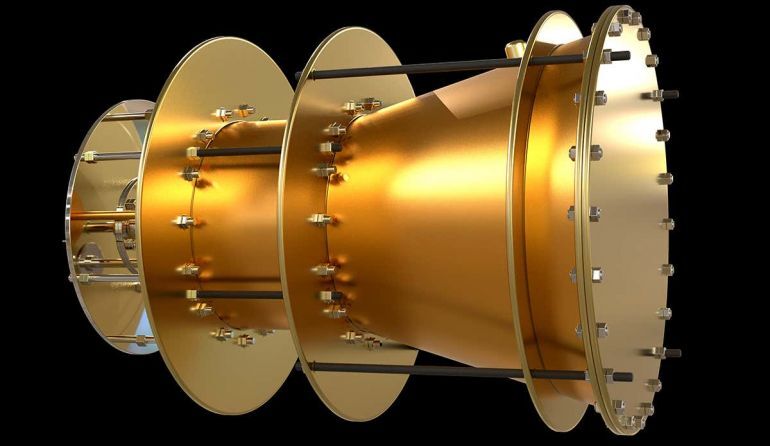
And could accelerate to 99% of the speed of light.
NASA engineer David Burns described his idea for a new rocket engine that could accelerate to nearly the speed of light without fuel. The New Scientist reports this.
Burns calls the concept a “spiral engine” and claims it could accelerate on its own to 99% of the speed of light given enough time and energy. To get around the limits of the laws of physics, David used a loophole in the theory of relativity.
The engineer's proposal involves using a particle accelerator that would constantly accelerate ions to near-light speed and then slow them down. In this case, the engine would produce thrust.
However, realizing such a concept requires a structure 200 meters long and 12 meters in diameter. The engine would also need a powerful energy source. Because of all this, the “spiral engine” needs a frictionless environment or a vacuum to work. Yes, the engine could accelerate on its own, but not quickly at all; it could take decades.
Many scientists in the past have proposed ideas for fuel-free engines, but none ever made it to practice.
David Burns developed his concept in his spare time and without NASA support. The scientist is not sure the idea will work in practice, but is convinced it deserves at least to be tested.
Earlier, for the first time in history, two women went out into open space at the same time.

Zelensky: Russia Used 115 Missiles, Nearly 1,900 Guided Bombs and Over 3,000 Drones in a Week
Attack on Major DTEK Energy Facility in Northern Odesa Region Leaves Some Families Without Power

Britain Threatens Sanctions on Kremlin-Linked People; Poland Ready to Hand Ukraine Ammunition

Russia says it has completed "planned exercises" in the Black Sea

MVD: Fake Riots With Prop Blood Were Being Prepared Near Presidential Office

Law Enforcers Name Another Klitschko Deputy as Suspect

Berlin Holds Protest Against War in Ukraine; EU Prepares for Possible Russian Halt of Gas Supplies
North Korea Fires Ballistic Missile Over Record Distance in Five Years
Irish Fishermen Force Russia to Postpone Naval Drills

US sanctions in case of invasion of Ukraine could completely destroy Russia's economy, NYT reports
