
Record Frosts: Forecasters Predict an Extreme Winter for Ukraine
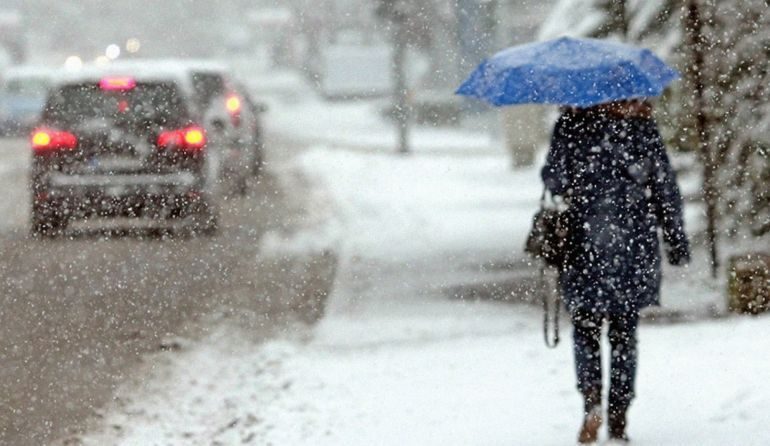
Heavy snowfall is expected.
This winter, in January and February 2020, Ukraine is expected to face record frosts. It has not been this cold in almost 30 years.
According to AccuWeather's annual forecast for Europe, the most severe cold will cover the territory from Finland to Ukraine, brought by winds from Siberia, reports the Ukrainian Climate Network.
In January and February 2020, temperatures may drop to extreme lows. Heavy snowfall is also expected.
At the same time, meteorologists note that it is difficult to give precise data, as the climate is unstable, but future winters will mostly be warm and rainy, with waves of extreme frost.
“Previously, the Arctic provided us with stable winters. In polar latitudes, masses of cold air circulated around the Arctic Ocean, forming a circumpolar vortex (a kind of belt) that separated very cold polar air from air masses of temperate latitudes,” said the Ukrainian Climate Network.
“Now the Arctic is warming rapidly, the circumpolar vortex is weakening, and therefore warm air from the south often breaks into the Arctic, displacing cold air from there, and Arctic frosts begin in temperate latitudes. Remember how the US and Canada froze this winter. Something like that could easily happen to us,” the organization noted.
According to climatologist Svitlana Krakovska, a participant in the UN Intergovernmental Panel on Climate Change, if previously the weather in Ukraine was mainly shaped by air masses moving from west to east, from the ocean, creating a fairly mild climate, now dry hot air from the south or cold air from the Arctic increasingly reaches these territories. That is precisely why waves of extreme heat or cold occur so often.
“Such sharp fluctuations are a disaster both for our health and for our cities,” said the climatologist. “Buildings, roads and utilities deteriorate much faster, and so does agriculture. Moreover, these ‘jumps’ are usually accompanied by tornadoes, squalls and other dangerous phenomena.”
On Monday, October 14, meteorologist Natalia Didenko said that warm weather in Ukraine will last another week.
A white-tailed eagle named Viktor was sent flying over the Alps with an attached camera to capture the effects of global warming.

Zelensky: Russia Used 115 Missiles, Nearly 1,900 Guided Bombs and Over 3,000 Drones in a Week
Attack on Major DTEK Energy Facility in Northern Odesa Region Leaves Some Families Without Power

Britain Threatens Sanctions on Kremlin-Linked People; Poland Ready to Hand Ukraine Ammunition

Russia says it has completed "planned exercises" in the Black Sea

MVD: Fake Riots With Prop Blood Were Being Prepared Near Presidential Office

Law Enforcers Name Another Klitschko Deputy as Suspect

Berlin Holds Protest Against War in Ukraine; EU Prepares for Possible Russian Halt of Gas Supplies
North Korea Fires Ballistic Missile Over Record Distance in Five Years
Irish Fishermen Force Russia to Postpone Naval Drills

US sanctions in case of invasion of Ukraine could completely destroy Russia's economy, NYT reports
