
Red Snow in Antarctica: Ukrainian Polar Researchers Find the Cause
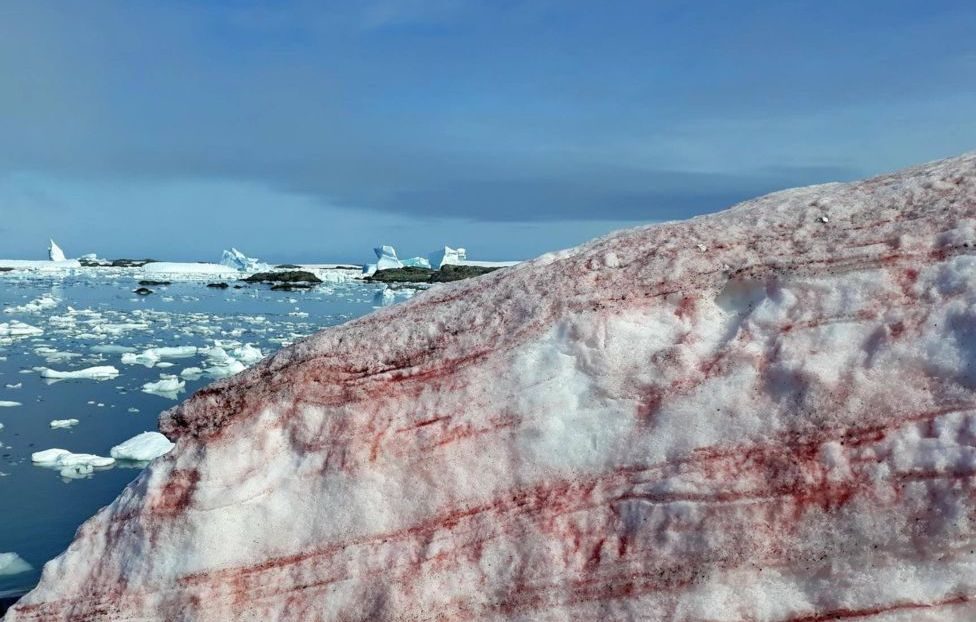
Algae, climate change and summer in Antarctica.
Snow around the Ukrainian Akademik Vernadsky Antarctic station has turned red. For several weeks, red and crimson patches have surrounded this area in Antarctica. This is reported by BBC.
Ukrainian scientists have found out where this snow came from and why it has this color. It turns out that such coloring is produced by microscopic snow algae — Chlamydomonas nivalis. The Ministry of Education reported on the research conducted by Ukrainian polar explorers.
The algae reproduce by spores, which are not afraid of extreme temperatures and remain in the snow throughout the long winter. When weather conditions become favorable — and right now it is summer in Antarctica — the spores begin to germinate. Since, in addition to the green pigment chlorophyll, their cells also contain a red carotene layer, red spots resembling raspberry jam appear on the snow.
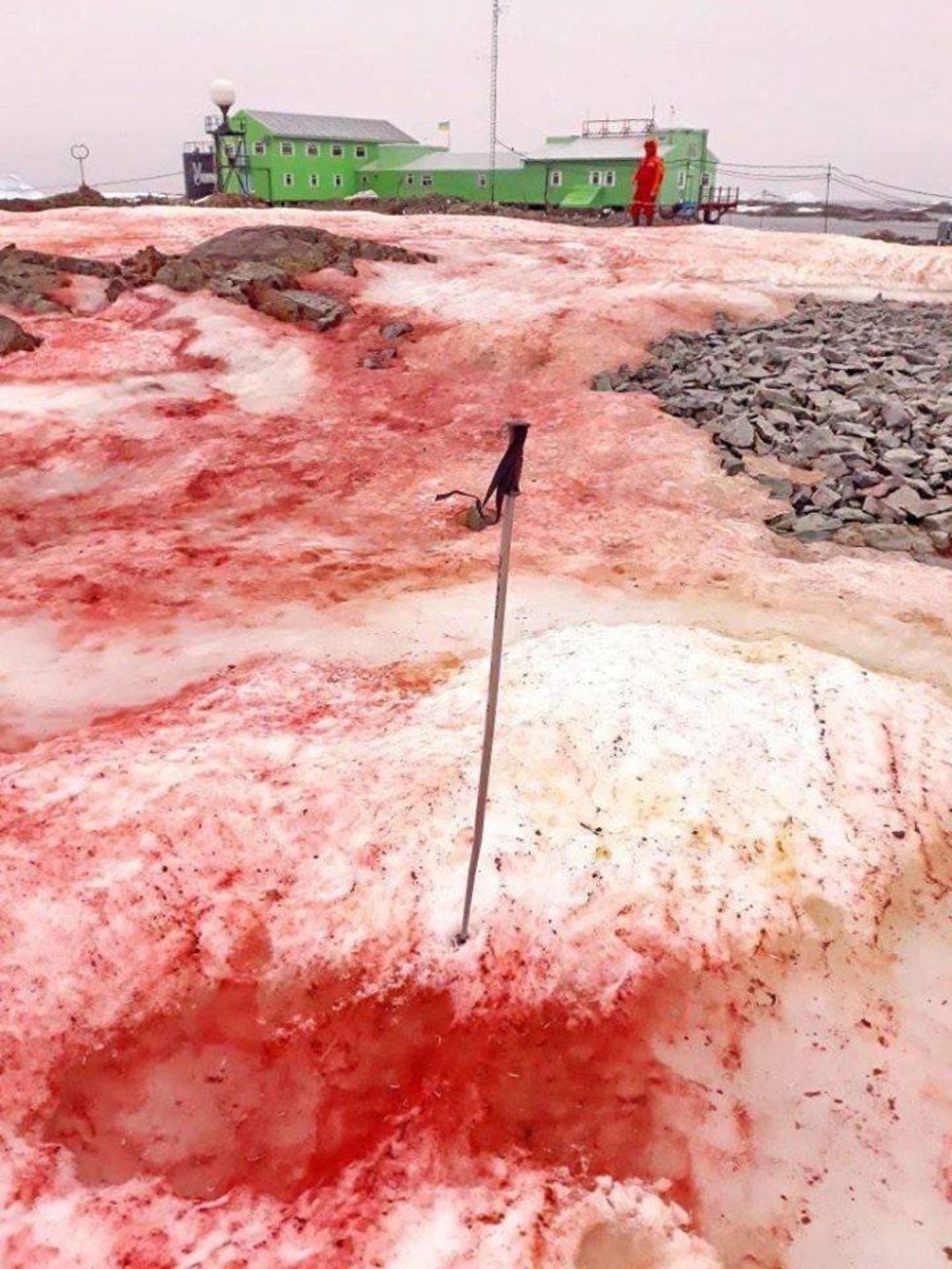
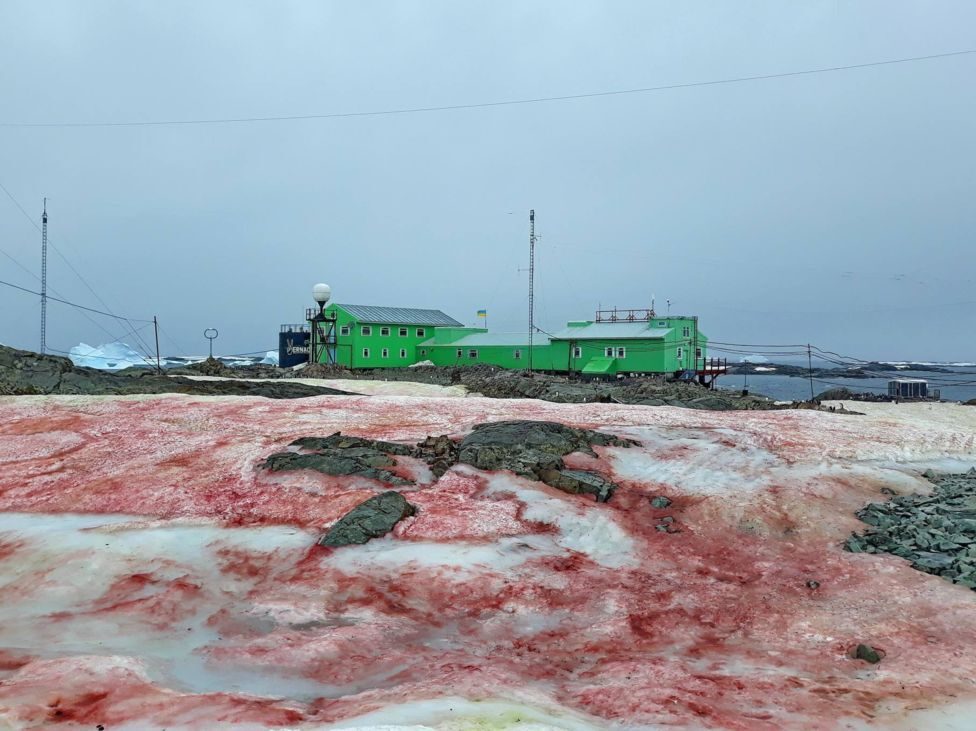
It is this layer that protects the algae from ultraviolet radiation. The «blooming» of the snow also contributes to climate change. Because of the red-crimson color, the snow reflects less sunlight and melts faster. As a result, even more bright algae appear on the snow.
With the onset of cold weather, the chlamydomonas prepares for winter dormancy and the «blooming» stops.
The Ukrainian Akademik Vernadsky station is located on Galindez Island, which belongs to the Argentine Islands archipelago near the elongated Antarctic Peninsula. On February 6, 1996, Great Britain handed it over to Ukraine. At present, the 24th scientific expedition is working at the station.
On February 9, 2020, scientists in Antarctica recorded a new temperature record — +20 degrees Celsius.
Zelensky: Russia Used 115 Missiles, Nearly 1,900 Guided Bombs and Over 3,000 Drones in a Week
Attack on Major DTEK Energy Facility in Northern Odesa Region Leaves Some Families Without Power

Britain Threatens Sanctions on Kremlin-Linked People; Poland Ready to Hand Ukraine Ammunition

Russia says it has completed "planned exercises" in the Black Sea

MVD: Fake Riots With Prop Blood Were Being Prepared Near Presidential Office

Law Enforcers Name Another Klitschko Deputy as Suspect

Berlin Holds Protest Against War in Ukraine; EU Prepares for Possible Russian Halt of Gas Supplies
North Korea Fires Ballistic Missile Over Record Distance in Five Years
Irish Fishermen Force Russia to Postpone Naval Drills

US sanctions in case of invasion of Ukraine could completely destroy Russia's economy, NYT reports
