
Scientists Find Plants Emit Sounds Under Stress

Under stress, plants "scream."
Plants under stress can emit ultrasound. This conclusion was reached by Israeli scientists led by Itzhak Chait of Tel Aviv University. They were able to record sound vibrations coming from plants left without water or with damaged stems, according to a preprint of the study results published on December 2 in the bioRxiv repository.
It is known that plants can respond to stress with visual or olfactory signals, for example — changes in color, shape or smell. However, according to the authors of the study, no one had previously fully studied or recorded their sound response.
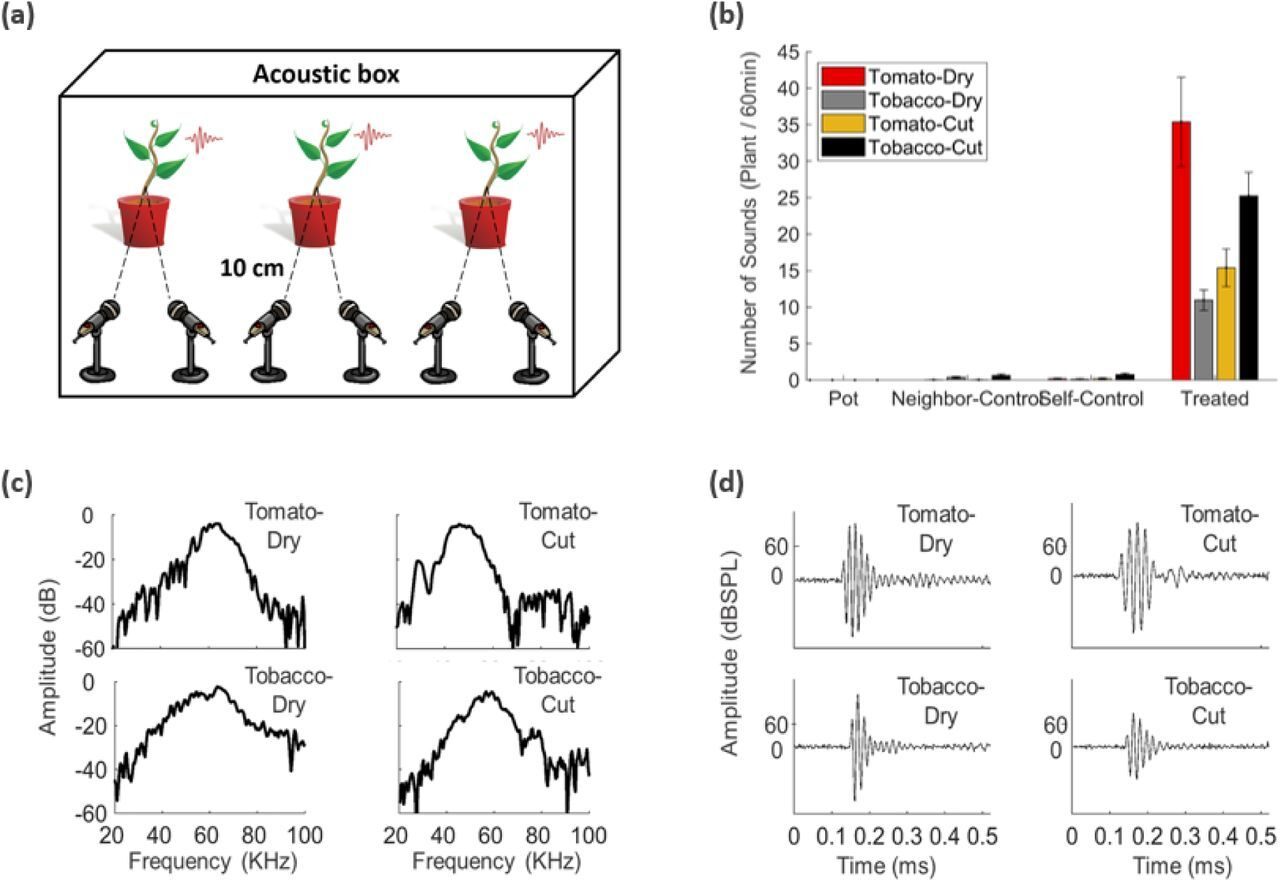
The scientists decided to conduct an experiment on common tobacco and tomato. Several plants were placed in a transparent flask, and nearby, 10 cm away, a device was installed that captured and recorded ultrasound with a frequency of 20 to 150 kHz — a sound that the human ear cannot perceive.
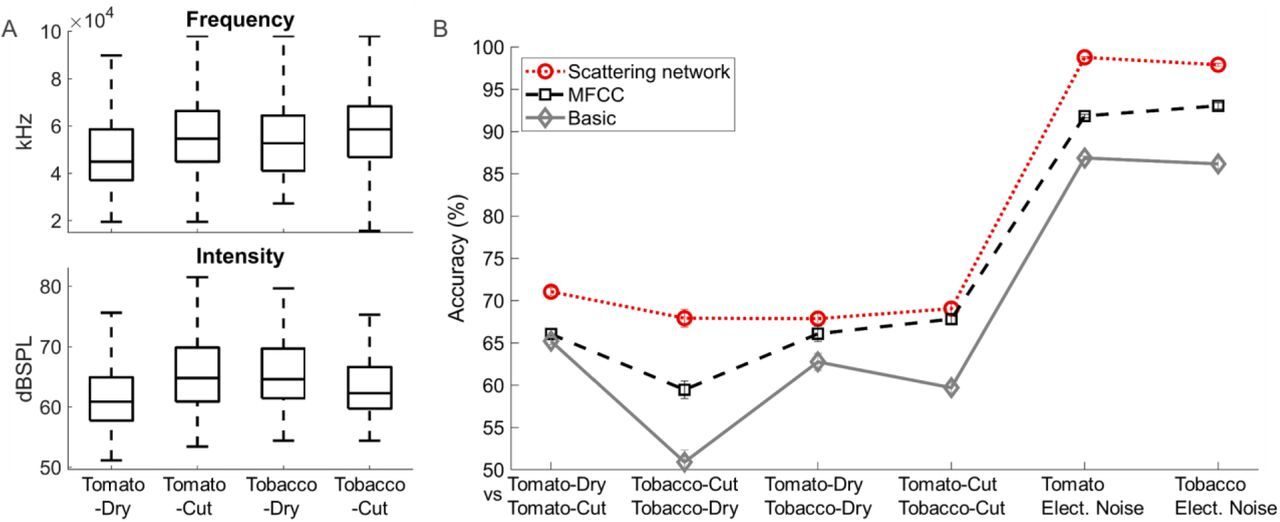
The test plants were deprived of water and their stems were damaged, thus putting them under stress. As it turned out, when under stress, both tobacco and tomato began to make noise. The authors of the study claim that in the absence of moisture they recorded irregular sounds resembling distinctive "screams" at a frequency of 49.6 kHz from the tomato and 54.8 kHz from the tobacco, while when the stems were cut, the plants made noise at frequencies of 57.3 kHz and 57.8 kHz. The sound pressure level reached 60-65 dB. Tomatoes produced more of these individual sounds than tobacco.
Scientists believe this noise may be the result of the formation and collapse of air bubbles in the xylem, the main water-conducting tissue of land vascular plants. Humans cannot distinguish such sounds, but other plants or insects probably can.

Earlier, American scientists found that houseplants do not have the air-purifying ability that people often attribute to them.

Zelensky: Russia Used 115 Missiles, Nearly 1,900 Guided Bombs and Over 3,000 Drones in a Week
Attack on Major DTEK Energy Facility in Northern Odesa Region Leaves Some Families Without Power

Britain Threatens Sanctions on Kremlin-Linked People; Poland Ready to Hand Ukraine Ammunition

Russia says it has completed "planned exercises" in the Black Sea

MVD: Fake Riots With Prop Blood Were Being Prepared Near Presidential Office

Law Enforcers Name Another Klitschko Deputy as Suspect

Berlin Holds Protest Against War in Ukraine; EU Prepares for Possible Russian Halt of Gas Supplies
North Korea Fires Ballistic Missile Over Record Distance in Five Years
Irish Fishermen Force Russia to Postpone Naval Drills

US sanctions in case of invasion of Ukraine could completely destroy Russia's economy, NYT reports
