
Anti-vaccination campaign in Ukraine, delivery and repair of weapons for militants in ORDLO and intimidation of lawyers for relatives of MH17 victims: latest on Russia's foreign policy
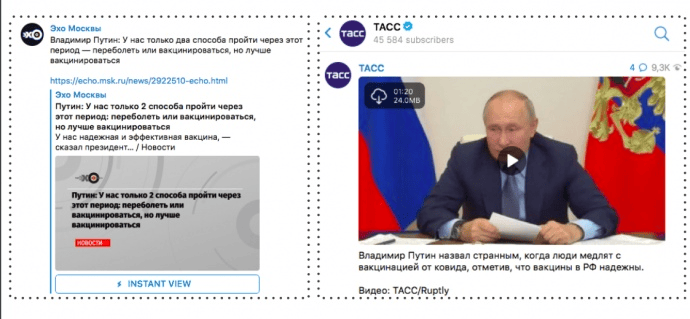
At the same time, the same sources are running an intensive campaign promoting COVID-19 vaccination inside Russia itself.
The National Security and Defense Council has identified the source of anti-vaccination sentiment in Ukraine: according to the investigation, the Russian Federation is deliberately carrying out a corresponding disinformation campaign to increase the incidence and mortality from COVID in Ukraine.
Meanwhile, Ukrainian intelligence has learned how Russia repairs and delivers weapons to militants in ORDLO, and lawyers for relatives of victims of the Malaysia Airlines MH17 crash, shot down in 2014 by Russian-backed terrorist forces from occupied Donetsk region territory, have reported 'intimidation' by Russia.
Anti-vaccination campaign in Ukraine
The NSDC Center for Countering Disinformation released a report based on an analysis of the information space of Ukrainian Telegram channels and confirmed a Russian information operation aimed at reducing vaccination rates and increasing the number of deaths.
«A large-scale, prolonged disinformation operation threatens the lives and safety of Ukrainians, and the number of victims will grow if necessary measures to counter it in the information space are not taken», the NSDC Center for Countering Disinformation said.
The Center for Countering Disinformation asks Ukrainians to pay attention to the success of vaccination in Morshyn as a clear example of overcoming disinformation about vaccines and the virus itself.
In Morshyn, more than 75% of residents have been vaccinated, and the number of fatal and severe cases is much lower than in other Ukrainian cities.
The report shows how messages about allegedly negative consequences of vaccination are spread through a network of mass media, in particular social networks and messengers.
Attention is drawn to popular so-called «Ukrainian political Telegram channels» linked to Russia. They promote destructive narratives through both posts and bots in the comments under them.
The SBU also confirms that all these channels are administered from Russia.
Telegram channels promote destructive narratives about vaccination in Ukraine, while they are administered by Russia, which has a diametrically opposite agenda: encouraging Russian citizens to get vaccinated and assuring them of the need for vaccination.
For example, the Telegram channel «Spletnitsa» was seen spreading disinformation in Ukraine aimed at discrediting vaccines.
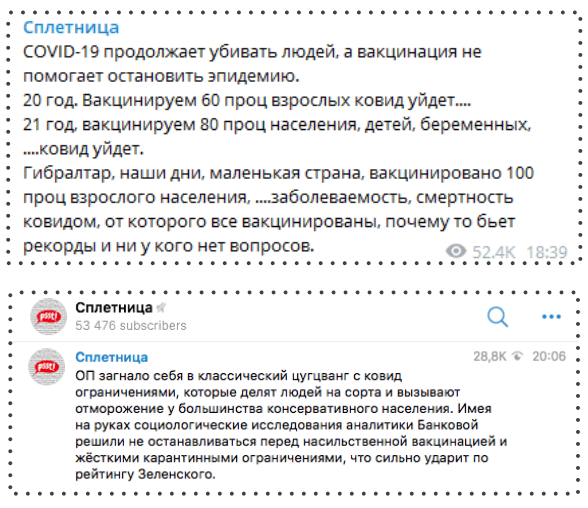
The channel also cites a study from Johns Hopkins University in its fakes. In fact, it presents statistics for a YouTube channel called Joel Smalley. There is no such employee at Johns Hopkins University.
On the other hand, if you look at Telegram channels administered by Russia for residents of ORDLO and occupied Crimea, the narratives are diametrically opposed.
The posts inform the population about the need for vaccinations, mock anti-vaxxers, and involve 'opinion leaders' and bloggers to promote vaccines. Positive vaccination advice is also promoted in Russia.
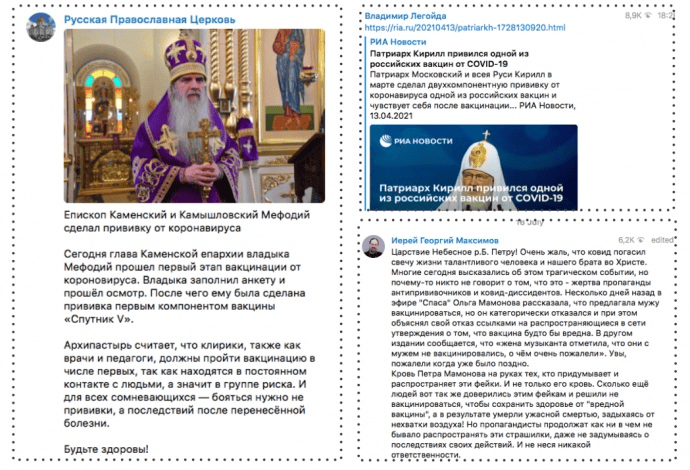
According to the report, 'one of the churches' plays a significant role in spreading anti-vaccination ideas — this refers to the ROC and the UOC MP.
The ROC in Ukraine opposes vaccines and organized a rally outside the Verkhovna Rada on October 19, where participants carried placards with slogans such as: 'Vaccination kills', 'No to medical experiments. Let's protect our children. Vaccination is a sin', and the like.
However, this same church, when addressing a Russian audience, on the contrary calls for vaccination, distributes information about types of vaccines, debunks myths associated with them, and notes that vaccination is not a sin.
Intimidation of lawyers for relatives of MH17 crash victims
Lawyers for relatives of MH17 victims have been intimidated. The Dutch National Coordinator for Counterterrorism and Security (NCTV) assumes this is being done on behalf of Russia, reports Dutch outlet RTL Nieuws.
The NCTV has offered the lawyers involved to join a security program.
In recent months there have been more incidents in which lawyers were harassed, including at their private homes. This is likely related to the right to speak that relatives had during the MH17 trial last month.
In early September the proceedings resumed with the right to speak for the next of kin. For almost three weeks they were allowed to explain to the court what the MH17 flight crash of July 17, 2014 meant to them.
They were assisted by a group of lawyers united in the so-called Legal Aid Group (RBT). These lawyers have been involved in the criminal case for many years and have access to case materials provided by the prosecution. This describes the criminal investigation, and the file now numbers more than 60,000 pages.
Eight RBT members were invited to the National Coordinator for Security and Counterterrorism (NCTV) on September 22. During an extensive presentation, the NCTV said Russia had tried in various ways to obstruct and intimidate the lawyers. The NCTV then offered to include the lawyers in the security program.
Some lawyers described suspicious incidents that have occurred recently.
At least two of them noticed they were followed home after a court hearing at Schiphol, where the MH17 trial is held.
Another lawyer saw two suspicious men in sunglasses near his home. In total, the NCTV was informed of four incidents.
Delivery of weapons to militants in ORDLO
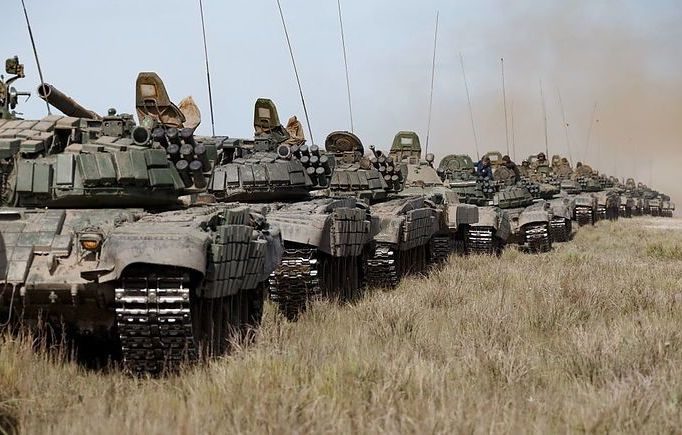
As reported recently by Ukraine's Military Intelligence, the Russian Armed Forces command continued in October to build up the combat capability of the operational grouping of Russian occupying forces in the temporarily occupied territory of Donetsk and Luhansk regions.
In particular, more than 10 units of infantry fighting vehicles and armored personnel carriers were returned to the so-called 1st (Donetsk) and 2nd (Luhansk) army corps after repairs on Russian territory.
In addition, more than 5.5 thousand tonnes of fuel were delivered, along with new batches of weapons and ammunition, including anti-tank guided missiles, ammunition for 122-mm multiple rocket launcher systems and 152-mm artillery systems, cartridges for heavy machine guns and sniper rifles, OZM-72 and MON-52 anti-personnel mines, and Granat-1 drones.
In addition, to restore armored combat vehicles, tank engines, spare parts and batteries were brought into the enemy's repair and recovery units from Russian territory.

Russian Attacks in Dnipropetrovsk Region: Two Killed, Seven Injured

Defense Forces Strike Four Russian Drone Control Points in Past Day, Including in Berdiansk

Britain Threatens Sanctions on Kremlin-Linked People; Poland Ready to Hand Ukraine Ammunition

Russia says it has completed "planned exercises" in the Black Sea

MVD: Fake Riots With Prop Blood Were Being Prepared Near Presidential Office

Law Enforcers Name Another Klitschko Deputy as Suspect

Berlin Holds Protest Against War in Ukraine; EU Prepares for Possible Russian Halt of Gas Supplies
North Korea Fires Ballistic Missile Over Record Distance in Five Years
Irish Fishermen Force Russia to Postpone Naval Drills

US sanctions in case of invasion of Ukraine could completely destroy Russia's economy, NYT reports
