
Baltic States to Send Missile Systems to Ukraine. Germany Refuses to Grant Estonia Permission to Transfer Weapons
Estonia's request is being considered in Germany and is "undergoing interdepartmental coordination."
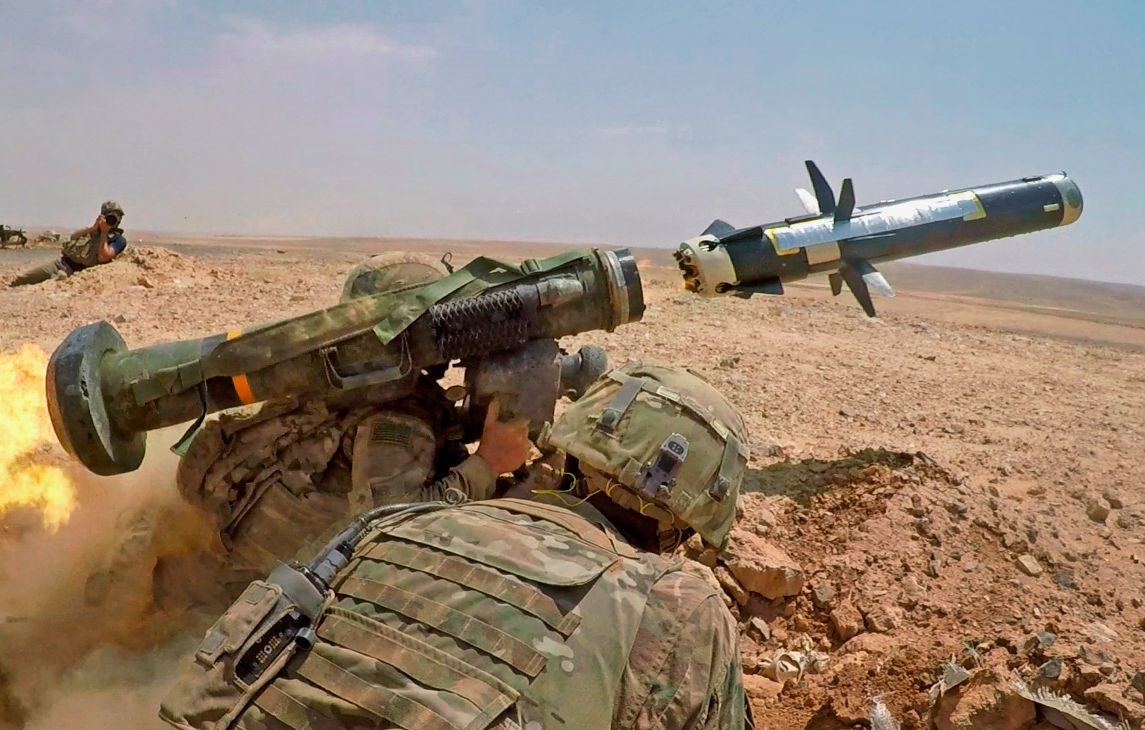
In response to Russia's aggressive actions, Latvia, Lithuania and Estonia have decided to provide Ukraine with Stinger air defense missiles and Javelin anti-tank missiles.
The defense ministries' statement notes that the Baltic states have decided to respond to Ukraine's needs and provide it with additional defense assistance, taking into account the increased military pressure exerted by Russia on Ukraine and its borders.
"Estonia will provide Javelin anti-tank missiles, while Latvia and Lithuania will provide Stinger air defense missiles and related equipment to strengthen Ukraine's defense military potential," the message says.
This assistance is being provided after the US government granted permission to transfer American-made equipment to a third party.
The statement says: "We sincerely hope that Ukraine will not face the need to use this equipment, and we call on the Russian Federation to refrain from aggressive and irresponsible behavior."
Germany has received a request from Estonia for approval to supply howitzers to Ukraine. A spokesperson for the German Defense Ministry said the request is being considered and is "undergoing interdepartmental coordination."
The process must be coordinated with Finland. Estonian authorities previously said they intend to send dozens of Javelin anti-tank missile systems and 122-mm howitzers to Ukraine.
The howitzers were produced back when the German Democratic Republic existed, and in the 1990s the authorities of unified Germany sold them to Finland.
Official Berlin has repeatedly refused to supply weapons to Ukraine amid tense relations between Kyiv and Moscow. The German government's position is as follows: lethal weapons will not be supplied, as official government spokesman Steffen Hebestreit said.
Germany's refusal also applies to defensive weapons if they can be used as lethal ones.
Sources The Wall Street Journal citing Estonian and German officials, report that Germany is refusing to grant Estonia permission to export German weapons to Ukraine.
The problem is reportedly related to the export of the D-30 howitzer, which fires 122-mm shells about 20 km. Berlin refuses to allow a third country to send artillery to Ukraine because this weapon was made in Germany.
The howitzers, produced in the Soviet Union, were deployed in former East Germany. After Germany's reunification in the 1990s, Berlin exported the weapons to Finland, which then transferred them to Estonia in 2009.
German officials said the deadlock is the result of long-standing policy on exporting weapons to tense regions. A representative of the Estonian government said its government is still trying to persuade Germany to change its mind.
The German defense minister said Berlin currently rules out arms supplies to Ukraine amid a possible Russian invasion.
Christine Lambrecht confirmed that Germany is sticking to its policy of refusing to supply lethal weapons to conflict zones. According to her, Germany supports Ukraine by other means.
Christine Lambrecht
German Defense MinisterA field hospital will be handed over in February, including the necessary training, with Germany co-financing it in the amount of €5.3 million. We have also supplied ventilators. And we are treating seriously wounded Ukrainian soldiers in our Bundeswehr hospitals. So we are supporting Kyiv. Now we must do everything possible to de-escalate. Supplying weapons at this point is useless — that is the view of the federal government.
She noted that Germany is making every effort to prevent a Russian invasion. Lambrecht said that Russia has no right of veto over any country joining NATO and no right to challenge the membership of Eastern European countries in the alliance.
"When more than 100,000 Russian soldiers are concentrated right at the border with Ukraine, that is an extremely threatening situation. We are alarmed, we see the danger — and we are doing everything possible to prevent it. <...> Any sovereign state that shares our values can apply for membership. However, beyond these red lines there is a strong desire on the Western side to negotiate with Russia and take its interests into account."
The fact that Estonia's Defense Ministry intends to provide Ukraine with anti-tank weapons became known as early as December 2021. Estonia has been providing assistance to Ukraine since 2014, after Russia's attack.
Peeter Kuimet
head of the International Cooperation Department of the Defense MinistryWe have helped train Ukrainian military medics, artillerymen, special forces fighters, and also in exchanging information with our servicemen.
Because Russian troops will again concentrate on the border with Ukraine, Estonia plans to significantly increase its support.
"In principle, Estonia has decided at the level of its Ministry of Defense that we want to support Ukraine with weapons and ammunition in the current difficult security situation," Kuimet said.
Estonia received Javelin missiles from the US: it bought some and received others as military aid. The cost of one missile ranges from €75,000 to €130,000 depending on contract terms and the specific type of missile. Estonia plans to send Ukraine several dozen such missiles.
In addition to sending weapons and ammunition, Estonia also plans to increase so-called soft assistance to Ukraine. Back in 2020 (before the situation on Ukraine's borders escalated), the Defense Ministry launched a joint project with Germany.
Kuimet said: "One Estonian company is preparing a mobile field hospital complex for the Ukrainian army using funds allocated by Germany." According to him, the role of the ministry and Estonian defense forces is to coordinate the project and train Ukrainian military medics to work with this complex.

Russian Attacks in Dnipropetrovsk Region: Two Killed, Seven Injured

Defense Forces Strike Four Russian Drone Control Points in Past Day, Including in Berdiansk

Britain Threatens Sanctions on Kremlin-Linked People; Poland Ready to Hand Ukraine Ammunition

Russia says it has completed "planned exercises" in the Black Sea

MVD: Fake Riots With Prop Blood Were Being Prepared Near Presidential Office

Law Enforcers Name Another Klitschko Deputy as Suspect

Berlin Holds Protest Against War in Ukraine; EU Prepares for Possible Russian Halt of Gas Supplies
North Korea Fires Ballistic Missile Over Record Distance in Five Years
Irish Fishermen Force Russia to Postpone Naval Drills

US sanctions in case of invasion of Ukraine could completely destroy Russia's economy, NYT reports
