
“Black Mirror” in reverse: how technology will make people kinder
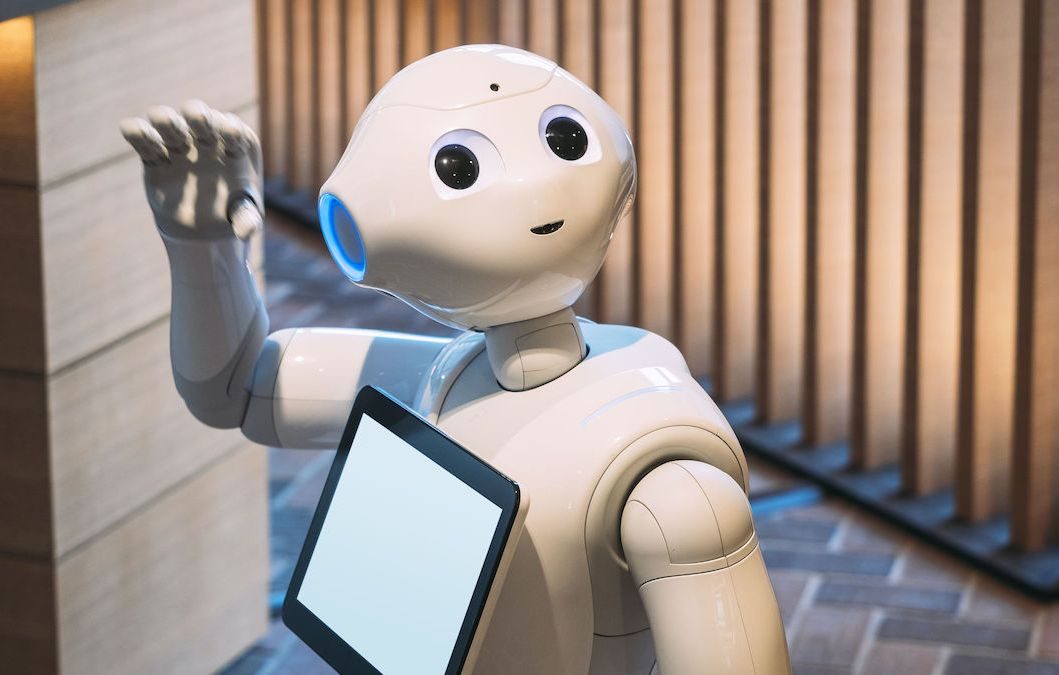
Caretaker bots and podcasts for empathy.
Journalist Caitlin Ugolik Phillips spent several years talking to the creators of “humane” apps: VR films about the war in Syria, chatbots able to detect depression in the person they are talking to, and programs that teach children empathy. Based on these interviews she wrote the book “The Future of Feeling: Building Empathy in a Tech-Obsessed World.” Technologies that awaken our worst impulses are giving way to services that make us the best versions of ourselves. Here is the gist.
There are two types of empathy: cognitive (when we understand what another person is feeling) and affective (when we feel alongside them). In 2018 PsychTests assessed the link between empathy levels in 9,000 people and 31 parameters, including their moral resilience, ability to resolve conflicts, ability to express their feelings, etc. People who consider themselves empaths, that is, capable of actively sympathizing with others, turned out to be happier, more motivated and more optimistic. Non-empaths scored higher on only one parameter: “desire for others’ approval.” It is no surprise that social networks, where the desire for approval is built into their main features, “like” and “share,” quickly became a very unpleasant place.
Even a non-existent social media user can make us angry. Melanie Green of the State University of New York at Buffalo concluded that people find it emotionally difficult to discuss issues on which there is no general consensus. For example, Americans generally support veterans’ rights and can discuss this topic civilly; discussing the use of stem cells is another matter. Green would voice a simple or controversial topic and then ask the person to rate a computer-generated face of their “interlocutor.” Faces shown after controversial questions (for example, on legalizing same-sex marriage) seemed more threatening to people. It is no surprise that we so easily get drawn into arguments even with empty fake accounts.
TikTok does not help communication. Teachers of younger zoomers (i.e., those born at the end of the last decade) complain that children who constantly use apps like Musical.ly struggle to communicate with each other without a smartphone. Moreover, when writing messages or using photo-sharing apps, they put the number of messages above their content. This drive for constant self-expression is even built into the streaks feature in Snapchat, which motivates the user not to let their account sit idle.
Empathy among teenagers is declining. In 2010 Sara Konrath of the University of Michigan analyzed the responses of 14,000 college students and concluded that their empathy levels were 40% lower than those of people of the same age in 1979. However, the researcher did not conclude that the technology boom was to blame, but journalists quickly picked up the topic and accused corporations of brainwashing children. Still, this theory has its supporters in academia. Sherry Turkle of MIT became alarmed long before social networks appeared, when she noticed how in the 1990s children treated Furby toys, talking robots resembling chicks. Children often perceived them as living creatures, yet could easily break them.
Technology has to be reshaped because of abuse. Brisa Ayub, former educational content producer at Common Sense Media, says the company has to change the terms of use of its products to account for new loopholes that children find. They pick up new forms of bullying from adults and from each other. Among them, playing on peers’ FOMO (fear of missing out) is typical: children don’t invite classmates to a party, and then tag them in photos from the event on social media. Even the coveted “like” becomes a tool of pressure when someone goes through another person’s page, liking every post. This signals: “I’m watching you.”
But social networks are also tools for “educating feelings”. And not only schoolchildren can be educated. For example, YouTube blogger Dylan Marron became famous for unboxing videos, only instead of purchases, he “unboxed” concepts like toxic masculinity. Marron quickly gained a group of personal haters who wished him dead in the comments. Then he decided to talk personally with one of them and gave one of the commenters his phone number. “As you remember, I’m a piece of shit,” he began. “I have to take back my words. I didn’t mean to call you that,” the interlocutor replied. This is how Marron’s podcast “Conversations with People Who Hate Me” sounds. The blogger does not manage to persuade everyone, but he holds a civilized conversation with almost every guest. All it took was moving from the anonymous space to a one-on-one conversation.
Podcasts by themselves provoke empathy. And it is not only that they tell stories (and people who read or listen to more stories score higher on empathy tests). A University of California experiment showed that people’s voices evoke more sympathy in us than their speech in written form. People were asked to read, listen to and watch monologues on complex topics like abortion or the war in Afghanistan. It turned out that the most humane speakers, in the subjects’ view, were the ones they only heard. The same worked with the voices of the 2016 US presidential candidates: without seeing the speaker, people perceived him as a more pleasant and intelligent person, even if they disagreed with his platform. In another study, people heard or saw two women mimicking each other. Audio evoked more sympathy than audio plus video. There is something in the voice that provokes empathy to a greater degree than watching facial expressions, and even more than reading text. But a number of startups want to make text-based discussions more humane too.
Neural networks will help to read text “more deeply”. For example, the Faciloscope app uses an algorithm that identifies three basic “rhetorical patterns” in sentences: setting (when people set rules for the conversation), addressing (when they point to the relationships between participants) and inviting (when they ask someone to comment or pose a question). Having analyzed with Faciloscope the first random argument from Facebook about censorship in libraries, the journalist saw that the lion’s share of the dialogue (69%) was taken up by establishing rules. This left practically no room for a real exchange of opinions. It is no surprise that our arguments on social networks are so unproductive.
An algorithm will determine the moment a dialogue stops being civilized. Google developed a similar tool for understanding the structure of online conversations. It is called Perspective API. Researchers from Cornell University used it to analyze 1,270 discussions on Wikipedia that went from civilized conversation to exchanging insults. They then compared them with discussions on the same topics that did not turn into “flame wars.” It turned out that if the first comment under a topic began with “you,” words of gratitude or a direct question on the subject, the discussion was far less likely to go off the rails. It is not that people agreed with each other. They could argue, but active interest in another’s opinion left no room for insults.
Another tool for studying empathy is games. The Institute for the Future (IFTF) in Palo Alto developed the multiplayer game Face the Future, aimed at teenagers. The game tells that in the future the FeelThat device will be invented, which broadcasts a person’s emotions to other people. It measures hormone levels and voice modulation, after which those around can physically feel what the FeelThat owner feels. The IFTF asked schoolchildren to come up with utopian and dystopian scenarios of how people might use such a thing. Some players thought FeelThat would help bring people closer. For example, it would “make Trump feel what an immigrant from Mexico feels.” But others asked: wouldn’t the device create new grounds for discrimination, on the basis of emotions? And wouldn’t the state be able to watch citizens more actively based on data obtained from such a program? The schoolchildren, in essence, voiced what tech enthusiasts around the world say: technologies do not instill good or bad traits in us by themselves. They only exploit existing habits.
There are “empathetic” games for younger schoolchildren too. Tinybop creates apps for the very young. For example, the game Homes lets you virtually visit homes of different peoples around the world, from an American bungalow to a Mongolian yurt. If a child turns on the webcam, then during the exploration of an unfamiliar home they will see themselves in the mirror and think about how children, essentially just like them, live on the other side of the earth. The company received warm feedback from a family of Muslim emigrants from Yemen. Their youngest daughter wanted to show new friends in the US how she had lived in her homeland, but when she searched for “homes in Yemen,” the internet produced nothing but houses destroyed by war. In the Homes app she found a modern Yemeni house similar to her own, and for the first time she was able to feel proud of her peers’ interest in her homeland. The Random App of Kindness game, in turn, lets a child virtually help a person or an animal. As it turned out in the case of 106 subjects aged ten and older, after two months of using it they were more inclined to help those around them in real life.
Virtual reality is an “empathy machine”. That is what director Chris Milk called the technology at the TED conference in 2015. Milk created the VR film “Clouds over Sidra,” in which the viewer is transported to the center of a Syrian refugee camp. The film was shown at the Davos forum, and the reaction of world leaders struck the director as impressive. When the UN began using VR to transport people to poor countries, donations doubled. VR films also appeared explaining the consequences of the Holocaust, the climate crisis and racial inequality. In one film you can be in the place of a Black teenager who is searched by police without reason. In another, you can be in the place of a girl who comes to have an abortion and is insulted by protesters (“You should have had an abortion, your mother!”). The Tow Center for Digital Journalism at Columbia University concluded that VR immersion not only evokes a more emotional response than photos or video, but also more often makes the viewer take a specific action after watching, for example make a donation.
But VR also creates space for manipulation. Mark Zuckerberg had to apologize for the ill-conceived idea of a VR walk through Puerto Rico after Hurricane Maria. Over the scenes of destruction was superimposed a cartoon avatar of Zuckerberg explaining what was happening, and for many viewers his comments sounded sarcastic. Epson Moverio augmented reality glasses can show a factory worker what will happen when he performs a certain action. On one hand, the glasses’ creators were able to put themselves in the worker’s place and help him. On the other, the boss can also “put himself in his place” and exploit the subordinate with doubled force, for example by prompting him to violate safety procedures that are not “written into” the glasses. Even the VR film by Oscar-winning director Alejandro González Iñárritu “Carne y Arena,” devoted to immigrants, came under criticism. It was called manipulative, overly alarming in its atmosphere (it presents all the dark sides of migration control) and at the same time unrealistic. For example, you can walk through a virtual character and see his beating heart.
Empathy is becoming a marketing gimmick and a mandatory part of corporate culture. The British firm The Empathy Business and Harvard Business Review publish rankings of companies with the highest levels of empathy (Facebook, Google, LinkedIn and Netflix regularly take top places in them). Assessed are not only management’s attitude to problems of discrimination or harassment, but also the ability to organize joint work in which employees listen to others’ emotions instead of “undermining” colleagues. In 2016, 20% of American employers introduced “empathy training” courses for their management.
“Empathy training” is common in large companies. Transgender entrepreneur Natalie Egan founded the startup Translator, which was originally conceived as a social network for transgender people. But many potential investors simply did not understand how the experience of such users differed from all others. So Egan turned Translator into an app that “translates” one group’s experience into a language everyone understands. The startup uses chatbots and VR technologies so that employees of client companies (including giants like McKinsey & Co) can better understand the difficulties women and minorities face in business. Because the app is anonymous, no one will feel humiliated, as during the “privilege walk,” a typical corporate training exercise where HR asks people who were born into wealthy families, are not immigrants, etc., to step forward.
Employees are even hired based on their propensity for empathy. For example, hotel chain Hyatt Hotels actively uses artificial intelligence in communicating with clients, but still needs real people when a problem arises that needs solving. When hiring new employees, Hyatt asks them to play a game developed by Pymetrics, which helps identify the necessary flexible skills. And Fidelity Investments improves its customer service with a VR simulation in which a call-center employee can virtually visit the caller’s “home,” see personally how the person lives, and how the company’s resolution of their issue will affect their daily life.
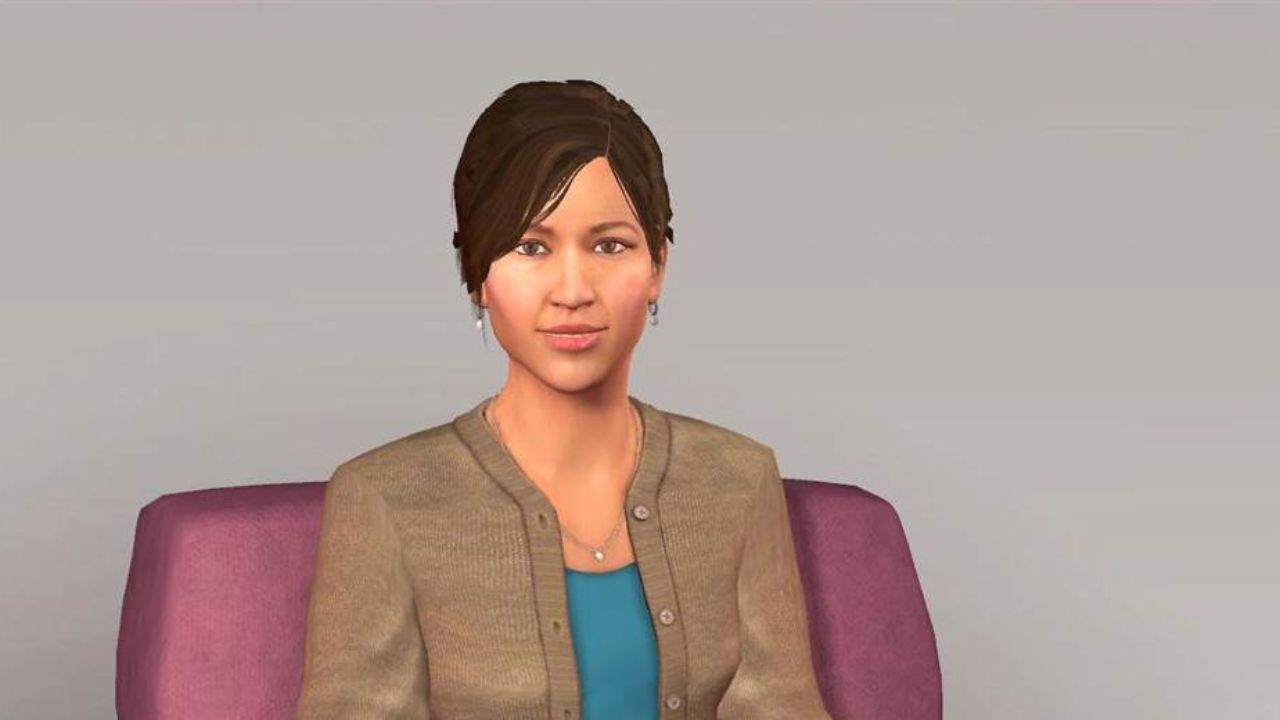
Bots are already replacing therapists: for example, Ellie appears on screen as a calm brunette in a cardigan. She talks with soldiers and detects signs of post-traumatic stress disorder. This is part of the larger SimCoach project, an interactive program for veteran reintegration. Those who had a session with “Ellie” were more open in subsequent, no longer anonymous consultations with doctors. Probably this is because she is humanlike but not too similar to a human, which lets people open up to her calmly. A robot does not evoke as much empathy as another person, but it is also not perceived as a completely soulless machine. For example, a 2012 study found that 98% of children did not want another person locked in a closet, 100% did not mind a regular broom being locked in a closet, but 46% did not want such punishment applied to the Robovie robot. Developers understand our weaknesses perfectly well and in 2019 even presented a special hugging robot, Lovot.
A bot can help parents become better. Vivienne Min created Muse, an app that studies parents’ relationships with their children and sends push notifications with suggestions for things to do together, for example hold a paper airplane contest or figure out how the plumbing in the bathroom works. If the child keeps losing, the app will advise the mom to let him win. Parents find it increasingly hard to demonstrate a model of empathy to children who spend a lot of time online, so Muse is becoming a lifesaver. The program tracks fifty cognitive constructs and knows which of them are best to develop at a given age of the child.
Finally, a bot can support you in a difficult moment. The chatbot Replika appeared after the best friend of its developer, Eugenia Kuyda, died. She uploaded into the AI all the messages the deceased had sent her, and his messages that mutual friends had forwarded to her. The resulting app does not resemble communication with another person very much, but it is excellent for reflection. You share something with Replika, and the bot asks leading questions that help you better understand yourself. The app re-teaches you to talk to yourself the way you would talk to a friend, a child or a beloved puppy, just with a little help from an algorithm.
But digital self-help is not always impersonal. For example, Robert Morris had long been used to enlisting outsiders to solve his problems. Writing down his observations and difficulties, he sent them to strangers through the outsourcing platform Amazon Mechanical Turk, where people evaluated his actions for a few cents and sometimes let him see the situation in a new light. That is how he came up with the idea of the Koko service, where people would discuss each other’s problems and virtually offer a shoulder to lean on. Sometimes it is enough to write to a stranger: “It will all be fine.” Koko’s algorithm was bought by Airbnb for their own AI developments, and Tumblr integrated Koko into its platform, so that if a user searched for things by tags like “depression” or “suicide,” the site suggested they use Koko, “an anonymous community of caring people.”
Artificial intelligence has no evil intentions, but it is capable of reflecting our evil impulses. And it is just as capable of reflecting our empathy, so everything depends on people.

Russian Attacks in Dnipropetrovsk Region: Two Killed, Seven Injured

Defense Forces Strike Four Russian Drone Control Points in Past Day, Including in Berdiansk

Britain Threatens Sanctions on Kremlin-Linked People; Poland Ready to Hand Ukraine Ammunition

Russia says it has completed "planned exercises" in the Black Sea

MVD: Fake Riots With Prop Blood Were Being Prepared Near Presidential Office

Law Enforcers Name Another Klitschko Deputy as Suspect

Berlin Holds Protest Against War in Ukraine; EU Prepares for Possible Russian Halt of Gas Supplies
North Korea Fires Ballistic Missile Over Record Distance in Five Years
Irish Fishermen Force Russia to Postpone Naval Drills

US sanctions in case of invasion of Ukraine could completely destroy Russia's economy, NYT reports
