
Guinea Coup: Gunfire, President Arrested, and Military on the Streets
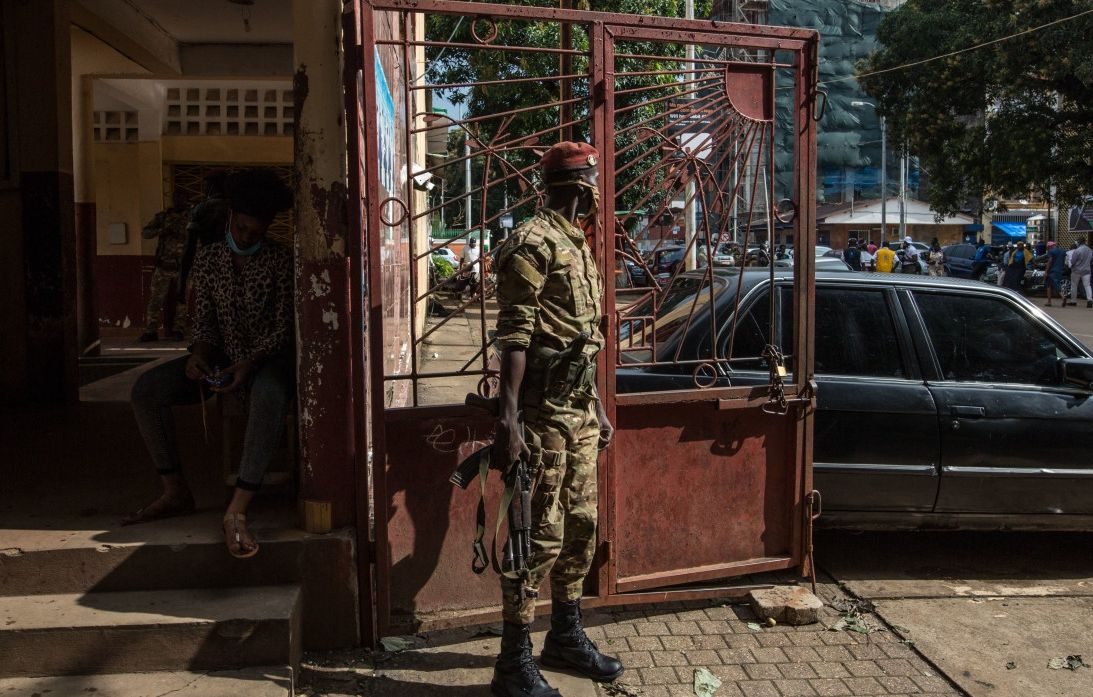
Rebels justified the coup by pointing to numerous abuses by Condé's regime.
On September 5, a coup d'état took place in Guinea, in which a group of military officers seized power and arrested the sitting president. Here is how it all began.
Gunfire and Army on the Streets
In the center of the capital, Conakry, powerful gunshots began to ring out on September 5, and military personnel and columns of armored vehicles were spotted on the streets near the presidential palace.
Witnesses reported shooting near the palace and military vehicles with soldiers on the city's streets. The reasons for the shooting were initially unknown, and the authorities of the West African country did not comment.
Journalists reported that this could be a coup d'état, but there was too little information. An official, speaking on condition of anonymity, told the media that President of Guinea Alpha Condé was not harmed in the shooting, but did not provide any further details.
A source among local military confirmed that a larger number of soldiers had been deployed to the presidential palace, some of whom were given heavy weapons.
The media reported the deaths of several military personnel, but the information was unconfirmed.
Arrest of the President
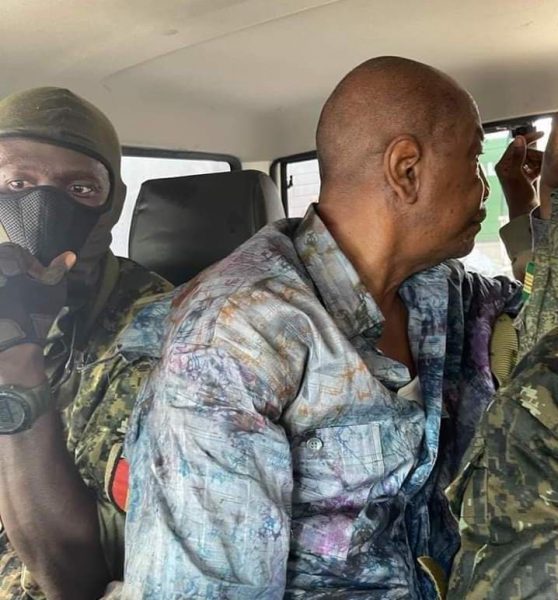
Guinean rebel leader Mamadi Doumbouya announced the arrest of the country's 83-year-old president, Alpha Condé, as well as the dissolution of parliament and the government.
Representatives of Guinea's Ministry of Defense claimed that they had managed to repel a rebel attack on the presidential palace. However, the ministry did not say where the president was.
The local outlet Guinee Matin reported that Doumbouya's statement (he heads a special forces unit) announces the arrest of the president, the dissolution of the National Assembly and the government, and the closure of borders. It also calls on the military to remain in their barracks.
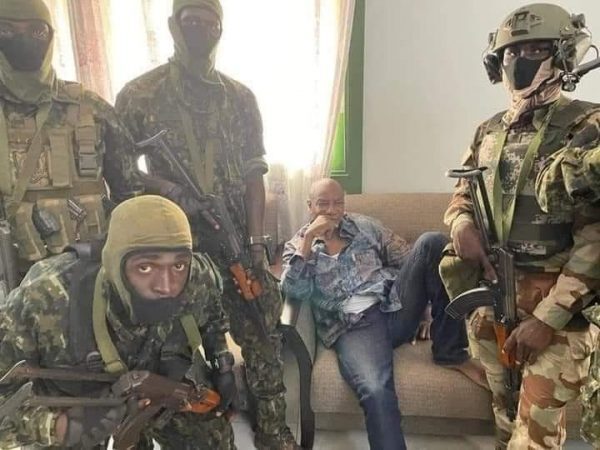
In his statement, he justified the coup by citing numerous abuses by Condé's regime, attacks on democracy, and human rights violations. At the same time, photos and videos of the arrested Condé spread online.
In a statement on national television, Colonel Doumbouya said that the constitution was being suspended in the country. He also announced the creation of the National Committee for Unity and Development, whose goal is to unite all citizens to address the problems facing the country.
BBC reports that the fate of Guinea's president remains unclear after an unverified video showed him in the hands of soldiers who claimed to have carried out the coup.
In the published video, soldiers from an elite special forces unit ask Condé to confirm that he is unharmed, but he refuses to answer.
The media note that soldiers are patrolling the deserted streets of the city center, and residents of the central district have followed orders to stay at home.
When Condé Came to Power
In 2010, Alpha Condé was elected president, and five years later he was re-elected for a second term. He was then supposed to leave office, but in March 2020 Guinea held a constitutional referendum, thanks to which Condé's presidential terms were reset and he was able to run for a second term.
In the October 2020 election, according to official data, Condé received 59% of the vote. The opposition accused the authorities of large-scale fraud, which led to mass demonstrations and unrest.
As a result of the authorities' actions to disperse protesters, 12 people were killed. On November 7, 2020, the country's Constitutional Court approved the final election results and declared Condé the winner.

Russian Attacks in Dnipropetrovsk Region: Two Killed, Seven Injured

Defense Forces Strike Four Russian Drone Control Points in Past Day, Including in Berdiansk

Britain Threatens Sanctions on Kremlin-Linked People; Poland Ready to Hand Ukraine Ammunition

Russia says it has completed "planned exercises" in the Black Sea

MVD: Fake Riots With Prop Blood Were Being Prepared Near Presidential Office

Law Enforcers Name Another Klitschko Deputy as Suspect

Berlin Holds Protest Against War in Ukraine; EU Prepares for Possible Russian Halt of Gas Supplies
North Korea Fires Ballistic Missile Over Record Distance in Five Years
Irish Fishermen Force Russia to Postpone Naval Drills

US sanctions in case of invasion of Ukraine could completely destroy Russia's economy, NYT reports
