
Half of Ukrainians Ready to Resist in Case of Russian Invasion
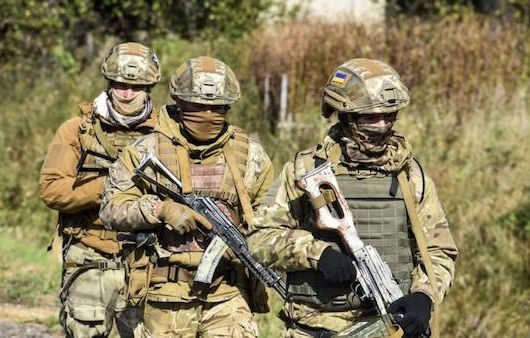
One in three Ukrainians is ready to do so with weapons in hand.
Sociologists found out how Ukrainians would react to a Russian invasion depending on their party and presidential electoral preferences.
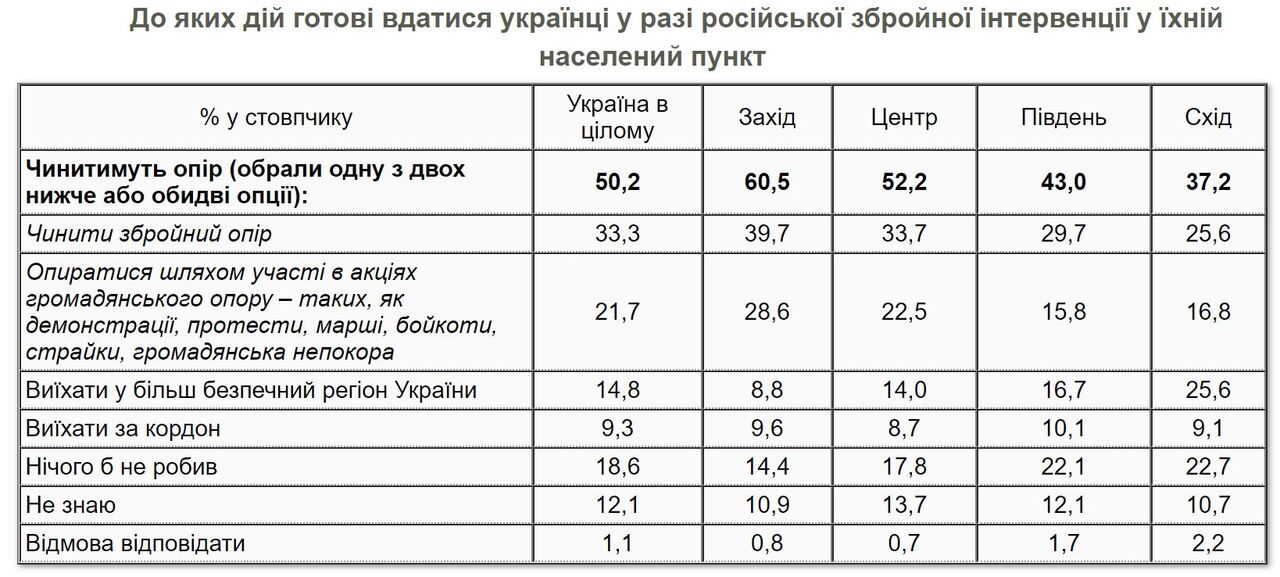
Half of Ukrainians, and every third one with weapons in hand, are ready to resist the aggressor in one way or another in the event of an open attack by the Russian Federation, according to a KIIS sociological group, citing the survey results.
Overall, every third respondent, 33.3%, is ready to offer armed resistance. Ready to resist by participating in civil resistance actions: 21.7%.
In general, 50.2% of Ukrainians are ready to resist in one way or another.
Among other options, 14.8% would move to a safer region, 9.3% would leave the country, and 18.6% would do nothing. Another 12.1% found it difficult to answer, and 1.1% refused to answer the question.
By region, readiness to resist ranges from 60.5% in the West to 37.2% in the East. Readiness for armed resistance ranges from 39.7% in the West to 25.6% in the East.
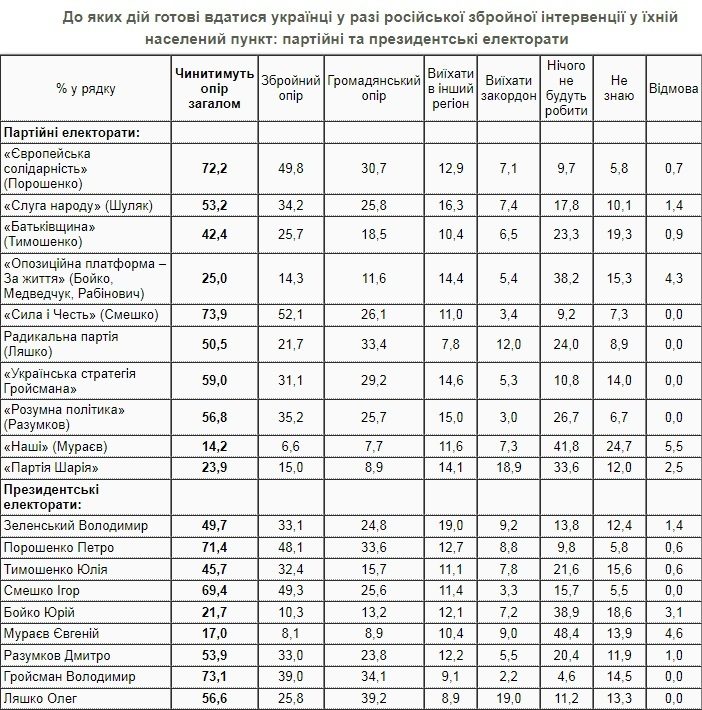
The largest share of those who said they were ready to resist the aggressor were voters of the Power and Honor and European Solidarity parties, and the smallest share were among the electorate of the OPZZH , the Our Ukraine party and Shariy's party. This is stated in the results of the survey by KIIS.
According to the survey, more respondents among the electorate of the OPZZH (58% combined), Muraev's party (60.7%) and Shariy's party (66.6%) said they would do nothing, move to another region or leave the country in the event of a Russian attack.
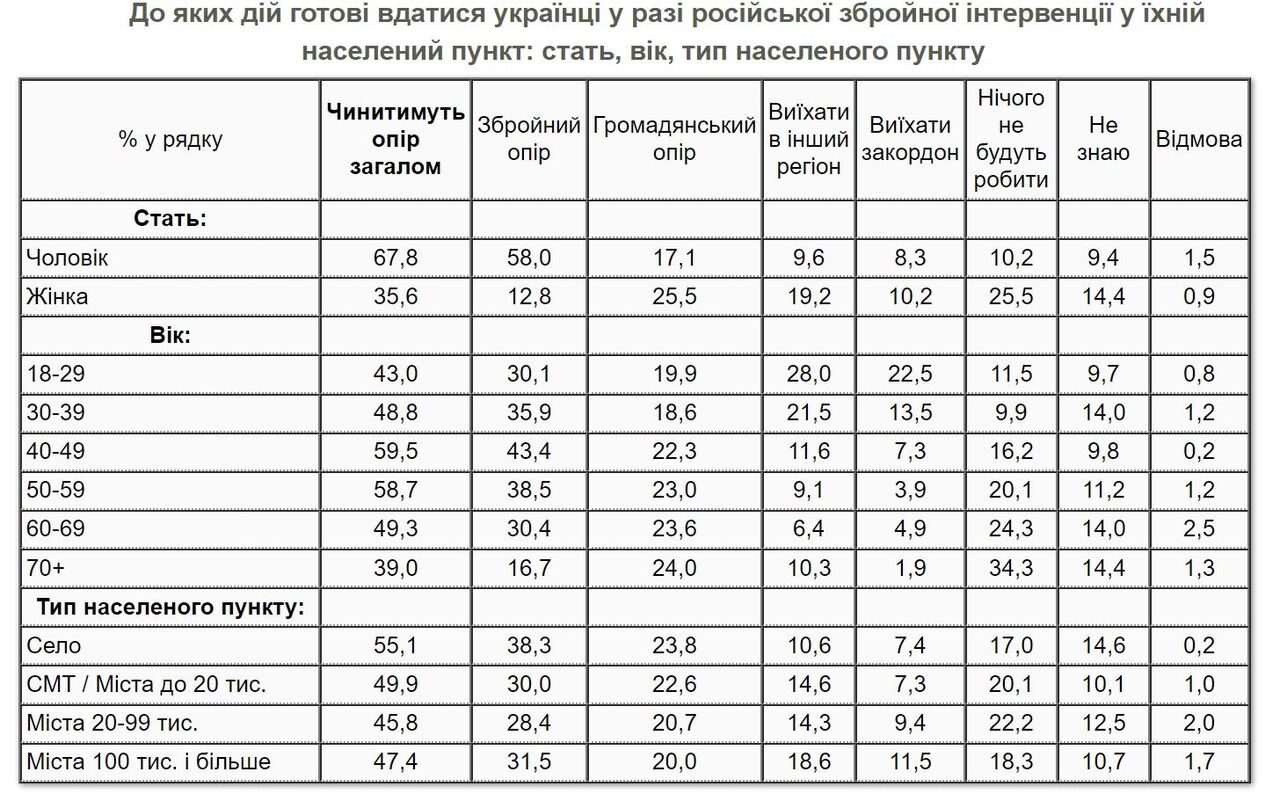
Men are more willing to resist: 68% of them are ready to resist, including 58% ready for armed resistance, and 17% ready to participate in civil resistance.
Among women, 36% are ready to resist, of whom 13% are ready to resist with weapons and 25.5% by participating in civil resistance actions.
By age, respondents aged 40-59 are most ready to resist.
The survey was conducted from December 3 to 11, 2021, by telephone. A total of 2,000 respondents aged 18 and over were interviewed across the entire country, except for the occupied territories. The statistical margin of error is from 1.1 to 2.4%.

Russian Attacks in Dnipropetrovsk Region: Two Killed, Seven Injured

Defense Forces Strike Four Russian Drone Control Points in Past Day, Including in Berdiansk

Britain Threatens Sanctions on Kremlin-Linked People; Poland Ready to Hand Ukraine Ammunition

Russia says it has completed "planned exercises" in the Black Sea

MVD: Fake Riots With Prop Blood Were Being Prepared Near Presidential Office

Law Enforcers Name Another Klitschko Deputy as Suspect

Berlin Holds Protest Against War in Ukraine; EU Prepares for Possible Russian Halt of Gas Supplies
North Korea Fires Ballistic Missile Over Record Distance in Five Years
Irish Fishermen Force Russia to Postpone Naval Drills

US sanctions in case of invasion of Ukraine could completely destroy Russia's economy, NYT reports
