
10 and 11 Years in Prison: Lukashenko Regime Sentences Opposition Figures Maxim Znak and Maria Kolesnikova
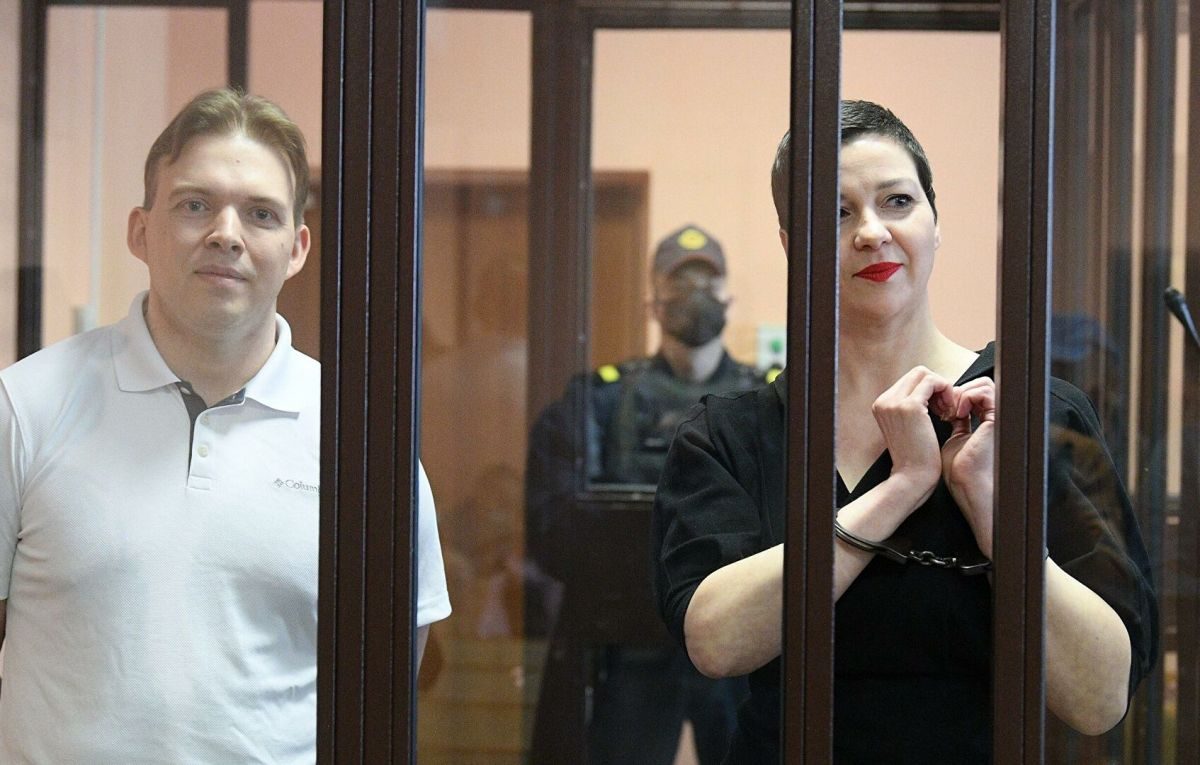
Lukashenko's regime is methodically eliminating opposition and dissent.
The regime of self-proclaimed Belarusian president Alexander Lukashenko has sentenced opposition figures Maxim Znak and Maria Kolesnikova to 10 and 11 years in prison respectively, while law enforcement has already called them political prisoners.
The regime accused them of an alleged “secret conspiracy to seize state power by unconstitutional means,” while the European Council awarded Kolesnikova the Sakharov Prize for her significant contribution to the fight for human rights.
We explain how the persecution of political prisoners began and what charges were brought against them.
Trial of political prisoners
The closed trial of Kolesnikova and Znak continued from August 4. Relatives of the defendants were not even allowed into the courtroom.
In mid-May, Kolesnikova and Znak were charged under three articles of the Belarusian Criminal Code: “calls for actions against national security,” “secret conspiracy to seize state power by unconstitutional means,” and “creating an extremist formation and leading it.”
The court found them guilty on all “charges.” At the same time, the defendants’ lawyers state that the court’s decision was made without any evidence.
Yevgeny Pylchenko
lawyerThis sentence is illegal and unfounded; it is not based on evidence. During the proceedings, neither their guilt nor even the commission of the crimes they were charged with was confirmed. Naturally, the defense will appeal this sentence, and appeals will be filed within ten days. I think our clients themselves will also file complaints.
Maria Kolesnikova will serve her sentence in a general-regime colony, and Maxim Znak in a strict-regime colony. Human rights organizations have recognized them as political prisoners.
Diplomats from Western countries, as well as Kolesnikova’s father, came to the courthouse. He says he submitted 15 requests for a meeting with his daughter, but none of them was granted.
Who the opposition figures are
Maria Kolesnikova is one of the leaders of the Belarusian opposition. Kolesnikova is also one of the co-founders of the Presidium of the Coordination Council for the Peaceful Transfer of Power in Belarus, which was created as a result of the illegal forceful suppression of mass protests that arose over suspicions of election fraud in Lukashenko’s presidential vote.
Unknown persons abducted her on the night of September 8, 2020, in central Minsk, forcing her into a bus. They first tried to forcibly take her to Ukraine, but she tore up her foreign passport and was then detained by State Border Control of Belarus.
Later it became known that Kolesnikova was in pretrial detention and was listed in a criminal case over an “attempt to seize power” as a suspect.
Kolesnikova has also been recognized as a prisoner of conscience. Law enforcement applies this term to those who are held in custody or imprisonment solely for peacefully expressing their political, religious or scientific views
Znak was detained on September 9, 2020, and charged with “calls for actions aimed at causing harm to national security.” He is also a member of the Presidium of the Coordination Council.

Russian Attacks in Dnipropetrovsk Region: Two Killed, Seven Injured

Defense Forces Strike Four Russian Drone Control Points in Past Day, Including in Berdiansk

Britain Threatens Sanctions on Kremlin-Linked People; Poland Ready to Hand Ukraine Ammunition

Russia says it has completed "planned exercises" in the Black Sea

MVD: Fake Riots With Prop Blood Were Being Prepared Near Presidential Office

Law Enforcers Name Another Klitschko Deputy as Suspect

Berlin Holds Protest Against War in Ukraine; EU Prepares for Possible Russian Halt of Gas Supplies
North Korea Fires Ballistic Missile Over Record Distance in Five Years
Irish Fishermen Force Russia to Postpone Naval Drills

US sanctions in case of invasion of Ukraine could completely destroy Russia's economy, NYT reports
