
Pandemic, Black Lives Matter and Brexit: Remembering 10 Main Events of 2020
2020, goodbye.
December 31 is the time to recall what the past year brought us and to wish that the coming year will be better.
Global Pandemic
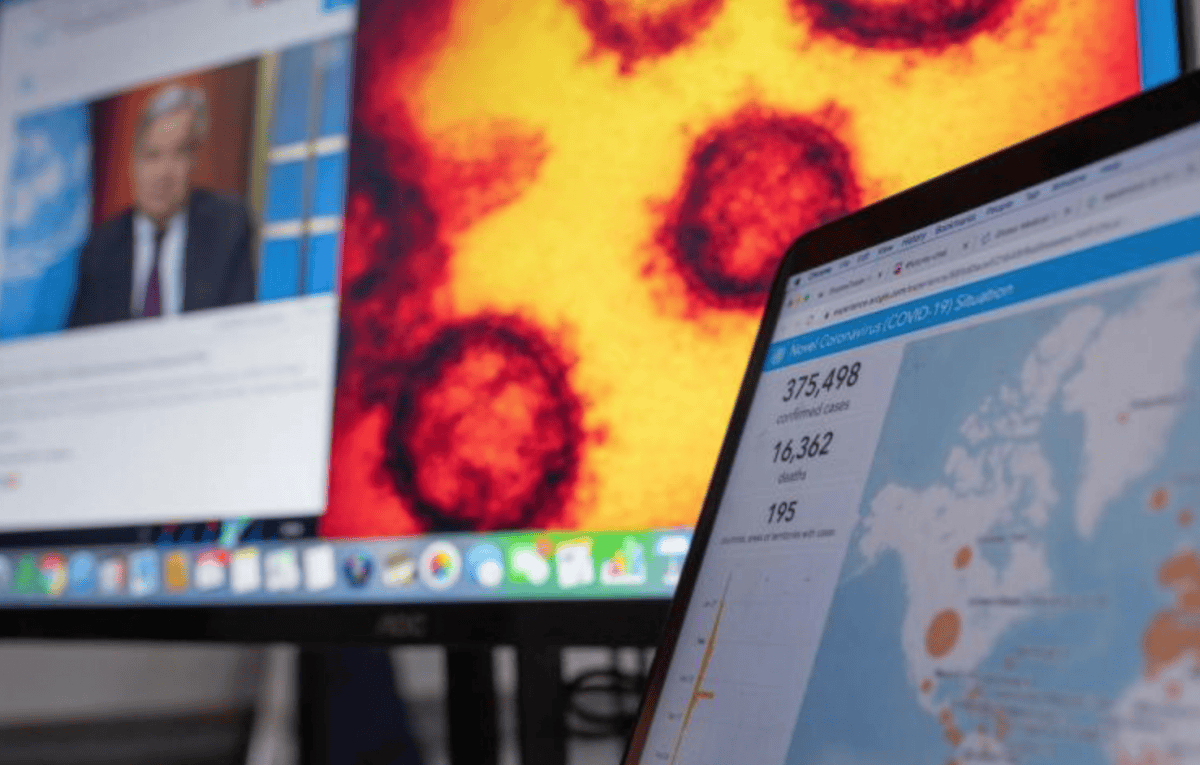
Reports of “viral pneumonia” cases in China began as early as 2019, but the true scale of the problem only became clear at the beginning of the year. On January 9, when the virus was already spreading widely in Wuhan, the WHO, citing Chinese authorities, reported that the outbreak was linked to a new coronavirus. Four days later, the first infection case outside China was recorded, in Thailand.
Within two months, the virus had spread around the world and become a global pandemic. By the end of the year, when many countries are already in a second wave of the pandemic, more than 80 million cases of COVID-19 and nearly 2 million deaths had been recorded.
Over the past year, the pandemic not only claimed many lives but also hit the global economy hard, especially at first and during the imposition of strict lockdown measures to control the spread of the disease. Hundreds of millions of people around the world lost their jobs, and in many countries (mainly in South Asia, Africa and Latin America) an acute food crisis emerged.
“In the last 15 years, the outgoing year has never felt so difficult,” German Chancellor Angela Merkel said on the eve of the new year. “And never, despite all our worries and some skepticism, have we looked to the new year with such hope.” Although COVID-19 is likely here to stay, the future indeed seems less cloudy: vaccines are ready, and in some countries people have already started to be vaccinated.
Soleimani, Iran and the Downed MAU Plane
In early January, when little was yet known about the danger of the coronavirus, the world began to talk about the risk of a new world war over the situation in the Middle East. On January 3, on the orders of US President Donald Trump, General Qasem Soleimani was killed in an airstrike at Baghdad airport. He was commander of the elite “Quds” special unit within the Islamic Revolutionary Guard Corps (IRGC) and was often called the ideologist of Iran’s foreign policy and the main enemy of Sunnis backed by the US and Saudi Arabia.
The protests in Tehran, of course, did not end there, and Iran responded with a missile strike on two American bases in Iraq. The involvement of two nuclear powers in the conflict fueled speculation about the possibility of a third armed conflict of planetary scale, but the peak of saber-rattling came with the crash of a Boeing 737 near Tehran.
Under conditions of heightened combat readiness, the IRGC mistakenly shot down a MAU airline plane flying from Tehran to Kyiv. All 176 people on board (a Ukrainian crew and mostly citizens of Iran and Canada) were killed. Iran later undertook to pay compensation of $150,000 to the families of the victims.
Brexit
At the end of 2019, the Conservatives won a majority in the British Parliament and almost immediately began implementing a plan to take the country out of the European Union. On January 22, despite all the efforts of the House of Lords, the bill on leaving the EU was passed by Parliament as a whole, and soon it was signed by Queen Elizabeth II, Prime Minister Boris Johnson and European Commission President Ursula von der Leyen.
The process of leaving the European Union turned out to be far more difficult and much longer than approving the idea at the legislative level. Throughout 2020, the United Kingdom negotiated with the EU on a trade deal to take effect after the country’s final exit from the bloc on December 31, but it seems an agreement was ultimately reached. By the way, the same goes for Ukraine.
Black Lives Matter
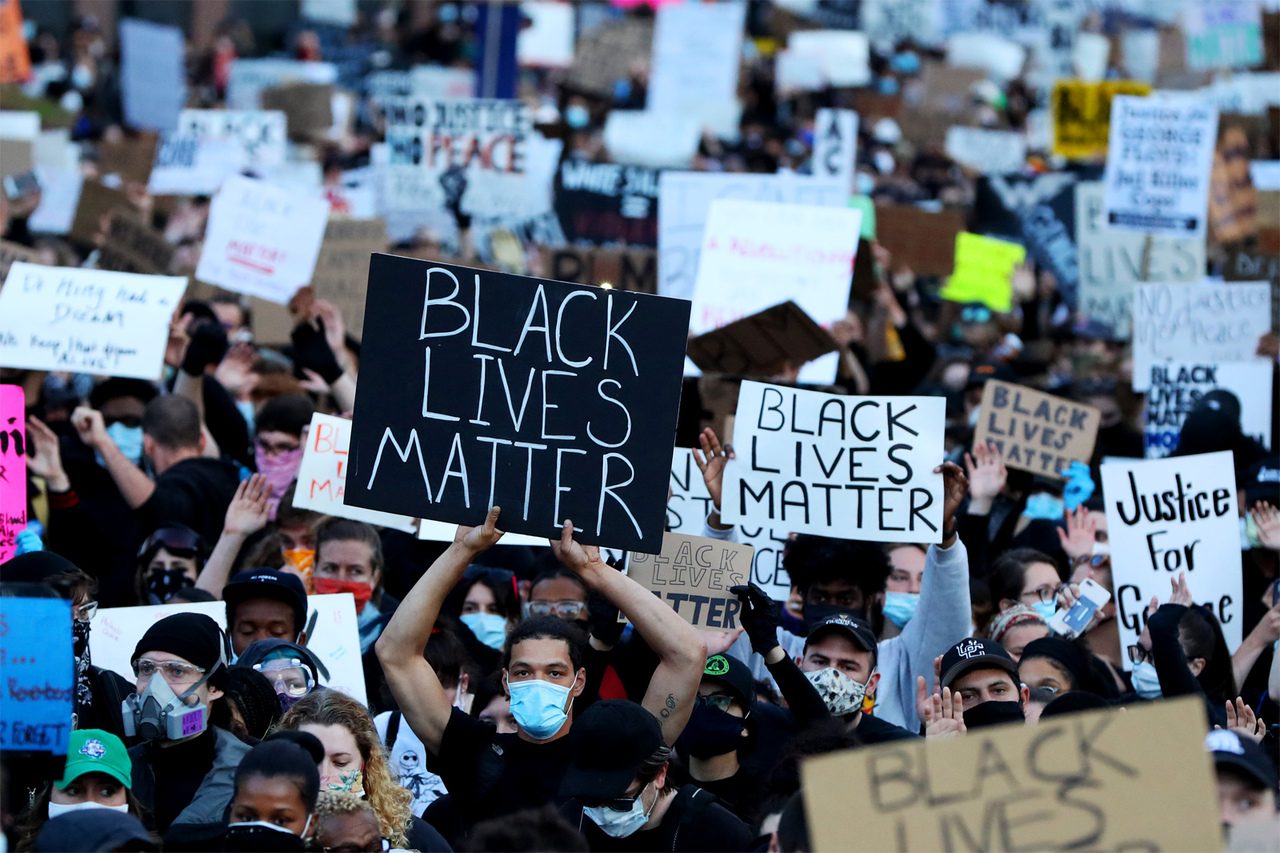
The fight against racism, “the original sin of America,” has been waged in the US for a long time, but it reached its peak precisely in 2020. The trigger for the protest movement was the death of George Floyd at the end of May in Minneapolis. While detaining the 46-year-old African American, a police officer pressed his knee on the suspect’s neck for more than eight minutes, as a result of which he died of asphyxia.
Video of the incident spread across social media, the hashtag #BlackLivesMatter went viral, and protest actions immediately broke out in many states. Over time, the movement calling for systemic changes to combat racism spread to the European continent as well.
Although most of these actions were peaceful, without clashes with police, vandalism or looting, of course, not everything went smoothly.
Beirut Explosion
On August 4, a powerful explosion rang out at the port of Beirut. The “boom” was loud. This was clear immediately, but the true scale of the catastrophe became known only a couple of days later. It turned out that it was one of the largest non-nuclear explosions in history.
As a result of the explosion, in which 2,700 tons of ammonium nitrate stored in a port warehouse detonated, nearly two hundred people died and more than 300,000 people lost their homes. Lebanese authorities estimated the damage from the explosion, which hit buildings across Beirut, at several billion dollars.
As a result, the painful blow to an already unhealthy economy, added to the tense political situation in the country, led to a serious nationwide crisis in Lebanon, which is controlled by Hezbollah. And, quite literally, to hunger.
Presidential Elections in Belarus
In the presidential election held on August 9, the Belarusian Central Election Commission declared Alexander Lukashenko the winner in the first round, which completely contradicted unofficial data showing that Svetlana Tikhanovskaya had won.
The wife of blogger Sergei Tikhanovsky, who had tried to run in the election and was later arrested, formed a united campaign headquarters with two other representatives of unregistered candidates and, according to independent exit polls, received nearly 87% of the vote.
Mass protests erupted across Belarus, accusing the authorities of falsifying the results. They continue to this day and are regularly suppressed by security forces. Sometimes, this is done with blatant brutality.
Poisoning of Alexei Navalny
On the morning of August 20, Russian opposition leader Alexei Navalny boarded a plane flying the route Tomsk–Moscow. He came to, however, not in the Russian capital but in the Charité clinic in Berlin.
The head of the Anti-Corruption Foundation felt unwell on the plane, after which the aircraft commander decided to make an emergency landing in Omsk. Later, Navalny thanked the pilots of the flight and the medics who provided assistance at the Omsk hospital for saving his life.
Two days later, Navalny was transferred to the German Charité clinic, where doctors concluded that the Russian opposition figure had been poisoned with a nerve agent from the Novichok group. After conducting their own tests in laboratories, France and Sweden confirmed the same information.
In mid-December, Navalny, who had spent 18 days in a coma in total, posted two videos on his YouTube channel (by the end of the year, each had 21 million views) in which he reported uncovering an assassination attempt against himself. In a joint investigation by The Insider, Bellingcat, CNN, Der Spiegel and El País, it was established that the FSB was involved in the poisoning of the politician, and Navalny named President Vladimir Putin as the one who ordered the special operation.
Conflict in Nagorno-Karabakh
Hostility between Armenia and Azerbaijan did not cease after February 1988, when the Nagorno-Karabakh Autonomous Oblast announced its withdrawal from the Azerbaijan SSR, but the conflict was largely frozen after the end of the First Nagorno-Karabakh War in 1994.
Everything started over at the end of September 2020, when, each blaming the other for starting the conflict, fighting broke out between Azerbaijan and Armenia along almost the entire line of contact in the unrecognized NKR.
As a result, the military operation by Azerbaijani forces, who captured the city of Shusha only a few kilometers from the regional capital, Stepanakert, succeeded on the 44th day. After signing a trilateral agreement (with Russia as mediator), Azerbaijan, which is backed by Turkey, received Shusha and three districts: Aghdam, Kalbajar and Lachin.
Joe Biden Defeats Donald Trump in US Presidential Election
In late February, US President Donald Trump was acquitted on both articles of impeachment, but his prospects in the upcoming presidential election suffered a serious blow.
By November 3, when the 46th president of the United States was being elected, the favorite was not the incumbent head of state but his rival, Joe Biden. However, since the Democrat’s lead, as he had previously served as vice president in the administration of Barack Obama, was small, there was still plenty of intrigue.
There was intrigue and, of course, Trump’s eccentricities. On election day, he rushed to declare himself the winner of the presidential race, and when it turned out that his rival was collecting more votes in the swing states, he announced massive fraud and refused to concede defeat.
The process of transferring power, however, has already begun. Trump will remain in the presidency until January 20, when Biden’s inauguration takes place. The vice president in the team of the oldest president in US history (78 years old) will be Kamala Harris, the first woman and the first Black person to hold this post.
Prince Harry and Meghan Markle Renounce Royal Duties
If in 2020 Harry, the younger son of Prince Charles and Princess Diana, was welcomed with the title “His Royal Highness,” now the Duke of Sussex is glad to have shed the burden of duties as senior members of the British royal family, and together with his wife and young son he lives in two countries: Britain and Canada.
“Megxit,” the name for Harry and Meghan Markle’s departure, modeled on Brexit, became one of the main topics for tabloids, which chewed over every detail of the royal couple’s removal from the throne: from the relationship between Markle and Elizabeth to the height of the actress’s heel, under which the sixth in line to the throne of the United Kingdom ended up.

Vasily Obaraz, TK Media

Russian Attacks in Dnipropetrovsk Region: Two Killed, Seven Injured

Defense Forces Strike Four Russian Drone Control Points in Past Day, Including in Berdiansk

Britain Threatens Sanctions on Kremlin-Linked People; Poland Ready to Hand Ukraine Ammunition

Russia says it has completed "planned exercises" in the Black Sea

MVD: Fake Riots With Prop Blood Were Being Prepared Near Presidential Office

Law Enforcers Name Another Klitschko Deputy as Suspect

Berlin Holds Protest Against War in Ukraine; EU Prepares for Possible Russian Halt of Gas Supplies
North Korea Fires Ballistic Missile Over Record Distance in Five Years
Irish Fishermen Force Russia to Postpone Naval Drills

US sanctions in case of invasion of Ukraine could completely destroy Russia's economy, NYT reports
