
Poland's Foreign Ministry Claims Poles Face 'Discrimination' in Ukraine
Ukraine's Foreign Ministry rejected the statement, noting that just a day earlier a successful meeting of the sides on this issue had taken place, at which Warsaw raised no such complaints.
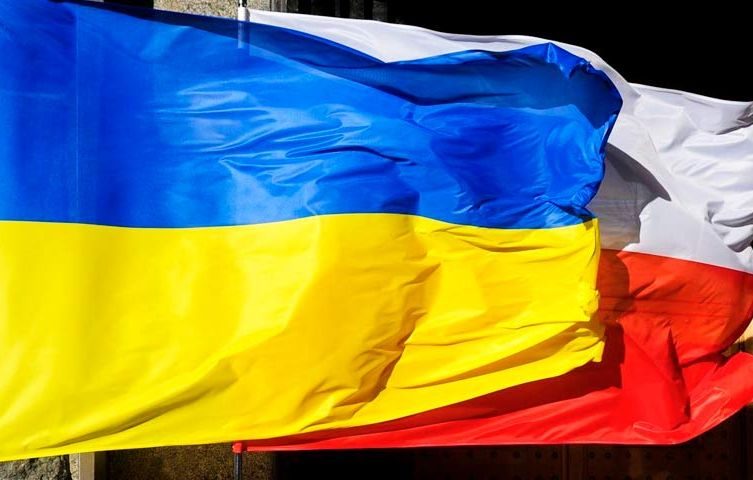
Poland has claimed that Poles in Ukraine face 'discrimination,' while Ukraine's Foreign Ministry, in response, flatly rejects this statement.
More on the substance of the claims, the resonance they caused, and how the Ukrainian side reacted.
'Discrimination' of Poles in Ukraine
On October 30, the Polish parliamentary committee on relations with Poles abroad heard information from the foreign minister about the situation of Poles in Ukraine.
Szymon Szynkowski vel Sęk
Deputy Foreign Minister of PolandIt would not be an exaggeration to say that Poles in Ukraine are subject to discrimination in terms of freedom of religion, access to education in their native language, and freedom of speech.
Szymon Szynkowski vel Sęk stated that 'the situation of Poles in Ukraine is changing for the worse.' According to him, this is happening due to objective and subjective factors.
One of the objective factors, he said, is the socio-economic situation, which is prompting people of Polish descent in Ukraine to emigrate.
'Polish communities in Ukraine are shrinking at alarming rates, especially among young people,' Szynkowski vel Sęk stressed. He said many young people are going to Poland, where they receive the 'Pole's Card,' which gives them access to education and encourages them to apply for Polish citizenship.
The second reason, he said, is the coronavirus pandemic. Ukraine ranks second in Europe for COVID-19 mortality, and this affects all population groups, including the Poles living there.
The subjective factors worsening the situation of Poles are, he said, an unfavorable language law for them, as well as the glorification of people linked to the Volhynia tragedy and the halt of exhumations of Polish victims.
According to him, Poles are also affected by the lack of regulated relations between the state and the Roman Catholic Church in Ukraine.
He added that the Foreign Ministry had raised all these issues in negotiations with the Ukrainian side.
Government plenipotentiary for Polish diaspora and Poles abroad Jan Dziedziczak also stated that during trials the Polish minority showed loyalty to Ukraine. For example, when Poland was the first to recognize Ukraine's independence in 1991.
'Many people of Polish descent also gave their lives for Ukraine in the war with Russia. This shows how loyal Poles in Ukraine are today,' Dziedziczak said.
According to him, representatives of the Polish minority were also involved in democratic processes, and the first person killed during the 2014 Maidan was of Polish descent, he said, without specifying whom he meant.
Reaction of Ukraine's Foreign Ministry
Ukraine's Foreign Ministry spokesperson Oleg Nikolenko told UP that the statement by Polish colleagues contradicts the friendly and partnership relations between Ukraine and Poland.
The Ukrainian Foreign Ministry also noted that using such claims about the situation of the Polish community in our country is at least incorrect and misleads our citizens.
Oleg Nikolenko
Foreign Ministry spokesperson of UkraineWe categorically reject the claim by Polish Deputy Foreign Minister Szymon Szynkowski vel Sęk about the alleged 'discrimination' of Poles in Ukraine.
Nikolenko also shed light on a notable fact: the statement from official Warsaw came the day after a successful session in Warsaw of the consultative commission on meeting the educational needs of the Ukrainian minority in Poland and the Polish minority in Ukraine.
At this session, the Commission confirmed mutual understanding and mutual openness to constructive dialogue with Ukraine. That is, during direct dialogue between the sides, no complaints were voiced, and they emerged only in the public sphere, which is generally not accepted in international diplomacy and may indicate a personal interest on the part of the Polish colleague.
Official Kyiv called on the Polish side to refrain from political assessments that are dissonant with the real intentions and steps of the parties to strengthen the partnership between Ukraine and Poland in various spheres.

Russian Attacks in Dnipropetrovsk Region: Two Killed, Seven Injured

Defense Forces Strike Four Russian Drone Control Points in Past Day, Including in Berdiansk

Britain Threatens Sanctions on Kremlin-Linked People; Poland Ready to Hand Ukraine Ammunition

Russia says it has completed "planned exercises" in the Black Sea

MVD: Fake Riots With Prop Blood Were Being Prepared Near Presidential Office

Law Enforcers Name Another Klitschko Deputy as Suspect

Berlin Holds Protest Against War in Ukraine; EU Prepares for Possible Russian Halt of Gas Supplies
North Korea Fires Ballistic Missile Over Record Distance in Five Years
Irish Fishermen Force Russia to Postpone Naval Drills

US sanctions in case of invasion of Ukraine could completely destroy Russia's economy, NYT reports
