
Has the War in Nagorno-Karabakh Ended? Riots in Yerevan, Russian 'Peacekeepers' and Ankara's Hand
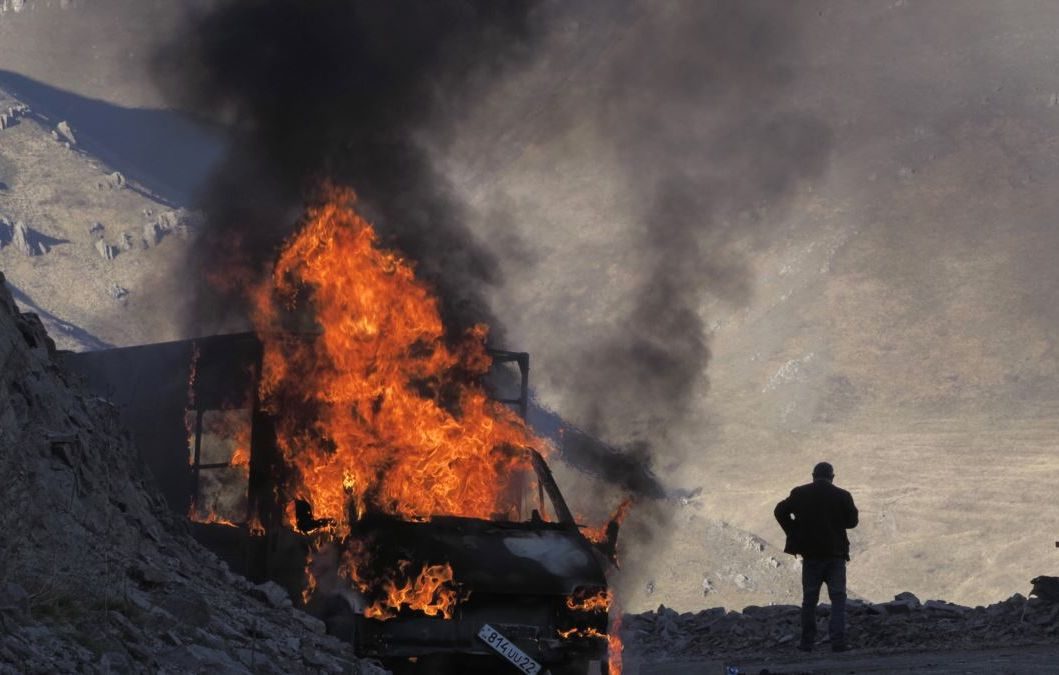
Azerbaijan celebrates, Armenia protests, and Russia argues with Turkey over peacekeepers.
On the night of November 9 to 10, it became known that the war in Nagorno-Karabakh had ended. Armenian Prime Minister Nikol Pashinyan, Azerbaijani President Ilham Aliyev and Russian President Vladimir Putin made relevant statements.
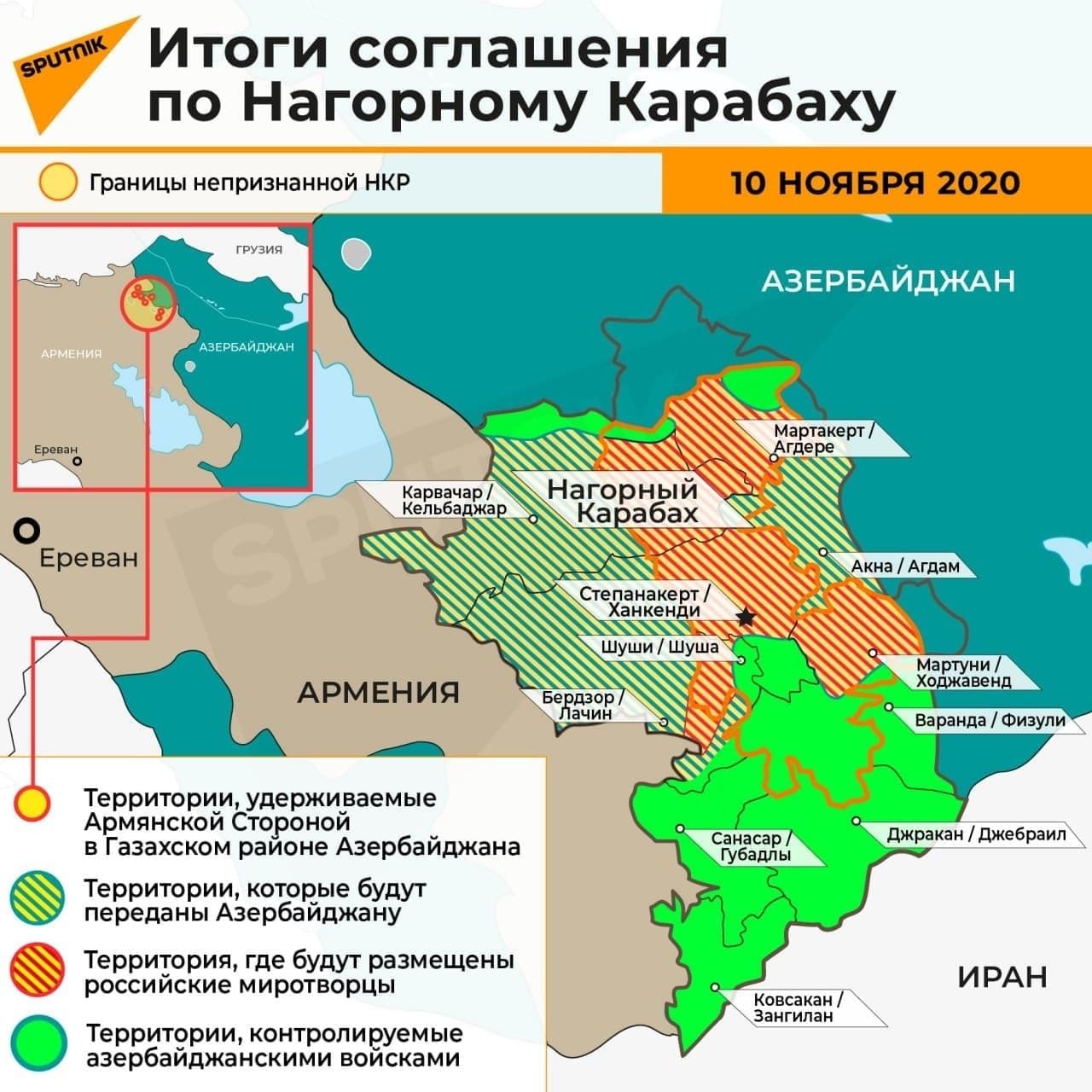
The parties agreed to a ceasefire in Nagorno-Karabakh from November 10, as well as to keep the positions they hold. Armenia is handing over to Azerbaijan all the occupied districts around Karabakh; Shusha will be under Azerbaijani control. Armenia will retain the 5-km-wide Lachin corridor to connect with Nagorno-Karabakh.
Russia will provide security for the Lachin corridor and the line of contact with 1,960 peacekeepers, 90 armored personnel carriers, 22 aircraft, and 380 units of motor vehicles and special equipment.
The 'polite people' have already set off and will remain in Nagorno-Karabakh for 5 years, with automatic extension for the same period unless Yerevan and Baku object.
Among other things: exchange of prisoners and bodies of the dead, unblocking economic and transport links in the region, and construction of new communications. Below is a map of the results of the Nagorno-Karabakh agreement:
Armenia's Reaction
In Yerevan, the capital of Armenia, a protest began amid discontent over the prime minister's decision. Overnight, enraged residents broke down the entrance doors of the government building, rushed inside, smashed windows, knocked out office doors and trashed the meeting hall.
Protesters also allegedly robbed the residence of the Armenian prime minister. According to him, a computer, watch, perfume, driver's licenses and other items went missing. In addition, protesters beat Armenian parliament speaker Ararat Mirzoyan, who is in hospital.
Earlier this week, 17 opposition parties in Armenia demanded Pashinyan's resignation and the transfer of power to a temporary governing body until the end of hostilities. Overnight, rumors appeared that Pashinyan had flown to Sochi on a military plane.
The Armenian prime minister said he remains in the country and continues to perform his duties. According to him, the army 'has for a long time insisted on the need for such a step.' Otherwise, according to Pashinyan, Armenia could have lost all of Karabakh. The Armenian Defense Ministry and General Staff supported the agreement to end the war.
Nikol Pashinyan
Prime Minister of ArmeniaI made this decision as a result of a deep analysis of the military situation and an assessment by the people who know it best. It is also based on the conviction that this is the best possible decision under the circumstances. I will tell you about all of this in detail in the coming days. This is not a victory, but there will be no defeat as long as you do not admit yourselves defeated. We will never admit ourselves defeated, and this must become the beginning of our era of national unity and revival.
Armenian President Armen Sarkissian said he learned of the signed trilateral agreement from the press. According to him, this is 'a matter of state importance' that 'should be the subject of comprehensive consultations and discussions.' The president is initiating emergency political consultations.
Azerbaijan's Reaction
Azerbaijani President Ilham Aliyev is confident that the 'historic' agreement on Nagorno-Karabakh will lead to long-term peace and put an end to bloodshed. At the same time, he stated that Armenia capitulated by signing the ceasefire agreement.
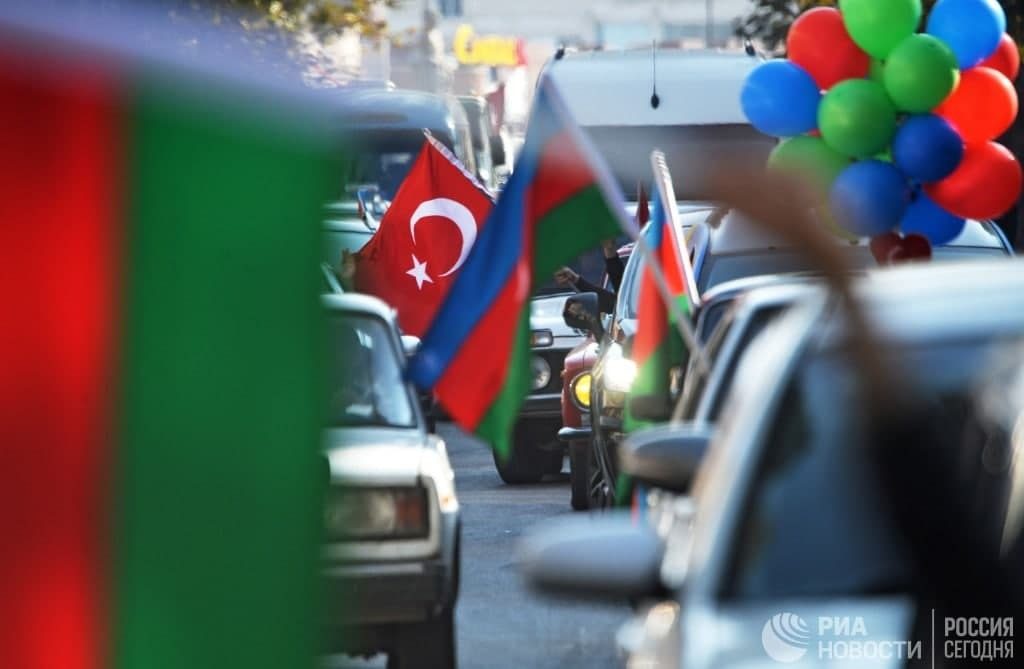
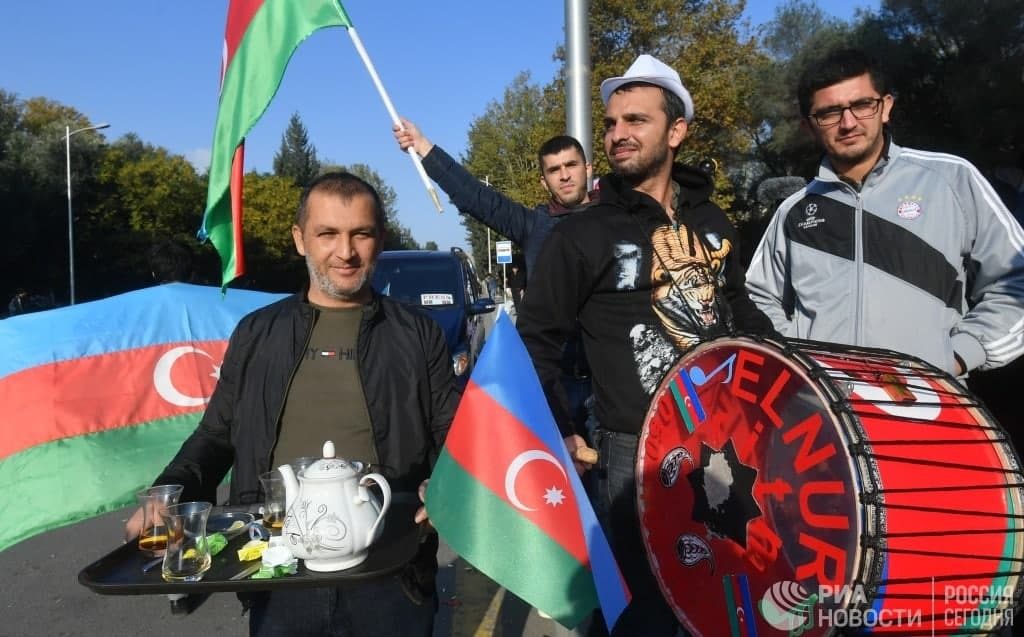
On Tuesday, November 10, in Baku, the capital of Azerbaijan, victory in Nagorno-Karabakh is being celebrated.
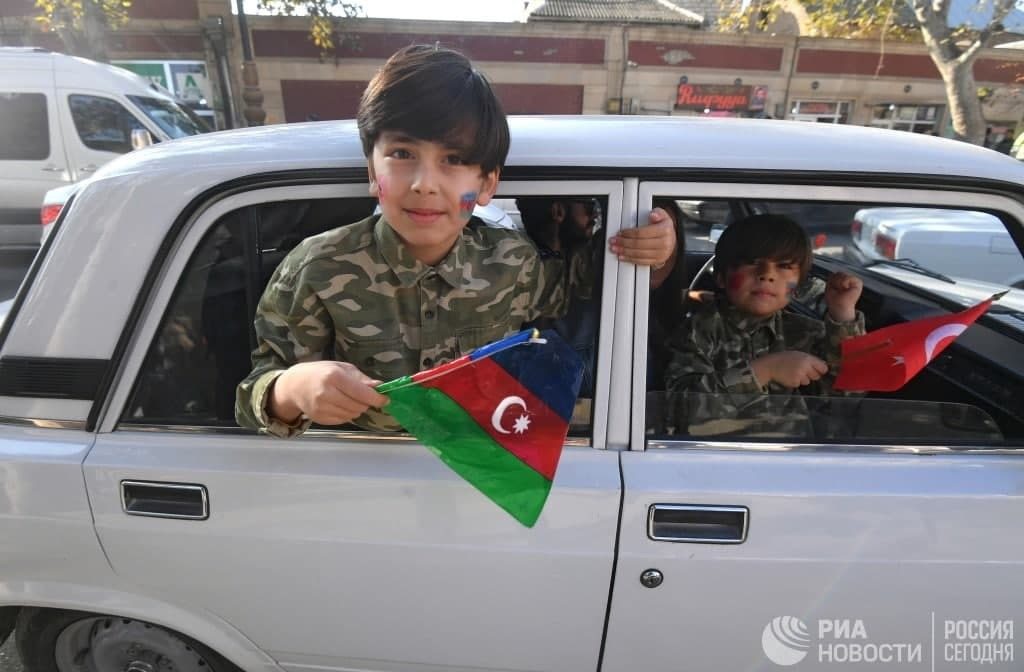
Aliyev also noted Russia's special role in settling the Karabakh conflict and its significant future role in the region's affairs. The Azerbaijani president also called the Russian president, apologized for the downed Russian helicopter over Armenia, promised to punish those responsible and to inform Moscow of the results.
The Russian Foreign Ministry said further steps regarding the downed helicopter will be determined after the investigation. Just yesterday, Russians on social media were outraged by Russia's passive reaction to the downed helicopter (the Russian Foreign Ministry 'positively assessed the immediate admission of guilt' by Baku), but after the publication of the trilateral agreement, Russia's 'peacekeeping' motives became clear.
Aliyev stated that Turkey will join Russia in peacekeeping activities in Karabakh. Turkey's Foreign Ministry confirmed this, but the Russian Foreign Ministry denied it: only Russian peacekeepers will be deployed along the line of contact. Turkey supported the overnight trilateral agreement, which contains no specifics about Turkish military personnel.
At the same time, Armenian President Aliyev and Turkish President Erdogan have already discussed creating a Turkish-Russian peacekeeping center in Nagorno-Karabakh. Meanwhile, the Russian Foreign Ministry said Foreign Minister Lavrov and Turkish Foreign Minister Cavusoglu will discuss further steps to consolidate the truce in Nagorno-Karabakh.

Russian Attacks in Dnipropetrovsk Region: Two Killed, Seven Injured

Defense Forces Strike Four Russian Drone Control Points in Past Day, Including in Berdiansk

Britain Threatens Sanctions on Kremlin-Linked People; Poland Ready to Hand Ukraine Ammunition

Russia says it has completed "planned exercises" in the Black Sea

MVD: Fake Riots With Prop Blood Were Being Prepared Near Presidential Office

Law Enforcers Name Another Klitschko Deputy as Suspect

Berlin Holds Protest Against War in Ukraine; EU Prepares for Possible Russian Halt of Gas Supplies
North Korea Fires Ballistic Missile Over Record Distance in Five Years
Irish Fishermen Force Russia to Postpone Naval Drills

US sanctions in case of invasion of Ukraine could completely destroy Russia's economy, NYT reports
