
You Can't Get This From monobank or PrivatBank. What Revolut Can Offer in Ukraine
We found seven advantages among the British.
British banking Revolut plans a large-scale expansion into new markets in 2020, including Ukraine. An important caveat: this requires a license from the regulator (in our case, the NBU) in a specific territory.
Ukraine is not a backward country when it comes to banking technology. PrivatBank's Privat24 has been operating here for many years, and the even more modern monobank launched in 2017, so it will be difficult to surprise Ukrainian customers with Revolut. In the US, before the launch of Apple Card, technology-driven banking was in very poor shape. The UK is different, where Revolut and Monzo, which grew from startups into fintech giants, compete with each other.
Revolut really does have something to offer Ukrainians. Entrepreneur from Ukraine Andrey Maryin, who lives in the UK and uses Revolut, tells TK Media about its main advantages, which PrivatBank and/or monobank do not offer.
1. Split Bill
Usually in restaurants, pubs and cafes, waiters bring a single bill, which is then inconvenient to split if you spent time with a group and paid by card. Revolut, however, offers the option after payment to select your friends' contacts and assign each of them the amount they owe. They receive a request in the app, and after confirmation, the money is debited from them and returned to you.
2. Unlimited Number of Virtual Cards, Choice of Card Names
PrivatBank already offers all of this now: you can create as many virtual cards as you want (not to be confused with internet cards), add them to Google Pay and Apple Pay, and even change their names (in case you want to give each card its own purpose).
The founders of monobank are not yet following the path PrivatBank took and limit the number of cards: you can have only one in each currency (hryvnia, dollars and euros). You also cannot give cards names.
3. Opening an Account and Cryptocurrency Transactions
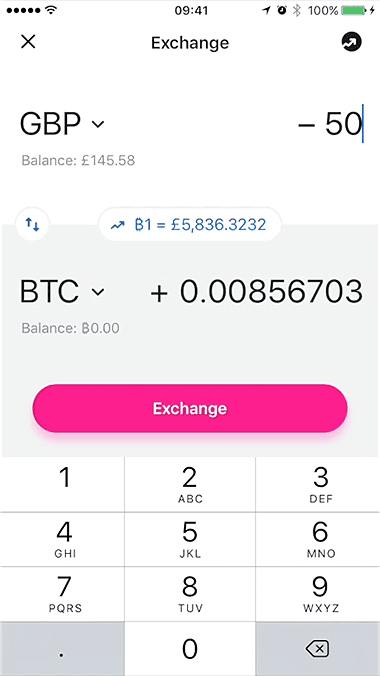
Formally, the customer does not own any crypto, but for them there is no difference. If you buy bitcoin, Revolut at the same time buys it itself at the current rate and displays it in your account. If you sell, Revolut also sells. If you pay with bitcoins in a store, it converts them at the rate and, again, sells them.
4. One-Time Card
A one-time card is a virtual card that changes its number after each transaction, so a fraudster who phishes your details during your online purchase will not be able to carry out any transaction.
Monobank now offers the option to generate a new three-digit code on both physical and virtual cards.
5. Pay in 150 Currencies at the Best Rate
Conversion is carried out at interbank quotes. And no commissions on top.
6. In-Depth Spending Analytics
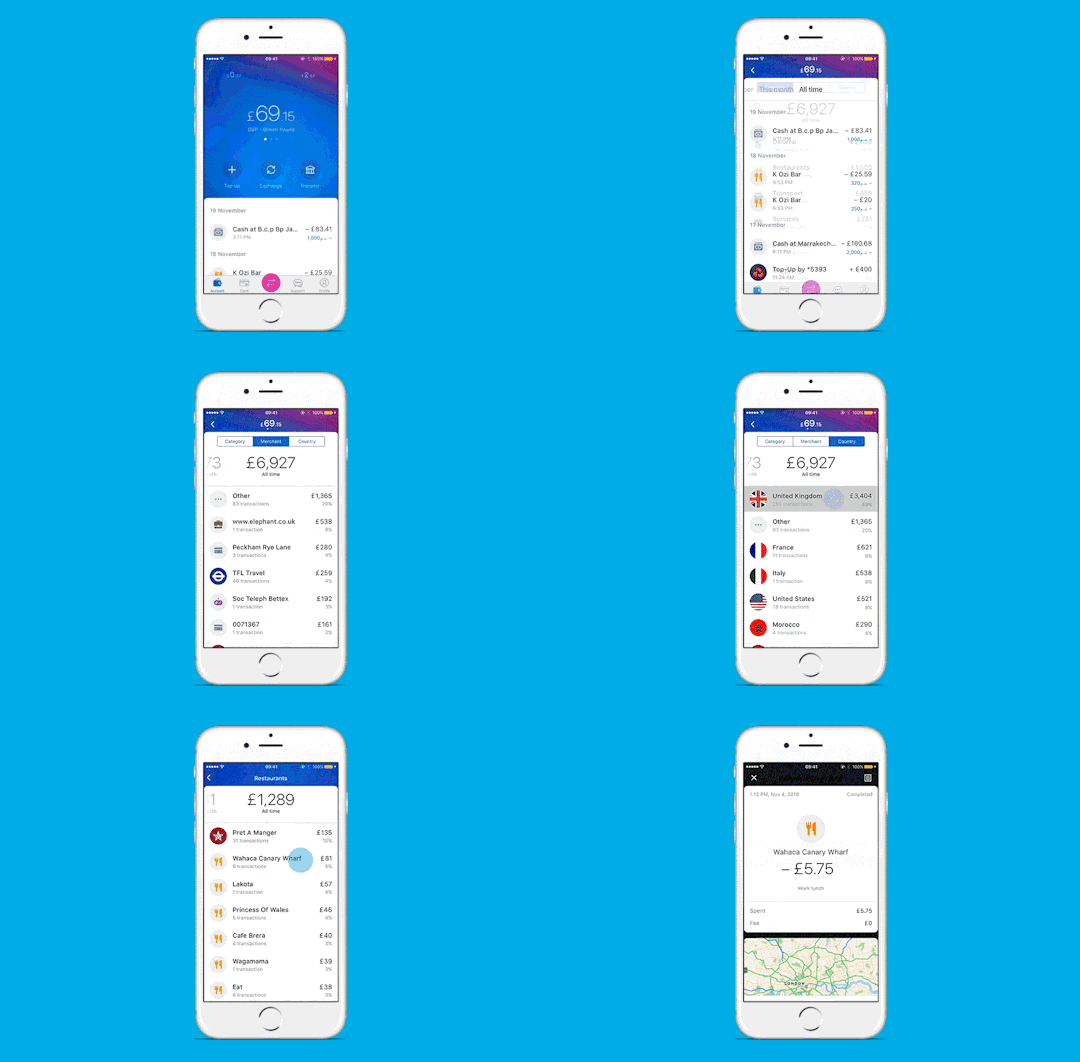
Both monobank and the updated Privat24 app have quite convenient statistics, but not as detailed. Revolut, however, lets you view spending by country as well. Is this excessive? Maybe. Revolut launched as banking for travelers, so for it this is natural.
7. A Different Earnings Model: No Commissions, but Insurance
PrivatBank charges commissions on every financial transaction. monobank has reduced them to a minimum, but they still exist: cash withdrawals from ATMs and "fines" for unpaid use of credit funds for 55 days.
Revolut has none of this. But it has limits: on the number of cards and no more than 5,000 pounds on a card per year, and to remove them, you need to buy premium. There are two types of premium, which cost 84 and 156 pounds sterling. In addition to unlimited access, premium provides several types of insurance: medical insurance up to 15 million pounds and travel insurance (for lost luggage and flight delays).
Separate insurance is another source of income for Revolut. Outside of premium, you can insure electronic devices, for example: insurance for an iPhone X costs customers 1.33 pounds per week.
Yevgeny Blazhko

Russian Attacks in Dnipropetrovsk Region: Two Killed, Seven Injured

Defense Forces Strike Four Russian Drone Control Points in Past Day, Including in Berdiansk

Britain Threatens Sanctions on Kremlin-Linked People; Poland Ready to Hand Ukraine Ammunition

Russia says it has completed "planned exercises" in the Black Sea

MVD: Fake Riots With Prop Blood Were Being Prepared Near Presidential Office

Law Enforcers Name Another Klitschko Deputy as Suspect

Berlin Holds Protest Against War in Ukraine; EU Prepares for Possible Russian Halt of Gas Supplies
North Korea Fires Ballistic Missile Over Record Distance in Five Years
Irish Fishermen Force Russia to Postpone Naval Drills

US sanctions in case of invasion of Ukraine could completely destroy Russia's economy, NYT reports
