
Full Euro 2020 Calendar: Who Plays, Whom and Where

The draw for the Euro 2020 championship took place today. The tournament will be held in 12 cities across 12 countries.
Who will play at Euro 2020
20 teams are already known, and four more will be determined on March 31 in the qualifying play-offs — 24 participants in total.
Unlike the host countries of previous tournaments, no team qualified automatically for the European Championship (because there are 12 hosts this time). 20 teams — the top two teams from each qualifying group.
In the qualifying play-offs next March, the 16 best teams from the 2018/19 Nations League who did not advance through the qualifying tournament will play.
Who will host Euro 2020
On the initiative of former UEFA president Michel Platini, it was decided to hold the tournament not in one or two countries, but in 12 (initially there were 13, but Brussels did not finish building its stadium in time and was replaced).
- London (England)
- Glasgow (Scotland)
- Baku (Azerbaijan)
- Rome (Italy)
- Saint Petersburg (Russia)
- Bucharest (Romania)
- Amsterdam (Netherlands)
- Budapest (Hungary)
- Bilbao (Spain)
- Copenhagen (Denmark)
- Dublin (Ireland)
- Munich (Germany)
If a team from one of the host countries makes it to the tournament, it is automatically placed in the group with its city. That is why Romania will be placed in Group C with Ukraine if it wins qualifying play-off A; but if not, the winner of this same play-off will play in Group F, because it could be Hungary.
Euro 2020 group stage
The top two teams from each group are guaranteed to advance to the round of 16. They will be joined by the four best third-placed teams.
Group A: Turkey, Italy, Wales, Switzerland
June 12
Turkey — Italy (Rome)
June 13
Wales — Switzerland (Baku)
June 17
Turkey — Wales (Baku)
Italy — Switzerland (Rome)
June 21
Switzerland — Turkey (Baku)
Italy — Wales (Rome)
Group B: Denmark, Finland, Belgium, Russia
June 13
Denmark — Finland (Copenhagen)
Belgium — Russia (Saint Petersburg)
June 17
Finland — Russia (Saint Petersburg)
June 18
Denmark — Belgium (Copenhagen)
June 22
Russia — Denmark (Copenhagen)
Finland — Belgium (Saint Petersburg)
Group C: Ukraine, Netherlands, Austria, winner of play-off D/A
June 14
Netherlands — Ukraine (Amsterdam)
Austria — winner of play-off D/A (Bucharest)
June 18
Netherlands — Austria (Amsterdam)
Ukraine — winner of play-off D/A (Bucharest)
June 22
Netherlands — winner of play-off D/A (Amsterdam)
Ukraine — Austria (Bucharest)
Group D: England, Croatia, Czech Republic, winner of play-off C
June 14
England — Croatia (London)
June 15
Czech Republic — winner of play-off C (Glasgow)
June 19
Croatia — Czech Republic (Glasgow)
England — winner of play-off C (London)
June 23
Croatia — winner of play-off C (Glasgow)
Czech Republic — England (London)
Group E: Spain, Sweden, Poland, winner of play-off B
June 15
Spain — Sweden (Bilbao)
Poland — winner of play-off B (Dublin)
June 19
Sweden — winner of play-off B (Dublin)
June 20
Spain — Poland (Bilbao)
June 24
Spain — winner of play-off B (Bilbao)
Sweden — Poland (Dublin)
Group F: Portugal, France, Germany, winner of play-off A/D
June 16
Portugal — winner of play-off A/D (Budapest)
France — Germany (Munich)
June 20
France — winner of play-off A/D (Budapest)
Portugal — Germany (Munich)
June 24
Portugal — France (Budapest)
Germany — winner of play-off A/D (Munich)
Round of 16
June 27
1. Winner of Group A — runner-up of Group C (London)
2. Runner-up of Group A — runner-up of Group B (Amsterdam)
June 28
3. Winner of Group B — third-placed team from A/D/E/F (Bilbao)
4. Winner of Group C — third-placed team from D/E/F (Budapest)
June 29
5. Winner of Group F — third-placed team from A/B/C (Bucharest)
6. Runner-up of Group D — runner-up of Group E (Copenhagen)
June 30
7. Winner of Group E — third-placed team from A/B/C/D (Glasgow)
8. Winner of Group D — runner-up of Group F (Dublin)
Quarter-finals
July 3
9. Winner of 5 — winner of 6 (Saint Petersburg)
10. Winner of 3 — winner of 1 (Munich)
July 4
11. Winner of 7 — winner of 8 (Rome)
12. Winner of 4 — winner of 2 (Baku)
Semi-finals
Winner of 9 — winner of 10 (London)
Winner of 11 — winner of 12 (London)
The final will be held on July 12 in London.
Euro 2020 qualifying play-offs
Four teams play in each of the four play-offs (A-D) — the winner of each (after the semi-finals and final) will advance to the European Championship.
A: Bulgaria — Hungary, Iceland — Romania
B: Bosnia and Herzegovina — Northern Ireland, Slovakia — Ireland
C: Norway — Serbia, Scotland — Israel
D: Georgia — Belarus, North Macedonia — Kosovo
If Romania wins play-off A, it will play at Euro 2020 in Group C against Ukraine. If not, the winner of play-off D will go into Group C.
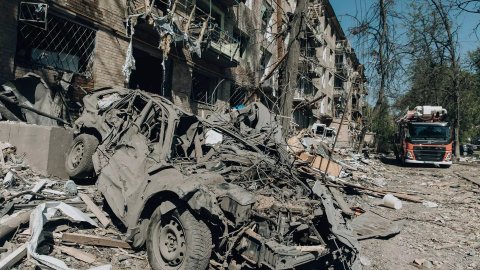
Zelensky: Russia Used 115 Missiles, Nearly 1,900 Guided Bombs and Over 3,000 Drones in a Week
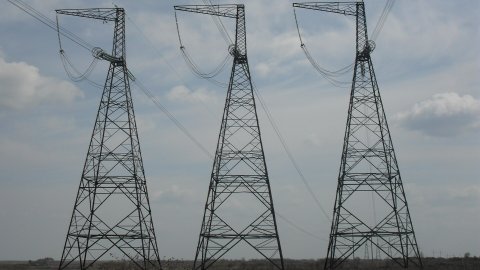
Attack on Major DTEK Energy Facility in Northern Odesa Region Leaves Some Families Without Power

Britain Threatens Sanctions on Kremlin-Linked People; Poland Ready to Hand Ukraine Ammunition

Russia says it has completed "planned exercises" in the Black Sea

MVD: Fake Riots With Prop Blood Were Being Prepared Near Presidential Office

Law Enforcers Name Another Klitschko Deputy as Suspect

Berlin Holds Protest Against War in Ukraine; EU Prepares for Possible Russian Halt of Gas Supplies
North Korea Fires Ballistic Missile Over Record Distance in Five Years
Irish Fishermen Force Russia to Postpone Naval Drills

US sanctions in case of invasion of Ukraine could completely destroy Russia's economy, NYT reports
