
The Coach We Were Waiting For. Shevchenko's Strength Is in Simplicity
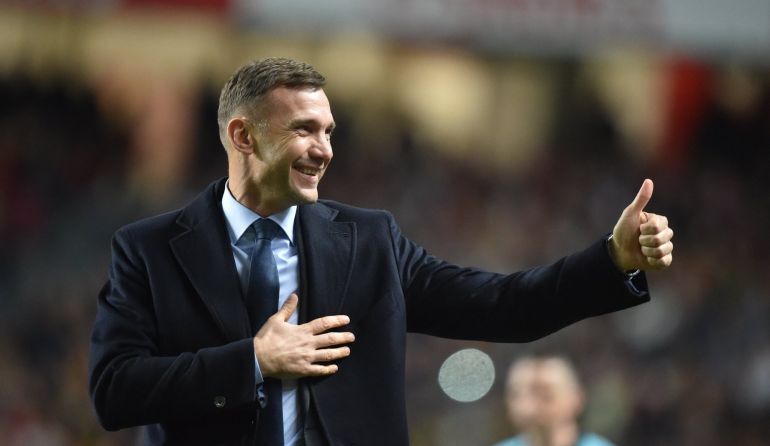
We thank Sheva and his staff in unison for qualifying for Euro 2020.
Andriy Shevchenko's taking over the national team from Mykhailo Fomenko was no surprise, and even with Sheva's advance preparation for this role, fans viewed the future with skepticism. “Who has he coached before?”, “He can't even string two words together”, “We have had no coaches since Lobanovskyi” — all of that. After Friday's match against Lithuania, there can be no talk of skepticism — despite the available options, it is clear to everyone that Ukraine is going to Euro 2020.
Back then, when he took charge of the national team in 2016, or perhaps even earlier, Shevchenko made a first staffing decision whose importance was not immediately appreciated in Ukraine. He brought Mauro Tassotti and Andrea Maldera into his staff as assistants, rather than seeking help from masters “who know the realities of Ukrainian football perfectly well.” Shevchenko made it clear right away that he intended to build the game mainly around attack, but in conversations with the press he did not go into details. Later, when journalists began asking those very assistants about it, it became clear that they are the ones who convey most of the tactical nuances to the players during preparation.
What may seem like a weakness of Shevchenko's is not one, since delegating certain duties to assistants is perfectly normal — a standard practice. But thanks to this, the Ukrainian national team, never having gotten a head coach from abroad, in essence still ended up partly in the hands of foreign specialists. They are the ones who helped Sheva accomplish the primary task — breaking the mentality in the national team. By managing to win over the players with the project and the process of its implementation (this is visible on the pitch and heard in numerous interviews), Shevchenko's staff convinced them to take the difficult path and play as the first team regardless of the opponent. Suffer less, play more.
And the team started playing. Yes, not right away, and qualifying for the 2018 World Cup did not happen at the first try. Still, in a difficult group (competing with far more cohesive and organized Iceland and Croatia), in the end many recalled the luck and the painful slips at the start, when Konoplyanka missed a penalty against Iceland, and when they gave up a draw to the Turks on their home ground. The form became clear immediately, but gradually the essence began to show as well. That is why there was no reason for upset, and there could not be more after the UEFA Nations League matches: Czechia and Slovakia, previously considered more or less teams of our caliber, could not compete with Ukraine.
The team's style of play, based on ball control and bold high pressing, and its tactical structure — what at first was a novelty became a pleasing everyday sight. Our players, it turns out, know how to play football. Before the start of the Euro 2020 qualifying campaign, the mood was no longer “what if,” but “why not.” And here Shevchenko's team completed the overall picture with a delight in the form of the final touch: the (almost) qualification for the European Championship finals.
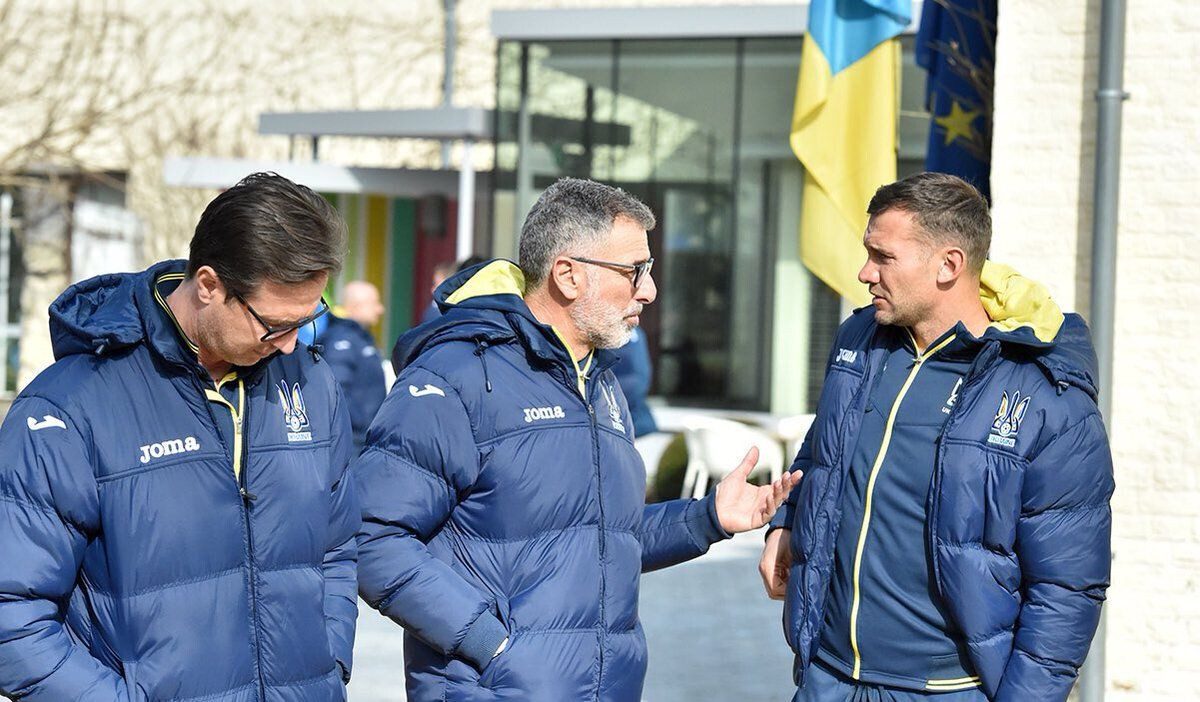
Shevchenko stands out for making simple and — as becomes clear sometimes before, sometimes during, and sometimes only after matches — quite obvious staffing decisions regarding players. The kind that, given the basic formation already in place, an assistant in a simulator like FIFA or Football Manager would recommend to you. The Lithuania match is also notable in this regard, since behind each of its moves, which could have been subject to debate, an idea was easily visible. Judge for yourselves:
- Serhiy Bolbat's inclusion was explained not only by his familiarity with teammates from playing for his base club in the national team, but also by the fact that, unlike Karavaev, he currently has regular playing time (including at the Champions League level) and can be more versatile in attack.
- Junior Moraes's inclusion was seen because he is more useful than Roman Yaremchuk in combination play around the penalty area when the opponent defends deep. At the same time, there is a high chance that Yaremchuk, who is more effective than Moraes in winning the first ball, will be the one to play against the Portuguese.
- Yevhen Konoplyanka's place on the bench was explained by the fact that he is only beginning to regain match fitness after an almost entirely missed summer preparation. Add competition to this (breaking up the trio in midfield or benching anyone from the Marlos-Yarmolenko duo now makes no sense at all) and you start to doubt whether Zhenya will start even once more before the end of the qualifiers.
- The absence of substitutions before the second goal was entirely logical — the team was playing well even despite the slippery score. After the second goal, Marlos and Yarmolenko, who needed rest before Portugal, went to the bench, followed by Stepanenko, who was on a yellow card.
And it's not only so in matters of selecting the lineup — it's so in everything. Has someone young like Roman Yaremchuk or Vitaliy Mykolenko started shining at club level? He got a chance, not just one, and regardless of the opponent's status. Are Dynamo players not shining? Dynamo players are not playing, despite Shevchenko's wonderful shared history with the capital club. Is Malinovskyi scoring? Malinovskyi shoots even with more experienced left-footed masters like Yarmolenko, Marlos or Oleksandr Zinchenko on the pitch.
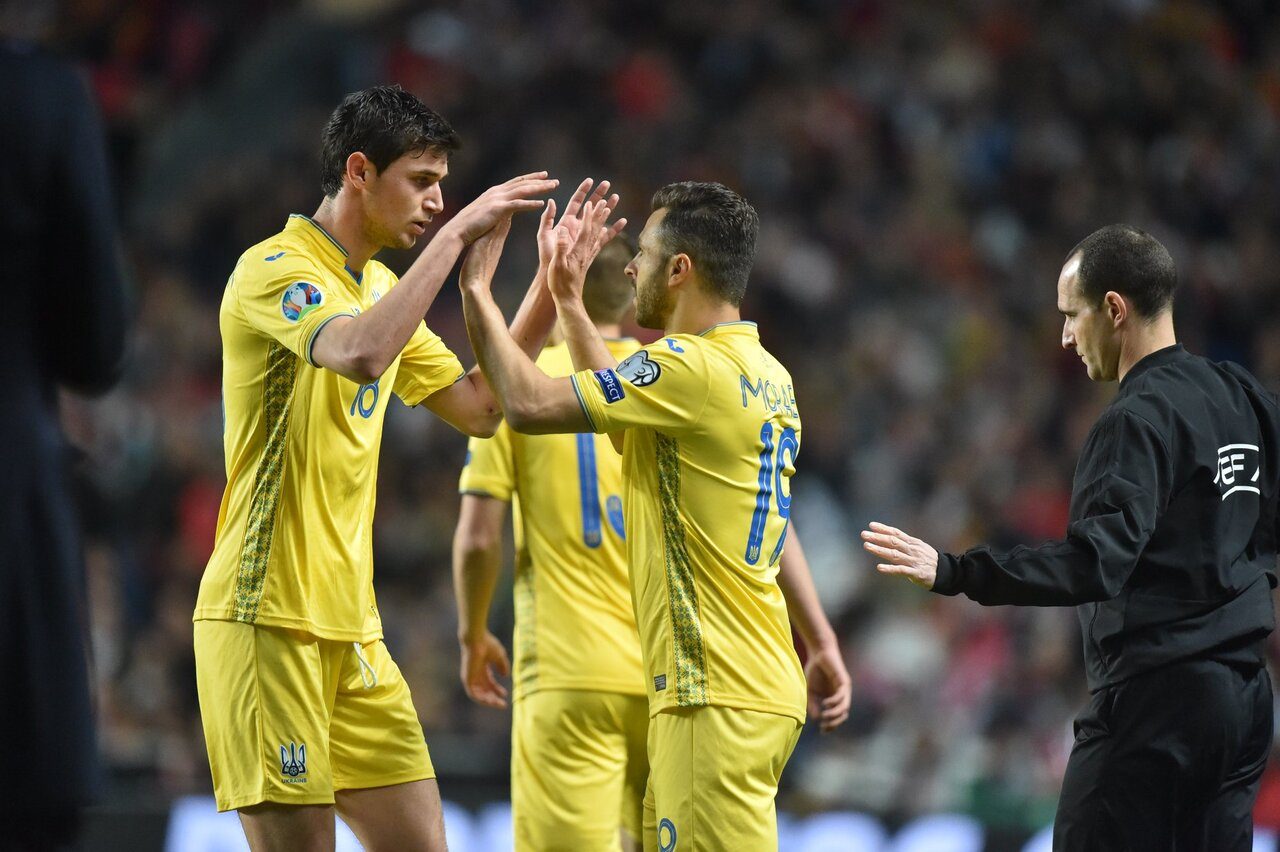
Without inventing anything complicated in the process and, unlike Serbia (that very 0:5), allowing themselves experiments only in friendlies, Shevchenko's team is so far unbeaten as it heads to the European Championship finals. The last time Ukraine lost was to Slovakia, in the Nations League, when everything was already decided.
It is quite possible to assume that at the Euros a strong and well-prepared opponent at that particular moment could beat this Ukraine side, perhaps even heavily, but at the Euro, which will be held in 12 cities across 12 countries, a Ukrainian fan who wants to travel will set off with good expectations for his team's play. Well, Sheva is a stud, no matter how this qualifying campaign ends.

Russian Attacks in Dnipropetrovsk Region: Two Killed, Seven Injured

Defense Forces Strike Four Russian Drone Control Points in Past Day, Including in Berdiansk

Britain Threatens Sanctions on Kremlin-Linked People; Poland Ready to Hand Ukraine Ammunition

Russia says it has completed "planned exercises" in the Black Sea

MVD: Fake Riots With Prop Blood Were Being Prepared Near Presidential Office

Law Enforcers Name Another Klitschko Deputy as Suspect

Berlin Holds Protest Against War in Ukraine; EU Prepares for Possible Russian Halt of Gas Supplies
North Korea Fires Ballistic Missile Over Record Distance in Five Years
Irish Fishermen Force Russia to Postpone Naval Drills

US sanctions in case of invasion of Ukraine could completely destroy Russia's economy, NYT reports
