
2 Infographics Confirming Messi's Greatness
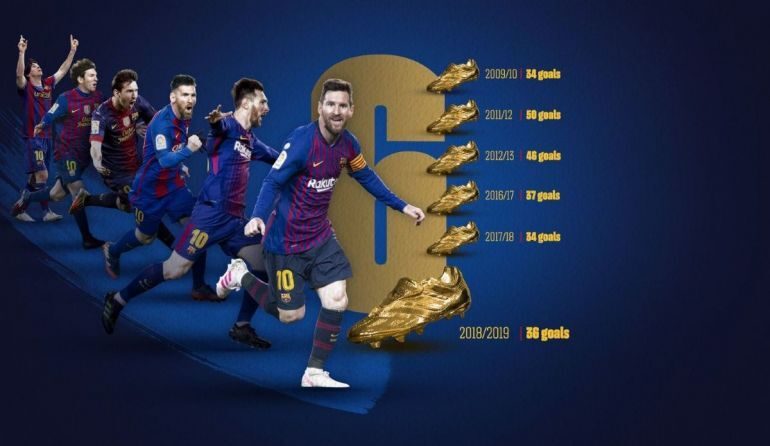
If you ever wondered why he received his 6th Ballon d'Or.
In early December at a ceremony in Paris, Argentine forward Lionel Messi was named the world's best player for the 6th time. In the race for this individual award, the Barcelona star beat Virgil van Dijk — one of Liverpool's key players, who triumphed in the Kyiv Champions League final.
We'll leave aside discussions about who deserved it more and simply acknowledge once again that Lionel Messi is truly great. To see this, let's add to his goal feats and regularly broken records a comparison of Messi's last season with his numbers from 2008-09, when the Argentine scored a club-record 100 goals in a season alongside Thierry Henry and Samuel Eto'o.
Messi was the best back then, and he remains the best now. Moreover, by some metrics Messi, who will turn 33 in a little over six months, even surpasses his early-winter 2008 self. That was the winter when he led Barça out of a group with Shakhtar, Sporting and Basel, and ultimately led the team to triumph over Manchester United at the Stadio Olimpico.
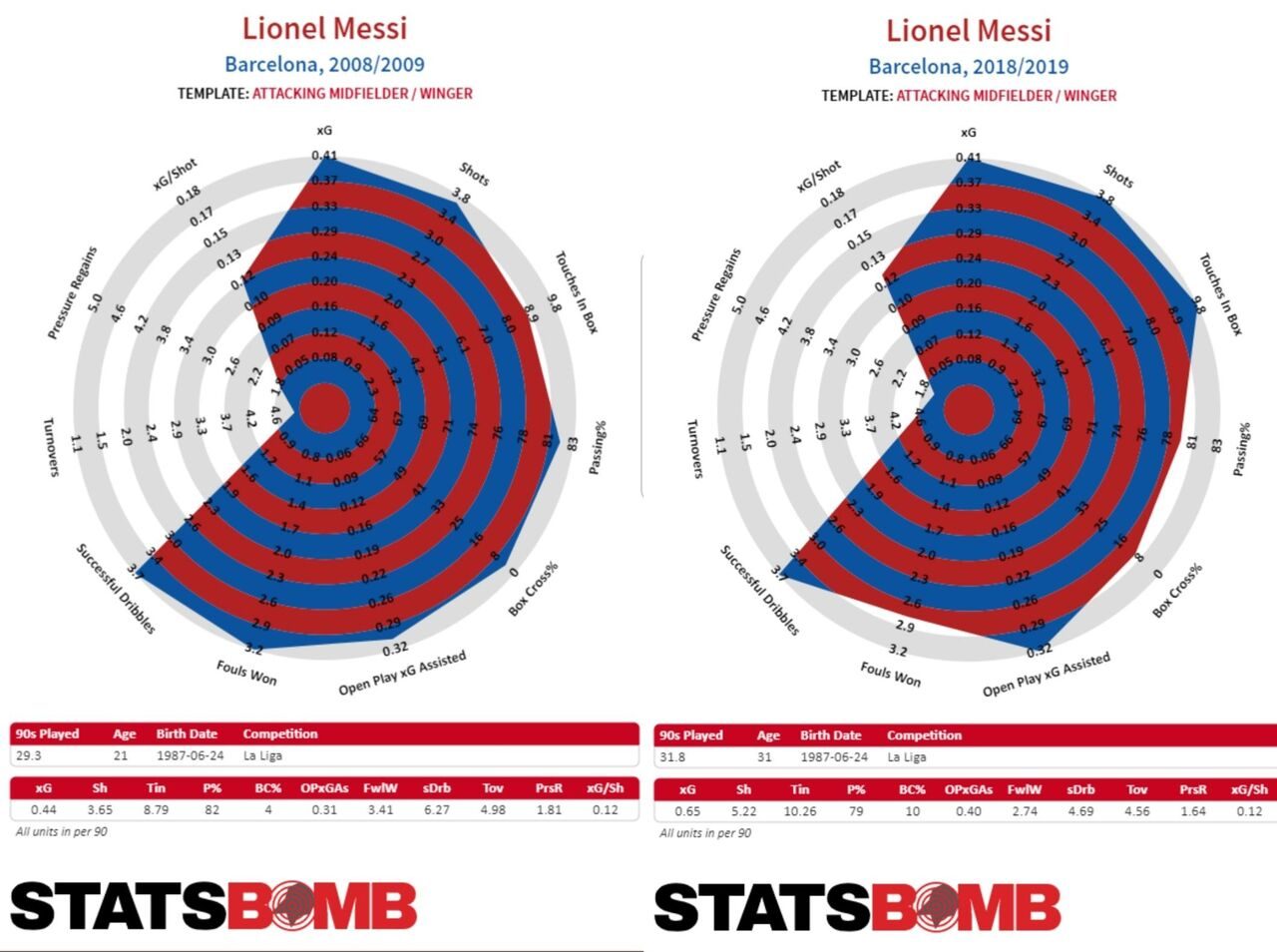
Where Messi's numbers have dropped is in the quantity/quality of crosses and passes. Considering that Messi has at the same time significantly improved as an assistant, more successfully creating goals for others (see Open play xG assisted), and recalling the change in his playing position over his career (from the wing to the so-called 'false nine' role), — this is unlikely to be a weakness.
Having managed to maintain his xG level (i.e., creating threat), passes (i.e., controlling the game) and dribbles (i.e., beating opponents), Messi has also become more efficient at shooting (xG/shot).
And this is the 'fading' Messi in the 'dead' Barcelona of the 'hopeless' coach Ernesto Valverde. Without Xavi and Andrés Iniesta.
Notes
- xG ('expected goals') – a model of expected goals based on shots; roughly speaking, how many goals a team 'should have scored'.
- Shots — Shots
- Touches in box — touches in the opponent's penalty area
- Passing% — pass completion %
- Box cross% — cross completion %
- Open play xG assisted — xG from open play
- Fouls won — fouls won
- Successful dribbles — successful dribbles
- Turnovers — ball losses
- Pressure regains — number of ball recoveries after losing possession
- xG/shot — ratio of shots per match to shot quality

Russian Attacks in Dnipropetrovsk Region: Two Killed, Seven Injured

Defense Forces Strike Four Russian Drone Control Points in Past Day, Including in Berdiansk

Britain Threatens Sanctions on Kremlin-Linked People; Poland Ready to Hand Ukraine Ammunition

Russia says it has completed "planned exercises" in the Black Sea

MVD: Fake Riots With Prop Blood Were Being Prepared Near Presidential Office

Law Enforcers Name Another Klitschko Deputy as Suspect

Berlin Holds Protest Against War in Ukraine; EU Prepares for Possible Russian Halt of Gas Supplies
North Korea Fires Ballistic Missile Over Record Distance in Five Years
Irish Fishermen Force Russia to Postpone Naval Drills

US sanctions in case of invasion of Ukraine could completely destroy Russia's economy, NYT reports
