
Biden's Team: Who Are These People and What Connects Them to Ukraine
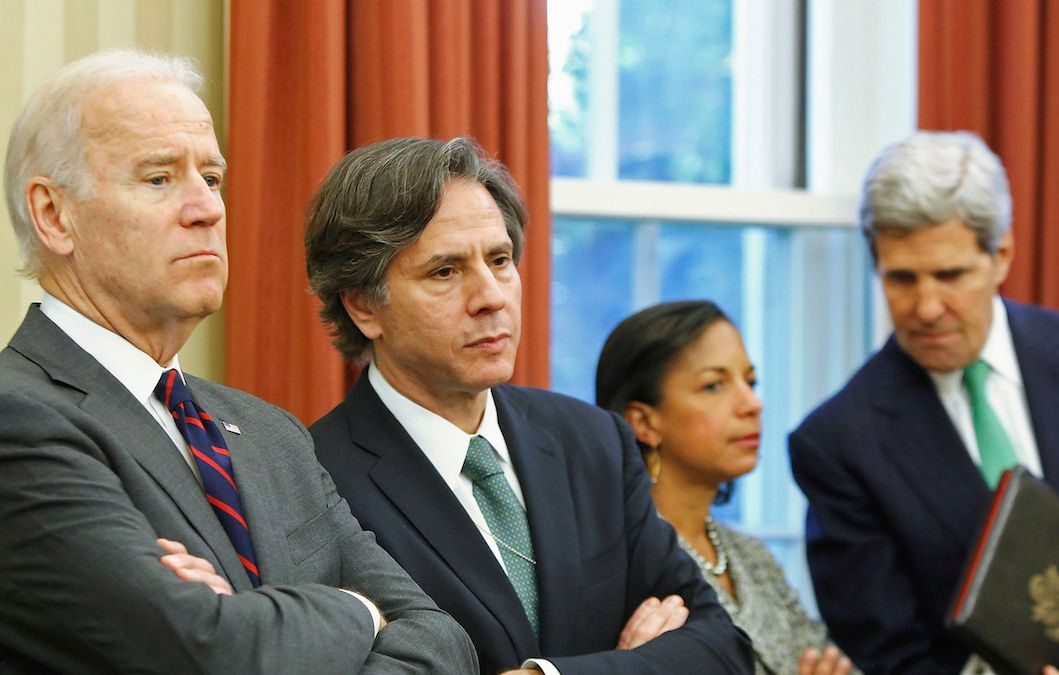
Besides Kamala Harris, Biden is relying on personnel from Obama's administration.
Elected US President Joe Biden is connected with Ukraine by almost too much. His son worked for the scandal-plagued company Burisma, and in Ukraine a criminal case was opened against him (and closed immediately after his election) for allegedly pressuring the Ukrainian authorities to remove Prosecutor General Viktor Shokin from office.
Nevertheless, there is no doubt about future support for Ukraine from the White House: during Obama's administration, when Biden was vice president, Ukraine became an ally of the US, he spoke from the rostrum of the Verkhovna Rada, and all of the Democrat's remarks since his election victory make it clear that the ties remain strong.
But who are the people who have already been announced as part of his team, and is anything connecting them to Ukraine?
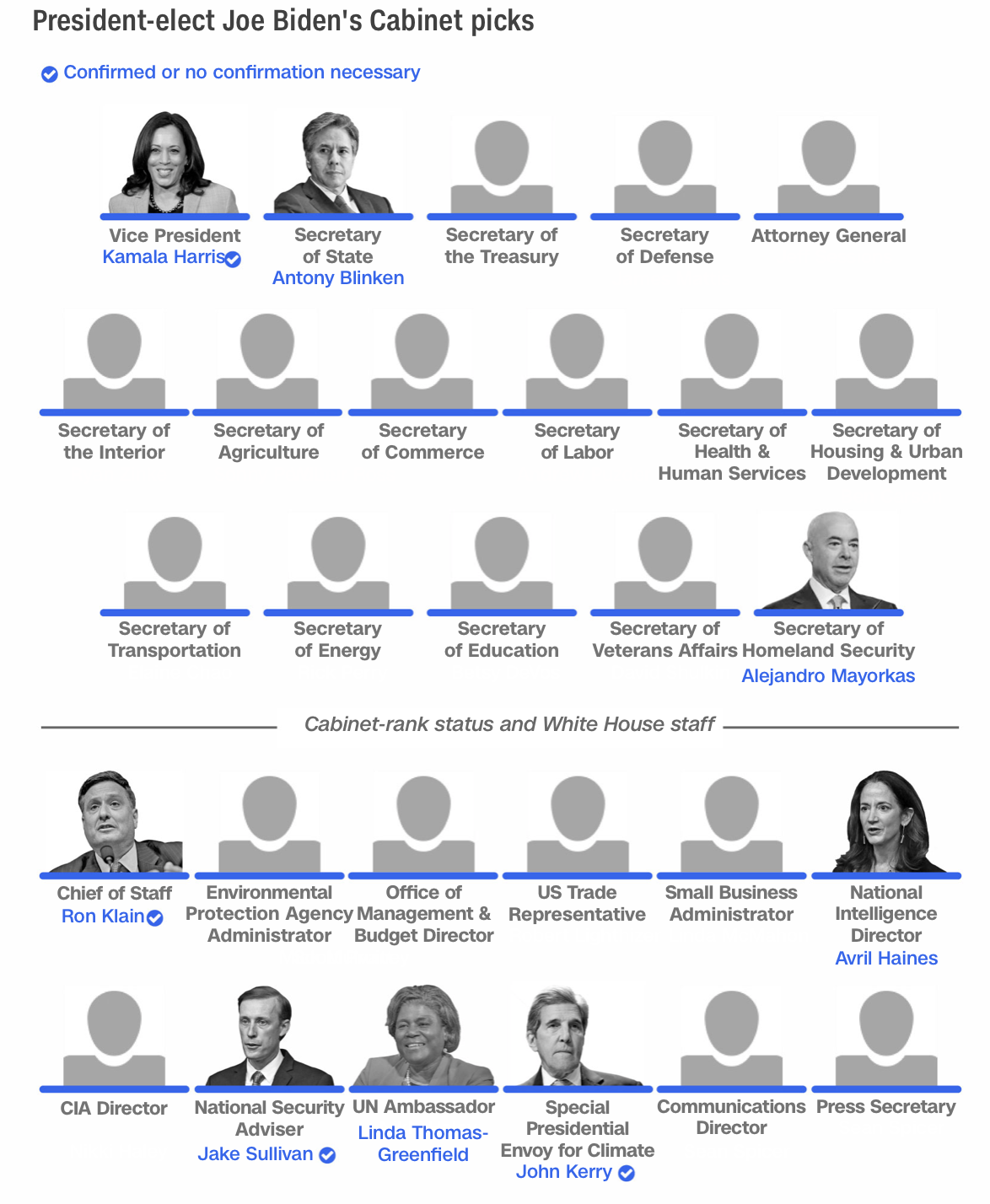
Vice President Kamala Harris. Unlike Ukraine's “vice president Yermak,” in the US the second person in the country is not only constitutionally enshrined, but is also listed on the ballot and elected together with the president as one team. This is not surprising, since if the president for any reason cannot govern the country, the vice president assumes the office.
The senator from California and the first female vice president in US history has little connection with Ukraine. She was one of the most active figures in the Democratic Party camp in promoting the impeachment procedure against Donald Trump after the scandal over alleged pressure on Ukrainian President Volodymyr Zelensky to make him investigate the Burisma case, the company where the son of the elected US president worked. Trump was not removed from office because the Republicans, who at that time held the majority in the Senate, prevented it, but Harris gained serious political dividends from this story.
Harris is definitely not favorable toward Russia. In the debates with Mike Pence, she criticized Trump for trusting Putin more than NATO partners and insisted on holding Russians accountable for interfering in the 2016 elections. She believes that Russia's military involvement in eastern Ukraine disrupts the balance in Europe. This means that an extension or even a strengthening of sanctions against the Russian Federation should be expected.
Secretary of State Antony Blinken. With the Democrats returning to power, Tony Blinken will take one step up — he served as deputy secretary of state under John Kerry in 2015–17, so he naturally has much more connection with Ukraine than Harris. Moreover, his grandfather came from Ukraine.
In March 2015, Blinken flew to Kyiv, where he called for stronger sanctions against Russia for the annexation of Crimea and related actions — for example, the infringement of the rights of Crimean Tatars.
But he made his most interesting statement regarding Ukraine in 2014, while still serving as deputy national security adviser.
Antony Blinken, November 2020
One of the factors that could help deter Russian aggression may be providing Ukraine with lethal weapons. We need to consider this
President Obama proved to be softer on this issue, so the question of providing weapons to Ukraine dragged on and was resolved already during the rule of the Republicans and Trump.
Director of National Intelligence Avril Haines. The former deputy director of the CIA will head national intelligence, becoming the first woman in this post. During Obama's presidency, she worked, among others, with NATO partners in Eastern Europe, where the key issues were assistance to Ukraine and countering Russia.
She once had to appear before the Senate and explain why the Obama administration did not react strongly enough to Russia's interference in the 2016 elections. The answer: the lack of support for these actions from the Republican Party.
National Security Adviser Jake Sullivan. His candidacy is considered the most controversial in the new administration. He was national security adviser to US Vice President Joe Biden in 2013–14, and Sullivan is accused of wanting to pursue a very soft policy toward the country's geopolitical rivals.
Obama's softness amid events in Crimea and eastern Ukraine, as well as toward China and Iran, is attributed, among others, to Sullivan, who is called the architect of foreign policy at that time. And perhaps it is precisely because of Sullivan that the Ukrainian armed forces received lethal weapons not under Obama, who was favorable toward Ukraine, but, paradoxically, under Trump, who did not love it.
The Electoral College will recognize Joe Biden as the winner of the elections on December 14, and the inauguration of the new president must take place on January 20.
TK Media

Russian Attacks in Dnipropetrovsk Region: Two Killed, Seven Injured

Defense Forces Strike Four Russian Drone Control Points in Past Day, Including in Berdiansk

Britain Threatens Sanctions on Kremlin-Linked People; Poland Ready to Hand Ukraine Ammunition

Russia says it has completed "planned exercises" in the Black Sea

MVD: Fake Riots With Prop Blood Were Being Prepared Near Presidential Office

Law Enforcers Name Another Klitschko Deputy as Suspect

Berlin Holds Protest Against War in Ukraine; EU Prepares for Possible Russian Halt of Gas Supplies
North Korea Fires Ballistic Missile Over Record Distance in Five Years
Irish Fishermen Force Russia to Postpone Naval Drills

US sanctions in case of invasion of Ukraine could completely destroy Russia's economy, NYT reports
