
Bill Gates Is the Main Character of Conspiracy Theories About Coronavirus and 5G. Here's What He Says Himself
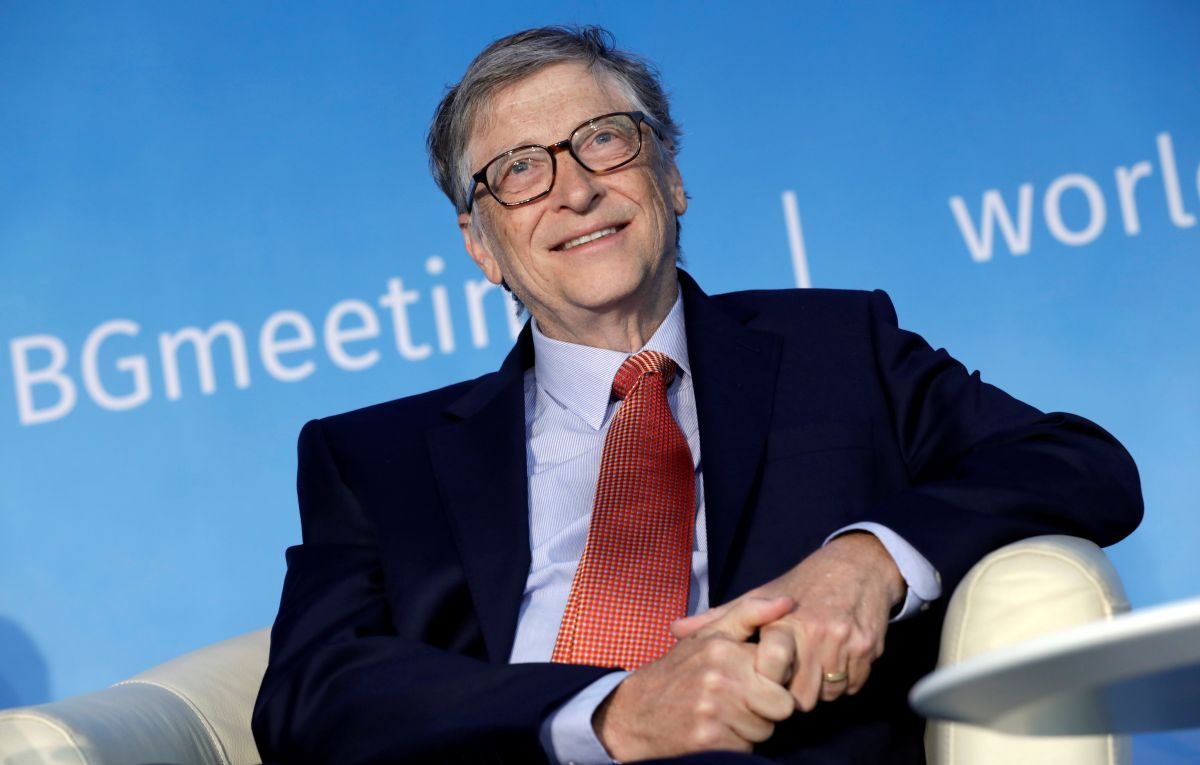
One of the world's richest people debunks myths in an interview with Bloomberg.
Microsoft Corp. co-founder and billionaire philanthropist Bill Gates has become a central figure in the COVID-19 story. The good news — the Bill and Melinda (his wife — TK Media note) Gates Foundation has allocated more than $350 million to fight the disease, including funding the production of vaccines at AstraZeneca, Johnson & Johnson and Novavax. The bad news — Gates is heavily criticized by anti-vaxxers and other conspiracy theorists who are convinced that he personally created the virus for his vile purposes.
Gates says he is optimistic — both about defeating the coronavirus and about the world's ability to deal with the most outlandish conspiracy theories.
- How confident are you that by the end of 2020 we will have a vaccine that can be widely distributed?
- The initial vaccine will not be perfect and effective in fighting the disease and its transmission. It may not be durable and will mostly be used in rich countries as a temporary measure.
We will be lucky if we achieve something more by the end of the year. But it is very likely that some other vaccines will be approved in 2021. The strongest response may come from a protein subunit. Given the large number of companies working on this, we can afford to make enough mistakes and in the end still arrive at something inexpensive and durable.
- For years there has been talk that if anti-vaxxers, like their great-grandparents, had experience fighting a pandemic, they would think differently.
- In both cases when I was in the White House (since 2016), I was told to listen to anti-vaxxers like Robert F. Kennedy Jr. So yes, it is quite ironic that people question vaccination, and we really have to say: "My God, how else can we survive this tragic pandemic?"
- Given the skepticism, should COVID-19 vaccination be mandatory?
- Making something mandatory often leads to unpleasant consequences. But one can argue that it is necessary for those who work in nursing homes, or simply with elderly people.

- What do you think about all these conspiracy theories claiming that you conduct vaccine research in order to control people's minds with 5G radio waves, etc.?
- That is strange. They take the fact that I am involved in vaccines and twist it — so supposedly I am trying to make money by getting rid of lives, rather than giving money to save lives. If this stops people from taking vaccines or following mask rules, then that is a big problem.
- What about hydroxychloroquine, which the White House promoted despite repeatedly proving ineffective and, in addition, causing heart problems in some patients?
- This is the age of science, but sometimes it does not seem so. In a test tube, hydroxychloroquine looked good. On the other hand, there are many good therapeutic drugs that have been proven to work without serious side effects.
- We have seen the US and other countries buying up vaccine supplies even before they are approved. Is this harmful?
- Cooperation is needed both within countries and between them. The US has so far not helped find money for purchases for poor countries. We have funded more research and development than any other country, but in production and procurement we have only been concerned about ourselves. In every phone call with the leaders of pharmaceutical companies and countries, I say: "Hey, we need everyone to be protected."
- How do you think this will all end?
- Innovations in therapy will start to reduce the mortality rate, but the real end will come with the spread of natural infections and a vaccine that gives us collective immunity. In rich countries this will happen sometime next year, at best at its beginning. By the end of 2021 we will get rid of this problem.
- And will we all be fine?
- Absolutely. We have been lucky that this disease was not more deadly.

Russian Attacks in Dnipropetrovsk Region: Two Killed, Seven Injured

Defense Forces Strike Four Russian Drone Control Points in Past Day, Including in Berdiansk

Britain Threatens Sanctions on Kremlin-Linked People; Poland Ready to Hand Ukraine Ammunition

Russia says it has completed "planned exercises" in the Black Sea

MVD: Fake Riots With Prop Blood Were Being Prepared Near Presidential Office

Law Enforcers Name Another Klitschko Deputy as Suspect

Berlin Holds Protest Against War in Ukraine; EU Prepares for Possible Russian Halt of Gas Supplies
North Korea Fires Ballistic Missile Over Record Distance in Five Years
Irish Fishermen Force Russia to Postpone Naval Drills

US sanctions in case of invasion of Ukraine could completely destroy Russia's economy, NYT reports
