
“Cloud Raves,” Pseudo-Doctors and Bloggers in Quarantine: What TikTok Lives On During the Coronavirus
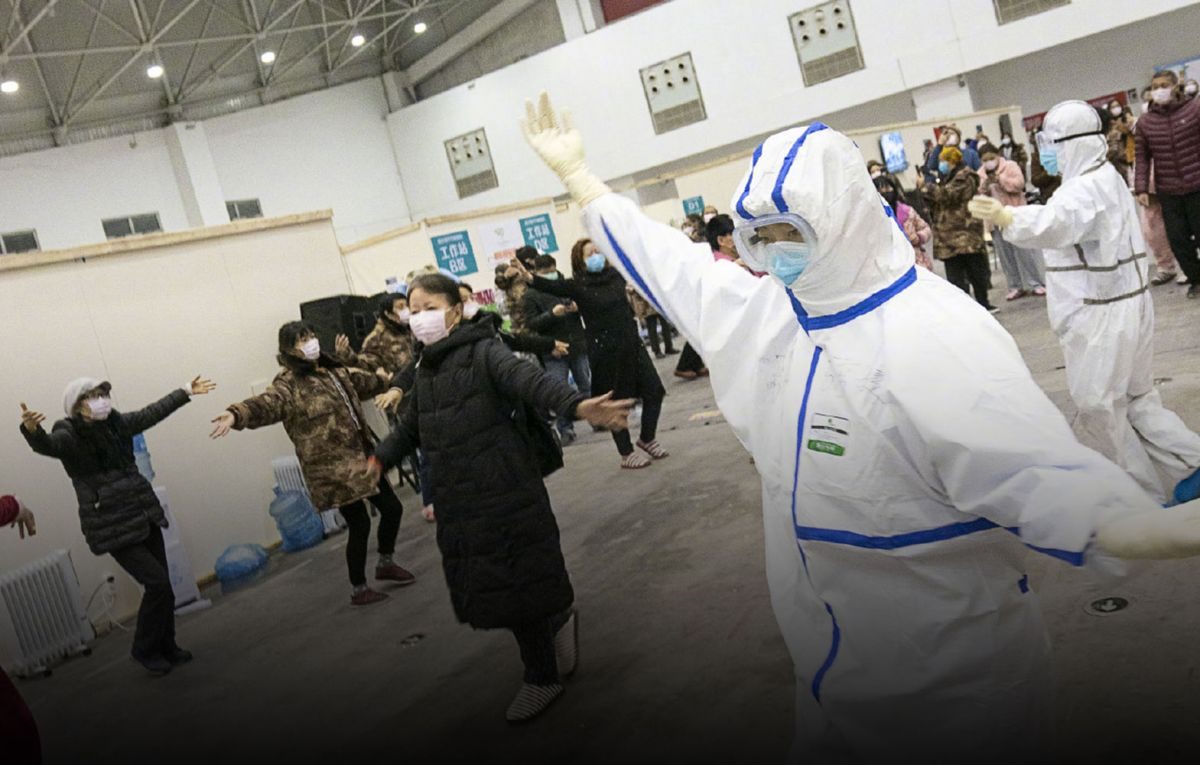
Forced isolation has given rise to new trends.
As is typical amid general panic, social media during the COVID-19 outbreak has become a double-edged sword. On the one hand, teenagers stuck in Wuhan can entertain themselves without leaving home, but on the other, a whole flood of fake news, fake patients and even fake doctors has begun online. We explain how TikTok helps people spend their leisure time during the coronavirus outbreak, for better or worse for others.
Cloud raves. Chinese nightclubs are entertaining young people stuck at home and at the same time continue to earn money by hosting online parties on local TikTok analogues called Douyin and Kuaishou. A “cloud rave” is, as a rule, simply a DJ stream that users can comment on in real time. Some musicians record streams at home, others in empty clubs, remembering to wear masks. Meanwhile, Chinese clubbers film their own dances on video.
This is not a niche joke: 2.3 million viewers joined the rave at Beijing's Sir Teen club on February 10, and in the first half hour the stream was watched by 100,000 people. Although the events themselves are free, users gladly send donations: the Shanghai club TAXX earned the equivalent of $104,000 during one of its streams.
Meanwhile, flash mob fans post videos of dance battles with residents of neighboring buildings on TikTok:
People stuck in quarantine at home or after travel post videos on the network of themselves sipping cocktails against digital backdrops of palm trees, fishing in tubs of water and playing billiards on the kitchen table:
Fake doctors. Of course, during periods of mass infection, doctors have nothing better to do than record chatter about viruses on their front-facing cameras. Some office worker decided to joke around and, putting on a white coat, showed on TikTok a test tube of blood supposedly belonging to a zero patient with COVID-19. In the video he gives a “professional” opinion that the blood “looks suspicious.” No wonder, since it's purple!
Of course, there was no shortage of wellness influencers giving useless and sometimes health-harmful advice on how to avoid infection. Most homegrown doctors who advise taking horse doses of vitamin C for COVID-19 symptoms, as tradition holds, are found on Instagram and YouTube, but TikTok has turned up plenty of conspiracy theory fans: one user posing as a truth-telling doctor declared on camera that 90,000 cases of illness had already been confirmed in China. The video garnered 250,000 views before it was removed from the platform.
…against real doctors. Understanding how lies on popular platforms undermine the spread of accurate information about the virus, health organizations have started opening their own TikTok accounts. UNICEF and the Red Cross have used the platform before, and during the COVID-19 outbreak the World Health Organization joined them.
In its first video, WHO's technical lead on infection prevention Benedetta Allegranzi demonstrates how to protect oneself during the epidemic by correctly wearing a mask and remembering to wash hands, and lists symptoms that should prompt an immediate visit to a doctor. True, even with 225,000 likes, WHO cannot catch up with the horror videos about coronavirus popular on the service.
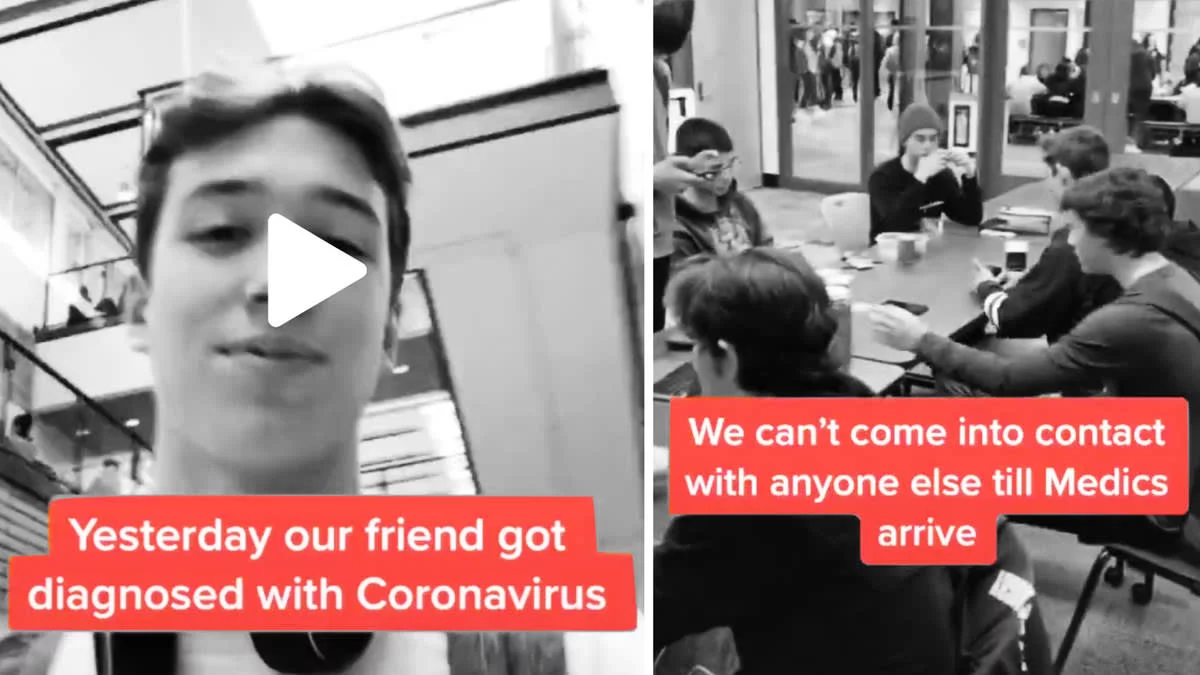
Fake patients. Armed with smartphones and chasing fame, teenagers could give a head start to the heroes of “American Vandal.” TikTok users pretend that they or their acquaintances are sick. One Canadian schoolboy posted a video in which his peer in a medical mask coughs violently in the cafeteria. The clip gained 4 million views and 817,000 likes and sowed panic among Canadians.
The spokesperson for the British Columbia Ministry of Health had to comment on the out-of-control prank, stressing that the only confirmed case in the province was a 40-year-old man, not a teenager. But this did not stop the author of the fake video from filming another: in it, the guy claims that he and his friends were isolated after contact with a patient and are being moved to quarantine. In his profile the joker describes himself as “CEO of Coronavirus” and urges people to follow him while he is still alive.
Another user claimed she caught coronavirus and presented proof: she is wearing a protective medical suit (in fact, a garbage bag). For 250,000 likes, you'll do anything.
Her record was beaten by a girl who apologized on TikTok to those who drank from her glass at a party after which she was supposedly diagnosed with the virus.
Everyday racism. It is no secret that because the virus originated in Wuhan, reports of it sparked a wave of everyday racism even in countries where not a single case has been detected. Social media became the tool for fanning paranoia: on the Instagram account of the University of California, Berkeley, for example, a post appeared saying xenophobia “may become a normal reaction in the coming weeks.” So this lad, imitating a coughing fit after ordering Chinese food, is not that original.
User Mr Slavinator, parodying residents of Eastern Europe, demonstrates that when a new student from China appears in class, one must urgently put on a gas mask:
But Asian-origin users, whom passersby shun, did not stay silent either: one TikTok user gained 50,000 likes by describing how he deliberately coughs near white fellow passengers so they “leave him alone.” “I'm not even Chinese, but can they really understand that?” he adds.
Bloggers panic and profit. In a comment to Business Insider, five travelers who have built careers on social media said they are afraid to travel abroad during the outbreak. But Chinese influencers, on the contrary, are capitalizing on the hot topic. The Xiaohongshu network, resembling a hybrid of Instagram and Pinterest, has recently turned into a storehouse of content about coronavirus. The hashtag “come on, Wuhan!”, meant to unite the city's residents in a common misfortune, was viewed 330 million times.
And 21-year-old Australian Daniel, who came to visit his grandparents in Wuhan, got stuck in quarantine and decided to film videos on TikTok about his daily life. Within a few days he attracted 17,000 followers and collected 155,000 likes.
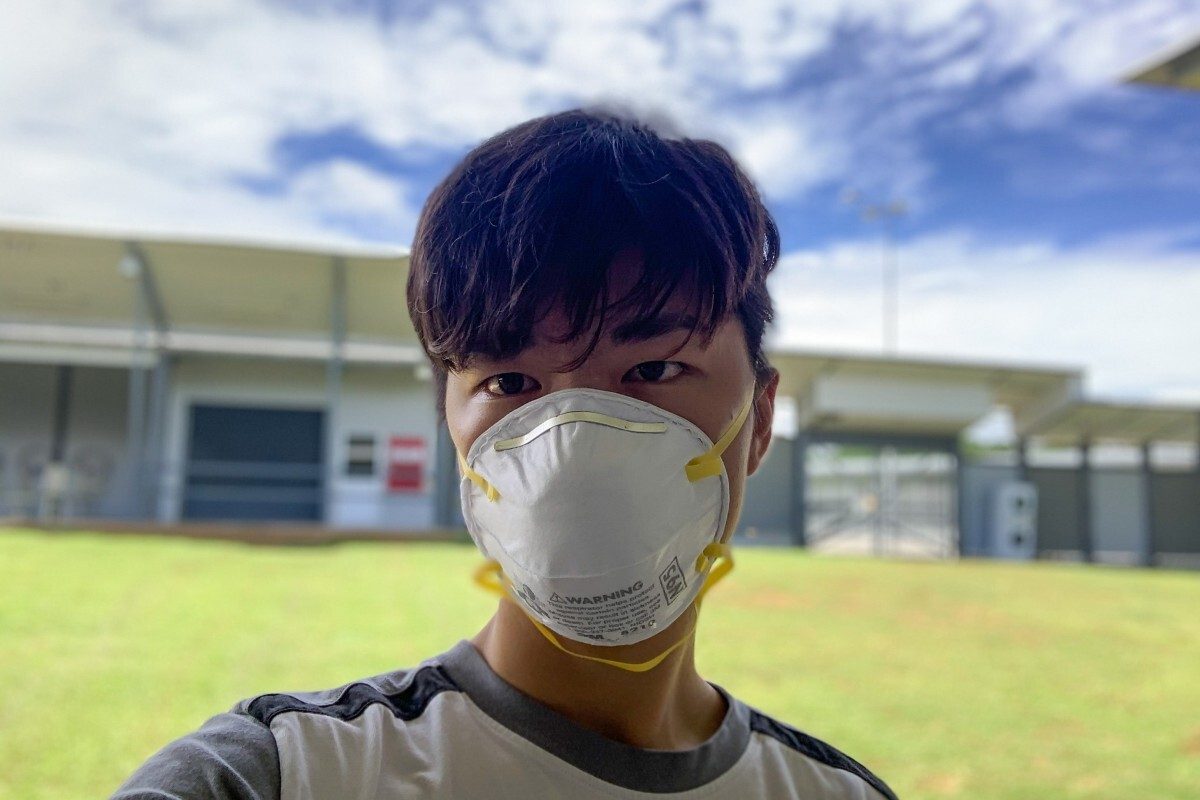
As usual, during a crisis social media reveals both the best and worst traits in people. One can only hope the epidemic ends soon, and we mean the epidemic of TikTok videos in which yet another teenager dances in a mask to the catchy “hey, it's corona time.”
Marina Moynihan, TK Media

Russian Attacks in Dnipropetrovsk Region: Two Killed, Seven Injured

Defense Forces Strike Four Russian Drone Control Points in Past Day, Including in Berdiansk

Britain Threatens Sanctions on Kremlin-Linked People; Poland Ready to Hand Ukraine Ammunition

Russia says it has completed "planned exercises" in the Black Sea

MVD: Fake Riots With Prop Blood Were Being Prepared Near Presidential Office

Law Enforcers Name Another Klitschko Deputy as Suspect

Berlin Holds Protest Against War in Ukraine; EU Prepares for Possible Russian Halt of Gas Supplies
North Korea Fires Ballistic Missile Over Record Distance in Five Years
Irish Fishermen Force Russia to Postpone Naval Drills

US sanctions in case of invasion of Ukraine could completely destroy Russia's economy, NYT reports
