
Egyptian Scientists Recreate Face of Pharaoh Amenhotep I
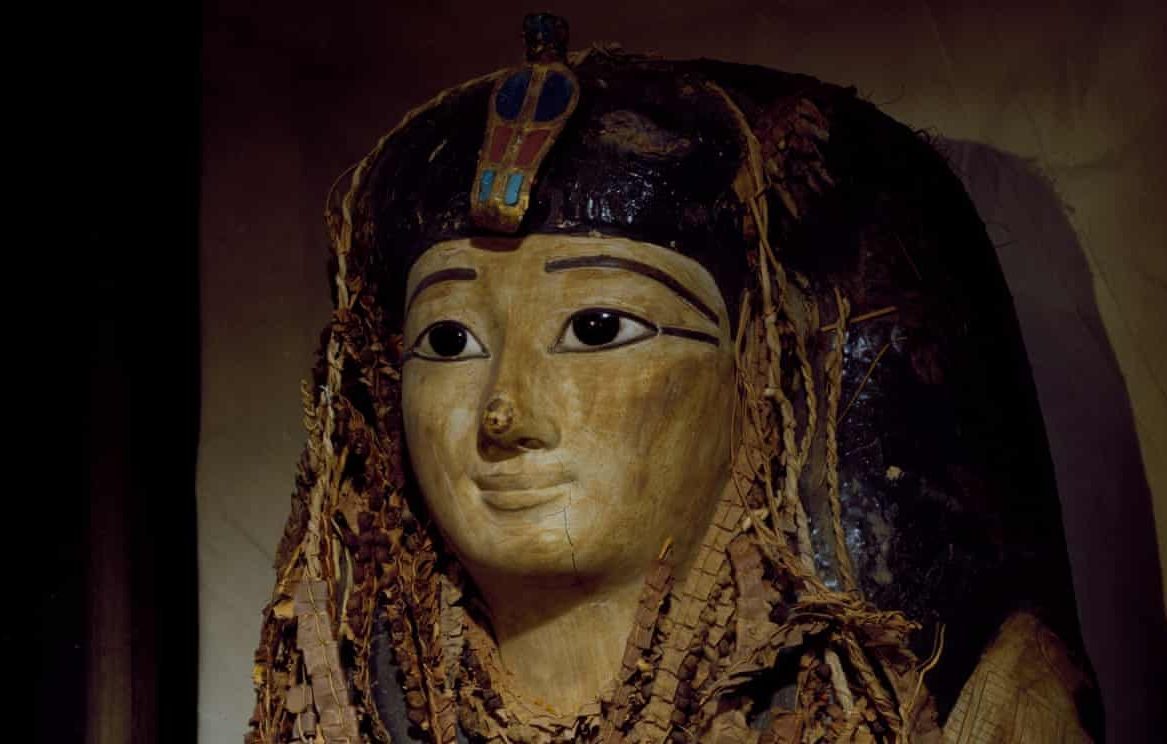
They used a CT scanner to do this.
The mummy of Pharaoh Amenhotep I remains one of the few embalmed bodies of Egyptian rulers whose remains modern researchers have not yet studied without their burial shroud.
The mummy was discovered in 1881 in the Deir el-Bahari tomb in Luxor, and its linen wrappings, preserved in an almost "perfect" condition, were not removed. Today, the mummy of Amenhotep I is kept in the Egyptian Museum in Cairo.
Local scientists studied the pharaoh's remains using computed tomography to get an idea of what he looked like, the causes of his death and his state of health at the time of death.
They were able to look beneath the burial bandages and recreate the appearance of the mummy underneath for the first time. The scientists published the results of the study in the journal Frontiers in Medicine.
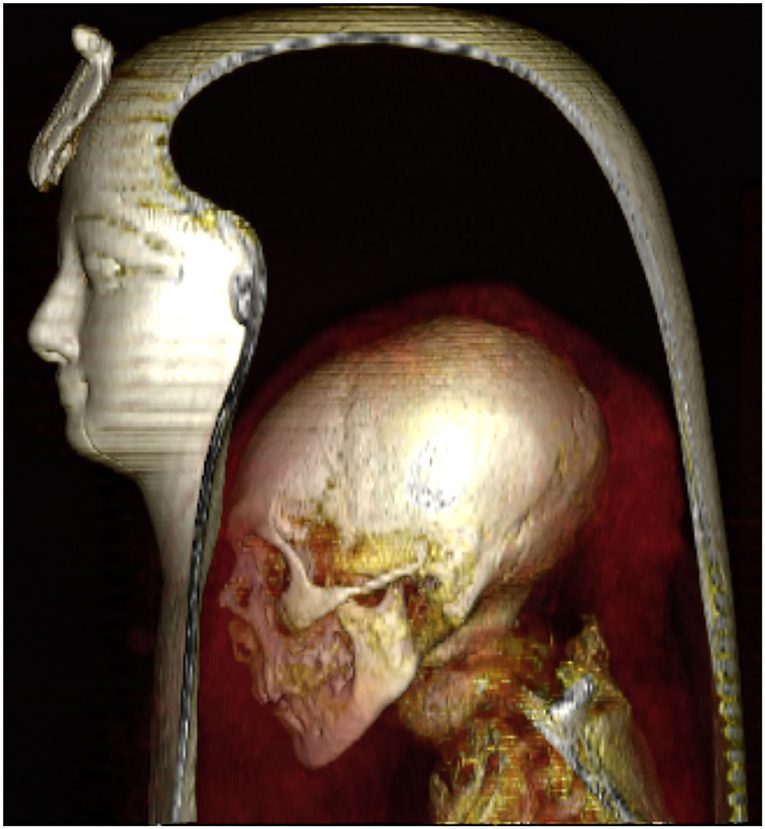
It turned out that at the time of death Amenhotep I was 35 years old and his height was approximately 168.5 cm. The pharaoh's face was oval, with a narrow chin and a small nose.
Sahar Salim
lead author of the studyWe showed that Amenhotep I was about 35 years old when he died. He was about 169 cm tall and had good teeth. In his wrapping he wore 30 amulets and a unique gold belt with gold beads. It appears that Amenhotep I physically resembled his father.
According to the researchers, the fact that the pharaoh had such good teeth shows how "remarkable" the mummification process was.
"The mummified bodies are well preserved. Even tiny bones inside the ears have survived. Undoubtedly, Amenhotep's teeth are well preserved. Many royal mummies had bad teeth, but Amenhotep I had good teeth," Salim said.
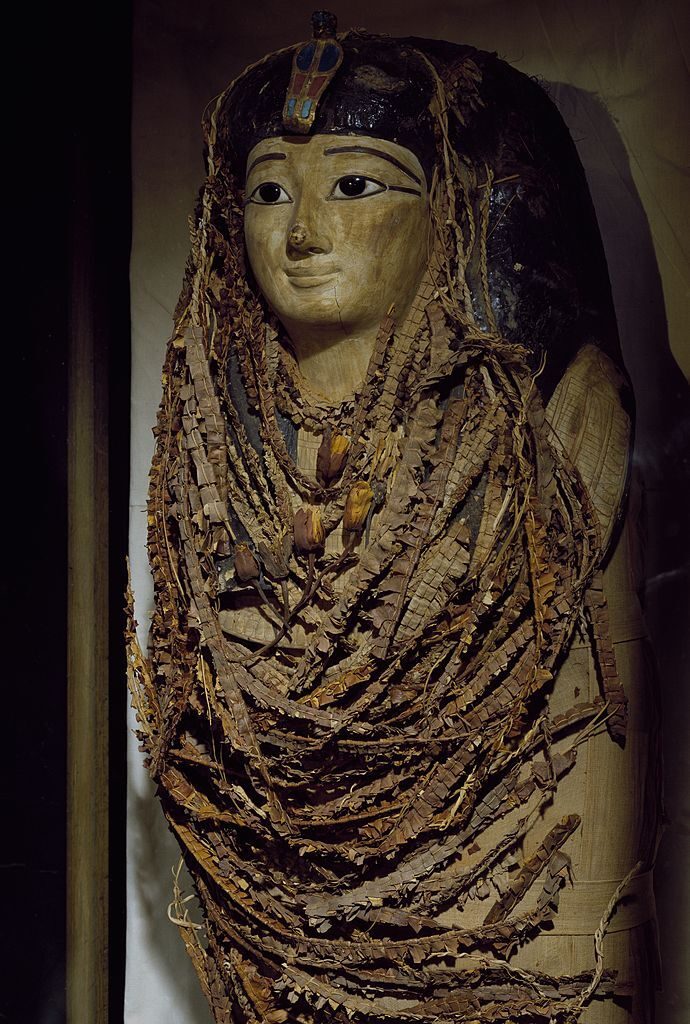
Amenhotep's hair was curly, and the lobe of his left ear was pierced. The researchers also noted that the pharaoh had a complete set of teeth. Under the wrappings, the scientists found 30 amulets and ornaments, including a metal (presumably gold) belt decorated with beads.
The authors of the study were unable to determine the cause of death. However, they recorded postmortem damage and traces of restoration. It is believed that Lebanese priests of the 21st dynasty restored and reburied the mummy of Amenhotep I after the original tomb was looted. The pharaoh's original tomb has never been found.
Amenhotep I was the second king of the 18th dynasty and ascended the throne after the death of his father Ahmose I. He ruled Egypt for about 21 years, from approximately 1525 to 1504 BC.
His name means "Amun is satisfied." His reign is believed to have been peaceful, which gave him time to focus on administrative organization and the construction of temples. He may have ruled together with his mother Ahmose-Nefertari.
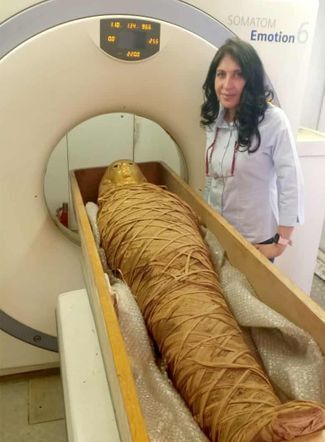
The research team found that Amenhotep's brain was not damaged, unlike those of other kings, including Tutankhamun and Ramesses II. Salim said the project was exciting, "like unwrapping a present."
Sahar Salim
lead author of the studyWe could not find any wounds or disease-related deformities to explain the cause of death, apart from numerous postmortem injuries, presumably inflicted by tomb robbers after his first burial. His internal organs were removed by the first embalmers, but not his brain and heart. We showed that, at least for Amenhotep I, the priests of the 21st dynasty lovingly repaired the damage inflicted by tomb robbers, restored his mummy to its former glory, and left the magnificent ornaments and amulets in place.

Russian Attacks in Dnipropetrovsk Region: Two Killed, Seven Injured

Defense Forces Strike Four Russian Drone Control Points in Past Day, Including in Berdiansk

Britain Threatens Sanctions on Kremlin-Linked People; Poland Ready to Hand Ukraine Ammunition

Russia says it has completed "planned exercises" in the Black Sea

MVD: Fake Riots With Prop Blood Were Being Prepared Near Presidential Office

Law Enforcers Name Another Klitschko Deputy as Suspect

Berlin Holds Protest Against War in Ukraine; EU Prepares for Possible Russian Halt of Gas Supplies
North Korea Fires Ballistic Missile Over Record Distance in Five Years
Irish Fishermen Force Russia to Postpone Naval Drills

US sanctions in case of invasion of Ukraine could completely destroy Russia's economy, NYT reports
