
Tourist Group Lost on Mount Elbrus: Five Dead, 14 Rescued
Climbers described how people died in each other's arms.
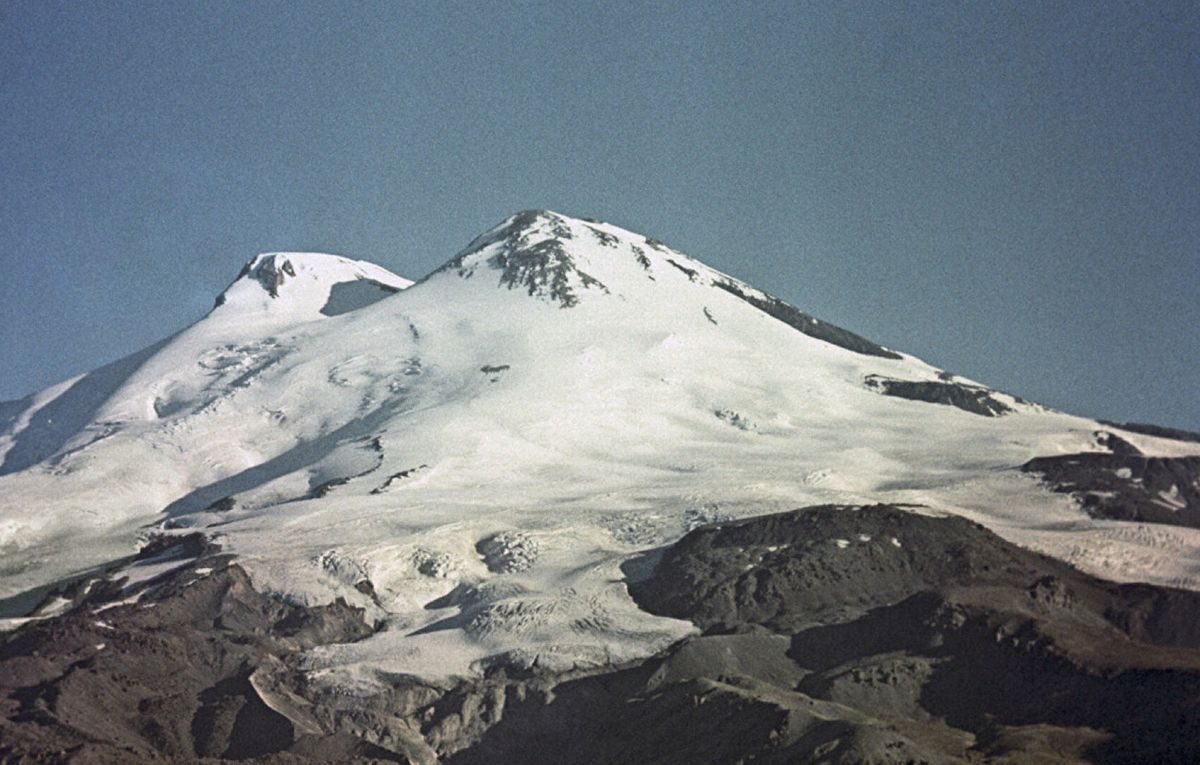
On the afternoon of September 23, a group of 19 climbers got lost on the slope of Mount Elbrus at an altitude of 5,400 m. We explain how many people died, how the rescue operation went, and how many managed to survive.
The group of tourists included people over 30 years old who had come from 11 regions of Russia. They were not professional climbers. At around 17:10, the tourists sent a distress signal because of worsening weather conditions.
According to the Russian Emergencies Ministry, wind gusts on the slope of Elbrus reached 40-70 m/s, wet snow was falling, and the air temperature dropped to -20 degrees Celsius. Visibility in such a blizzard did not exceed one meter. Several dozen rescuers began searching for the missing tourists from an altitude of 5,000 m.
Initially, the agency reported that the guide who accompanied the tourists had abandoned them: “The guide who led people up the mountain abandoned them and went down. We met him on the way.”
Denis Alimov, the organizer of the Elbrus climb, said the group included four professional climbers who accompanied 16 climb participants. He said that at around 10:00, the climbers reached a plateau above the Elbrus saddle (5,416 m, the starting point for the summit climb), but then one of the young women fell ill.
The guide's assistant and the young woman began descending to the saddle to lose altitude, while the other tourists went on toward the summit. A guide from another group said the climbers were “significantly delayed” during the ascent.
The guide's assistant who helped the young woman descend said that 30 minutes after separating from the group, the weather worsened and a storm began. Alimov said: “A sharp drop in pressure was possibly the reason, because the girl's condition got worse even as we lost altitude. She lost consciousness and died within an hour in the guide's arms.” The guide's assistant waited for the group until 15:00, but when they did not come down, he contacted the camp, began descending and called the Emergencies Ministry.
One of the tourists broke a leg during the descent of the rest of the group, while the weather deteriorated catastrophically. One of the climbers said: “We got lost. We slipped and fell about 100 meters over bottle ice, we couldn't get the ice axe in at all. One of our guys broke his leg. We immediately sent an SOS message to the Emergencies Ministry with our coordinates. We waited about two hours and then carried the guy down.”
The guides decided to split the group into three squads to separate those who were moving faster from those moving slower. During the descent, two more people died in one of the groups. However, the organizer considers the decision to split up to be correct, otherwise there could have been more victims. The guides suffered severe frostbite and injuries. One of them, according to Alimov, was practically blinded.
According to the Russian Emergencies Ministry, five people died on Mount Elbrus: four women and one man. 14 people were found alive and rescued. At the Azau Glade at an altitude of 2,300 m, they were handed over to medical workers. All were hospitalized. At least three people were unable to descend on their own: one had fractures, and two were unconscious, so rescuers carried them to snowcats (tracked over-snow vehicles).
Media outlets published lists of the dead and injured, according to which two of the injured are guides. Eight people are in moderate condition. At 2:45, the search and rescue operation was fully completed. A pre-investigation inquiry has been launched into the deaths of the climb participants.

Russian Attacks in Dnipropetrovsk Region: Two Killed, Seven Injured

Defense Forces Strike Four Russian Drone Control Points in Past Day, Including in Berdiansk

Britain Threatens Sanctions on Kremlin-Linked People; Poland Ready to Hand Ukraine Ammunition

Russia says it has completed "planned exercises" in the Black Sea

MVD: Fake Riots With Prop Blood Were Being Prepared Near Presidential Office

Law Enforcers Name Another Klitschko Deputy as Suspect

Berlin Holds Protest Against War in Ukraine; EU Prepares for Possible Russian Halt of Gas Supplies
North Korea Fires Ballistic Missile Over Record Distance in Five Years
Irish Fishermen Force Russia to Postpone Naval Drills

US sanctions in case of invasion of Ukraine could completely destroy Russia's economy, NYT reports
