
Erdogan Invades Syria and Meets With “Crimean Deputies”. What Is Happening in Turkey Now?
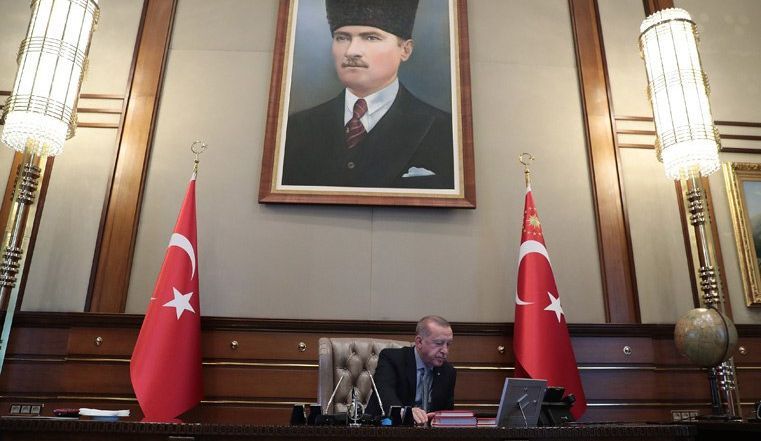
Turkey is confronting the West and drawing closer to Russia. The TK Media editorial team looked into what is happening in Ankara.
They say Turkey has invaded Syria. What is happening there?
On October 9, Turkish President Recep Erdogan announced the start of a Turkish military operation against the Kurds in northeast Syria. The Turkish Foreign Ministry sent notifications about the start of the invasion to the United States and NATO countries. Erdogan called the military operation “Peace Spring”.
That same day, Turkish air and artillery forces began bombing Kurdish positions in the provinces of Raqqa, Aleppo and Al-Hasakah, as well as other cities along the Turkish-Syrian border. The Syrian National Army, which is oriented toward Turkey, also came out against the Kurds.
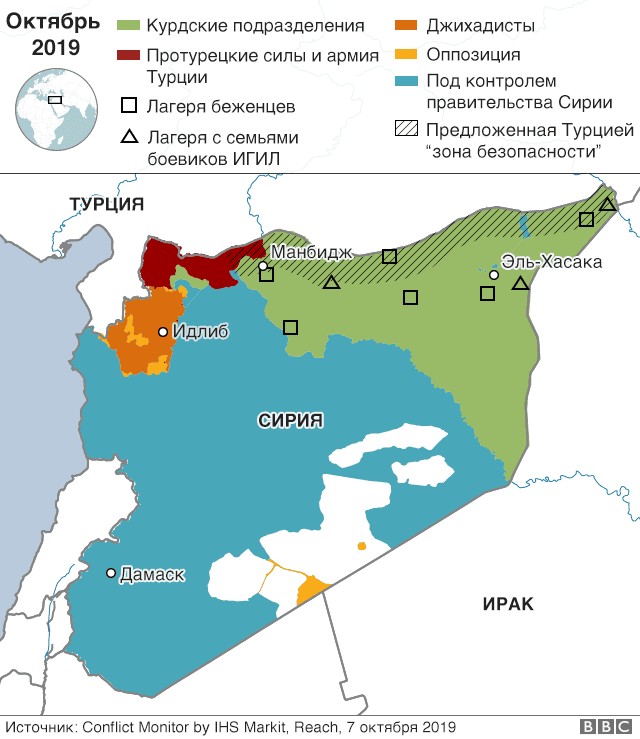
Why does Turkey wage war against Syrian Kurds?
President Erdogan justifies the need for the military operation by the threat of terrorism coming from the Kurds in northeast Syria, which creates the threat of Kurdish separatism inside Turkey itself, where Kurds make up no less than 15 to 25% of the country's population. It should be noted that “anti-Kurdish rhetoric” is part of Erdogan's domestic policy, with which he won the early presidential election in 2015, and recent elections in Turkey, in particular the opposition's victory in the local elections in Istanbul, have forced Erdogan to look for ways to mobilize his own electorate. The number of terrorist attacks in Turkey has indeed increased in recent years, and public fear and law-and-order policies have helped the Turkish president strengthen the influence of law enforcement agencies and “tighten the screws” on the opposition.
Among the goals of the operation named by Erdogan are neutralizing terrorist organizations, establishing control over the territory and creating a “security belt” between Syria and Turkey. In addition, after establishing control over northeast Syria, Erdogan expects to resettle 3 million Syrian refugees currently in Turkey to that territory. The latter, the refugee problem, has been a separate major pain for Ankara in recent years and an economic burden for the country.
How did the international community react to the invasion?
The West condemned Turkey's actions in Syria.
France, Britain, Germany, Belgium and Poland initiated the convening of the UN Security Council. On October 13, German Chancellor Angela Merkel called the Turkish president and expressed concern that Turkey's actions would provoke another round of destabilization in Syria, lead to a massive exodus of local residents and the revival of the defeated terrorist group “Islamic State”.
Egypt convened an emergency meeting of the Arab League to discuss the situation.
At the official level, Russia has taken a position of “neutrality” and says it is interested in establishing peace in the region. At the same time, according to Erdogan himself, Russia approved the Turkish president's military operation. On October 12, the Turkish president met with the chairman of the Russian State Duma, Vyacheslav Volodin, which can also be interpreted as a signal of Moscow's support for Ankara.
The position of the United States deserves special attention.
Talk of a possible Turkish military invasion of Syria did not emerge yesterday and was not a surprise. On October 7, after a phone call with Erdogan, Donald Trump announced the withdrawal of American troops from the northeast region of Syria. Because of this, many European media outlets and American politicians accused Trump of abandoning US positions and leaving the Kurds, as US allies, at the mercy of Turkey, and reminded him of personal responsibility for a possible genocide. Trump's camp, however, responds that they agreed only to a “limited military” operation in Syria.
After the invasion began, Trump changed his rhetoric, calling the military operation a “bad idea” and threatening economic sanctions capable of destroying the country's economy.
Trump wrote on Twitter that he would order an end to trade talks with Turkey and restore 50% tariffs on steel imports, which had been lowered to 25% in May.
Donald Trump
President of the United StatesI will soon sign an order authorizing sanctions against current and former officials of the Turkish leadership, as well as against anyone destabilizing the situation in northeast Syria. I am ready to destroy the Turkish economy without delay if Turkish leaders continue down this dangerous and destructive road
The US Treasury Secretary also made a statement, saying that the new sanctions could completely halt the Turkish economy.
On October 14, Ankara said it did not plan to stop the military operation until it achieved its objectives. This was stated by the official representative of the Turkish president, commenting on threats of economic sanctions. Erdogan, for his part, played his “trump card”: Syrian refugees. The Turkish president said he was ready to open the border and the road to Europe for 3.6 million Syrian refugees if Europe continues to call the military operation “Peace Spring” an occupation of the region.
What about the Kurds?
The position of the Kurds remains bleak. Kurdish leaders announced a halt to anti-terrorist operations against the “Islamic State”, saying they were throwing all their forces into defending against the Turkish invasion from the north.
In addition, the Kurds began official talks with Damascus with Russian mediation. According to Reuters, Kurdish leaders and representatives of Bashar al-Assad's government held talks at Hmeimim base, where Russian aviation is stationed. Under an agreement reached between the Kurdish groups and Damascus, government Syrian forces will be deployed along the entire length of the Syrian-Turkish border to help repel Turkey's offensive. In addition, Syrian state institutions are fully returning to Kurdish territory.
If an alliance between the Kurds and Damascus is actually concluded with Russian mediation, and the conflict with Ankara is subsequently settled (also with Russian mediation), the Kremlin will strengthen its positions in the region against the backdrop of the US troop withdrawal.
Erdogan met with “Crimean deputies”. Does he recognize Crimea as Russian?
On October 12, the Turkish president met with the chairman of the Russian State Duma, Vyacheslav Volodin. For the first time, the Russian delegation included State Duma deputies from Crimea, Natalia Poklonskaya and Ruslan Balbek, despite the fact that Turkey does not recognize the annexation of Crimea. The source of this news was Natalia Poklonskaya herself, who posted photos on her Facebook page.
The Ministry of Foreign Affairs sent a protest note to Ankara and summoned the Turkish ambassador to the ministry. The ministry replied that it was concerned by the meeting of the Turkish president with Russian politicians, illegally elected in occupied territories. Poklonskaya's publication and law enforcement agencies did not go unnoticed either. The prosecutor's office of the Autonomous Republic of Crimea said it would give a legal assessment of the visit. As for the leader of the Crimean Tatar people, MP Mustafa Dzhemilev, Turkish President Recep Erdogan simply had no idea whom he was greeting.
Mustafa Dzhemilev
leader of the Crimean Tatar peopleWe are now waiting for clarification from the Turkish Foreign Ministry on this. We asked through the embassy what the matter is. Overall, the picture is this: Erdogan was invited to dinner, and he went to greet everyone. He had no idea who they were. The Foreign Ministry says the lists did not pass through them, nor through the presidential administration.
Recognition of Crimea's annexation should not be expected from Ankara, but flirting with the “Crimean agenda”, against the backdrop of rapprochement with Russia and conflict with the West, is already underway. This will become a serious challenge, including for Ukrainian diplomacy.

Russian Attacks in Dnipropetrovsk Region: Two Killed, Seven Injured

Defense Forces Strike Four Russian Drone Control Points in Past Day, Including in Berdiansk

Britain Threatens Sanctions on Kremlin-Linked People; Poland Ready to Hand Ukraine Ammunition

Russia says it has completed "planned exercises" in the Black Sea

MVD: Fake Riots With Prop Blood Were Being Prepared Near Presidential Office

Law Enforcers Name Another Klitschko Deputy as Suspect

Berlin Holds Protest Against War in Ukraine; EU Prepares for Possible Russian Halt of Gas Supplies
North Korea Fires Ballistic Missile Over Record Distance in Five Years
Irish Fishermen Force Russia to Postpone Naval Drills

US sanctions in case of invasion of Ukraine could completely destroy Russia's economy, NYT reports
