
EU to discuss new sanctions against Russia over actions toward Ukraine; G7 warns Russia of consequences
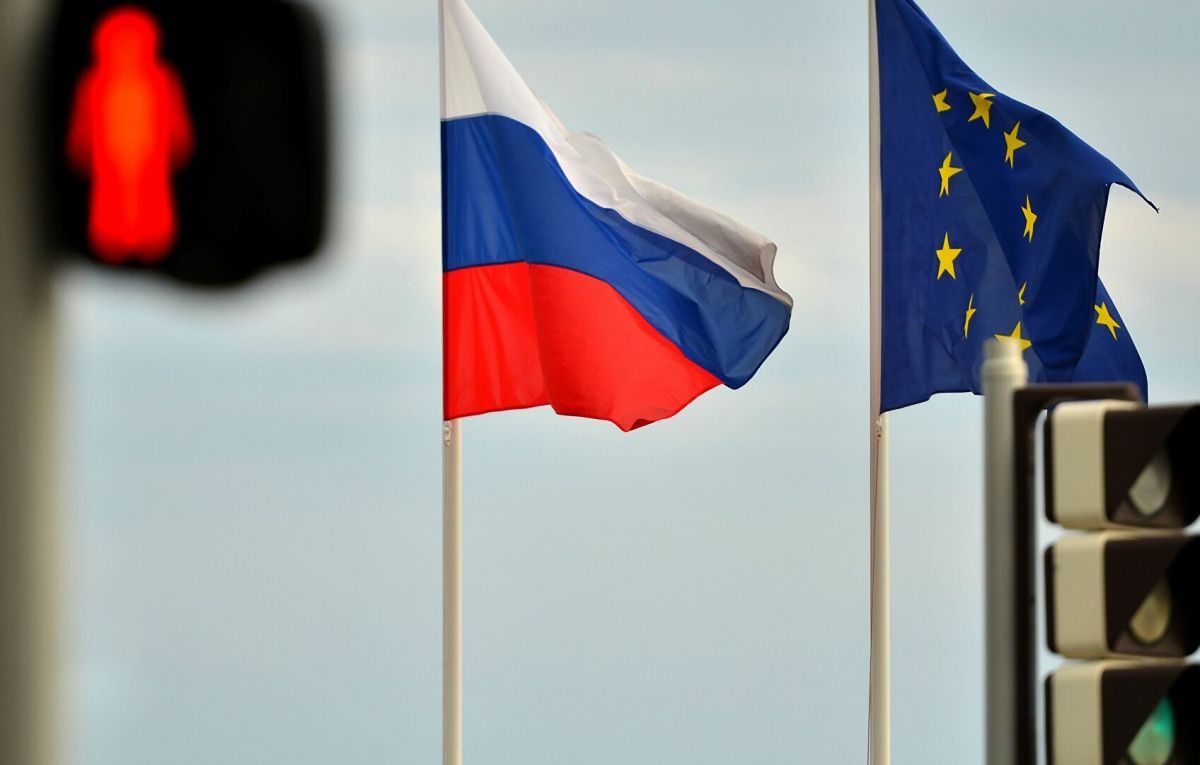
Germany's new foreign minister sees no grounds for launching Nord Stream 2.
On December 13, European Union foreign ministers plan to discuss possible new sanctions to deter Russia from invading Ukraine. This is reported by dpa, citing sources in diplomatic circles.
A source told the publication that, although European diplomats are seeking a path to de-escalation, "sometimes you need to speak softly but keep a stick at hand."
Recall that amid tensions in recent weeks over the unknown intentions of Russia, which has gathered up to 100,000 troops near the border with Ukraine, Western partners are warning the Kremlin through their statements that a military escalation would have serious consequences.
EU foreign policy chief Josep Borrell also said that the European Union is ready to use all tools and is studying ways to boost Ukraine's internal resilience.
G7 warning
G7 countries have warned Russia of serious consequences if President Vladimir Putin attacks Ukraine.
At a meeting in Liverpool, delegates of the Group of Seven said they are united in condemning Russia's military buildup near Ukraine's borders and called on Moscow to de-escalate.
The draft statement says: "Russia should have no doubt that further military aggression against Ukraine will have massive consequences and a serious price. We reaffirm our unwavering commitment to the sovereignty and territorial integrity of Ukraine, as well as the right of any sovereign state to determine its own future."
The G7 includes the United Kingdom, France, Germany, Italy, Japan, Canada and the United States, as well as a representative of the European Union.
"We call on Russia to de-escalate, to use diplomatic channels and to abide by its international obligations on transparency of military activity. We reaffirm our support for the efforts of France and Germany in the Normandy format to achieve full implementation of the Minsk agreements with the aim of settling the conflict in eastern Ukraine," the statement of the countries says.
Javelins will not be enough
Retired US Marine Corps colonel and analyst at the Center for Strategic and International Studies Mark Cancian said that American Javelin missiles are highly effective weapons against Russian ground forces' tanks.
However, Ukraine, he said, has so far acquired too few missiles, so they will not be able to significantly affect the course of combat operations. The US has made two deliveries of missiles: first Kyiv received 37 command launch units (CLU) and 210 missiles, and later 10 CLUs and 150 missiles.
These missiles are enough to equip only three of Ukraine's 28 battalions. The analyst clarified that Ukraine's forces also have other weapons, such as Soviet-era anti-tank missiles and the domestically produced laser-guided Skif missiles.
Mark Cancian
US Marine Corps colonelBased on US practice, Ukraine's 28 combat battalions need about 450 units of anti-tank weapons. Ukraine could probably use considerably more anti-tank weapons.
He calculated that three Ukrainian battalions equipped with Javelins would be enough to cover only about 11 km of the front line, while Ukraine's border with Russia is 2,200 km long.
Cancian warns that Russian intelligence may identify Ukrainian units equipped with Javelins and go on the offensive in other directions.
Nord Stream 2
Germany's new foreign minister, Annalena Baerbock, said she currently sees no grounds for launching the completed Russian gas pipeline Nord Stream 2.
She noted that in the coalition agreement the parties enshrined the provision that European energy legislation applies to energy projects, which include Nord Stream 2.
Annalena Baerbock
Germany's foreign ministerThis means that in its current form this pipeline cannot be approved, since it does not meet the requirements of European energy legislation, and security issues in any case remain unresolved.
She added that if the conflict between Russia and Ukraine escalates further, the pipeline certainly cannot be connected to the grid.
According to Baerbock, recognition of Ukraine's sovereignty will remain the basis for all of Germany's negotiations with Russia, and the "door to negotiations is always and at any time open." She recalled that Germany supports revitalizing negotiations in the Normandy format.
"We are now at the stage where we want to do everything so that negotiations can take place again, because negotiations are the best and most reliable way to avoid further escalation," the minister said.

Russian Attacks in Dnipropetrovsk Region: Two Killed, Seven Injured

Defense Forces Strike Four Russian Drone Control Points in Past Day, Including in Berdiansk

Britain Threatens Sanctions on Kremlin-Linked People; Poland Ready to Hand Ukraine Ammunition

Russia says it has completed "planned exercises" in the Black Sea

MVD: Fake Riots With Prop Blood Were Being Prepared Near Presidential Office

Law Enforcers Name Another Klitschko Deputy as Suspect

Berlin Holds Protest Against War in Ukraine; EU Prepares for Possible Russian Halt of Gas Supplies
North Korea Fires Ballistic Missile Over Record Distance in Five Years
Irish Fishermen Force Russia to Postpone Naval Drills

US sanctions in case of invasion of Ukraine could completely destroy Russia's economy, NYT reports
