
Fury Destroys Wilder at His Own Game. Everything About the Year's Main Boxing Bout
A professional analysis of the British fighter's victory yesterday.
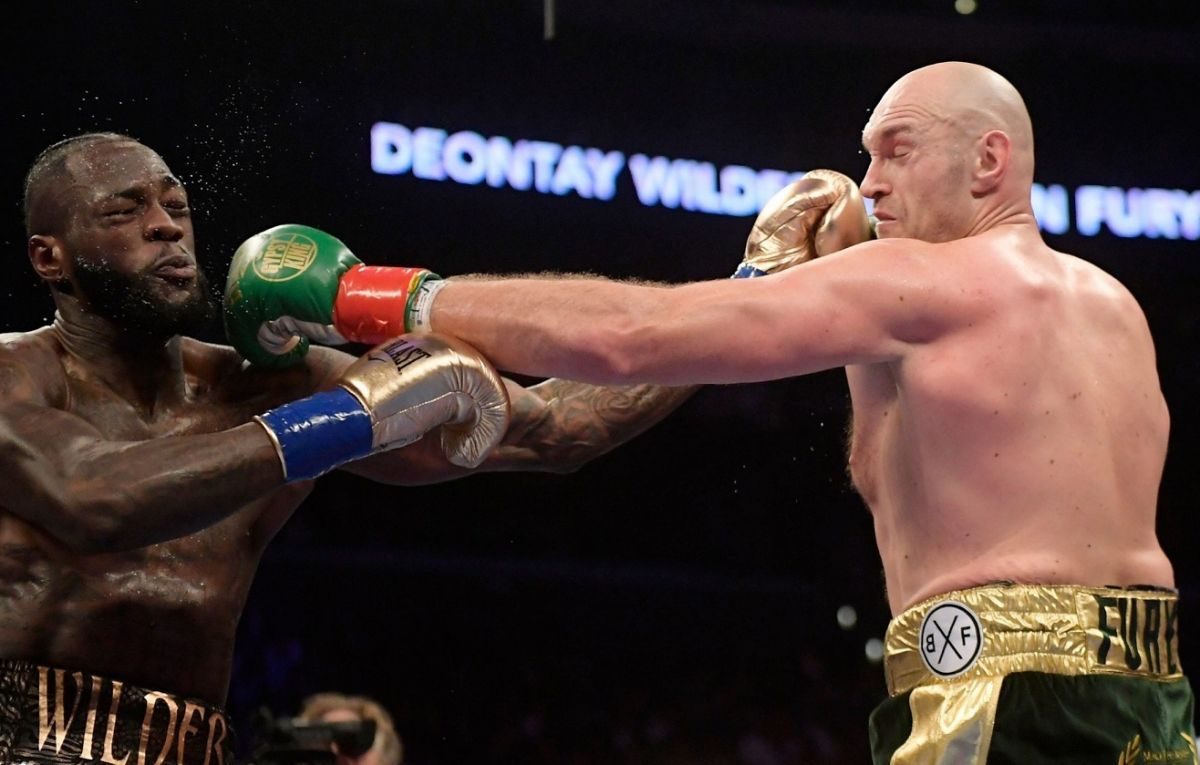
Following the long-awaited rematch between WBC heavyweight champion Deontay Wilder (42-1-1, 41 KO) and Tyson Fury (30-0-1, 21 KO), the title changed hands. The fight was shrouded in a thick fog of intrigue, yet what happened in the ring still came as a huge surprise.
The rematch had been awaited for almost a year and a half
The two talkative heavyweights first met at the end of 2018. Back then, Tyson Fury approached the bout with a far from ideal background. He had only recently turned the page on a two-and-a-half-year binge of alcohol, drugs and depression, and two routine wins over modest opponents did not inspire confidence that his comeback to championship level would succeed.
Nevertheless, Tyson impressed. Thanks to skilled and attentive work from distance, he confidently built up points, and it seemed nothing could stop him from taking the American's championship belt 15 months ago. But that only seemed so. In the ninth round, a split-second loss of concentration turned into a light knockdown for the challenger, and in the final round he found himself in an even more dire position. Wilder unleashed a precise combination of a right straight and a follow-up left hook, and given how heavily the Briton fell to the canvas, a stoppage seemed inevitable. But Fury not only returned from oblivion, he stunned Wilder and the fans by fighting the aggressor with dash right up to the final bell.
Tyson Fury's advantage seemed so substantial that losing two points for the knockdowns should not have affected the result. However, it was precisely the falls that became the decisive factor, and the judges kept the “Bronze Bomber” title, scoring a draw.
Both sides were interested in a rematch and almost immediately sat down at the negotiating table. However, an immediate rematch did not come together. Fury grabbed God by the beard in the form of a 100-million deal with Top Rank, which significantly complicated organizing the rematch.
The fighters had to take two intermediate bouts each, but the financial potential of the rematch still helped ESPN and FOX reach an agreement to jointly organize the rematch on a pay-per-view basis.
Fury doesn't make empty promises
What could be expected from the rematch? For Deontay, this was already his 11th title defense, and in each fight he acted in roughly the same manner: find and destroy. Of course, he had gained experience, his actions had become less frantic, and his confidence in his own punch grew, peaking in the rematch with Luis Ortiz, when he lost every round by a wide margin but still knocked out his opponent with a straight punch in the seventh. It was hard to believe that Wilder would suddenly change himself and decide to compete with Fury in boxing skill.
Changes were expected from the Briton, who had performed excellently in the first fight, but that proved not enough. Fury took a big risk and parted ways with trainer Ben Davison, who had brought him back into the game after a self-destructive period outside boxing. The Briton's new mentor became the nephew of the legendary Emanuel Steward, Shugar Hill.
Fury assured that his new trainer would help him change his style, become more aggressive and ultimately knock out Wilder. Tyson kept repeating like a mantra that he needed a knockout, otherwise he would be robbed again. He explained the extra couple of kilograms by his hunt for a knockout, and also recalled the cut he had received in the previous fight, which would surely reopen if he delayed dealing with Wilder. In short, in every interview the Gipsy King kept saying he wanted to fight.
Such words from the Briton were perceived as a classic attempt to get into the opponent's head, since an aggressive brawl with such a powerful knockout puncher is fraught with catastrophe. How surprised everyone was when, from the starting bell, Tyson Fury moved forward, playing the role of the aggressive number one…
After Deontay managed to land his long right straight on the challenger right at the start, the Briton's plan to press the puncher looked like a huge gamble. Nevertheless, Fury kept applying pressure, threw punches and confidently claimed the opening three-minute round. In the second round Wilder again managed to land his kilometer-long power punch, but it had no major influence on the course of the fight, as the Briton was wearing down the “Bomber”.
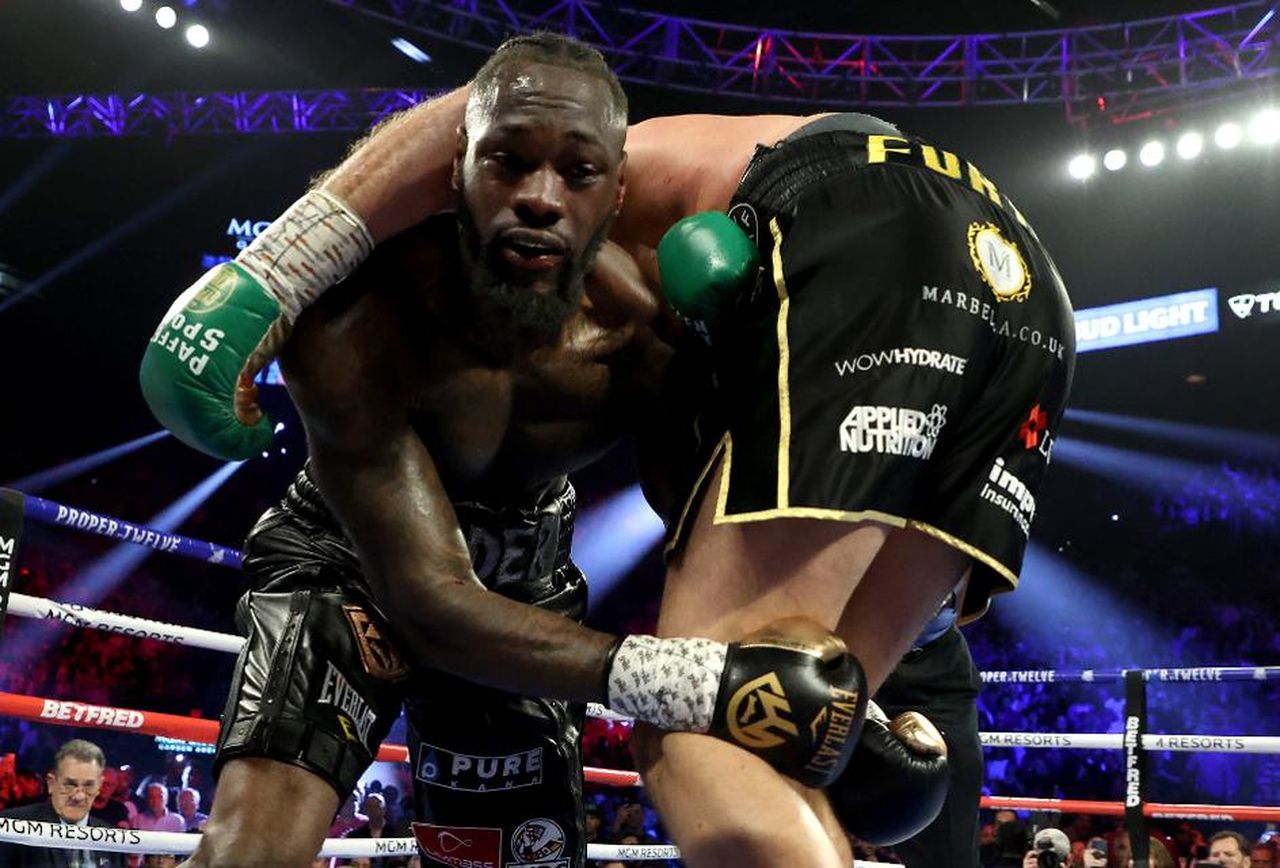
In the third round Fury landed a superb right to the area of his opponent's ear, and he crashed to the canvas. After that Wilder was no longer the same. He survived to the bell, but never fully recovered.
Credit is due to the Briton, who did everything possible to neutralize the champion's chances of success. If the first fight was nearly exemplary from the standpoint of boxing art (punch yourself but don't get punched back, adjusted for two knockdowns), this time Tyson Fury fought flawlessly, like a fighter primed for an early victory.
When the champion was shaken by punches and fatigue, Fury did not slip into the banal targeting of his opponent's head. He worked sensibly to the body wherever the situation allowed, grinding him down and squeezing the last drops of fuel from his already emptied tank.
In the fifth round Deontay was knocked down once more, but overall this no longer changed anything. It was clear to everyone where things were heading. It was clear to the referee, who gave the champion extra time to recover while somewhat biasedly penalizing the Briton for fouls. It was clear to Tyson Fury, who did not even blink when Kenny Bayliss deducted a point from him for holding, as the Gipsy King understood the judges' scorecards would not be needed.
Probably the only one who still believed in Wilder's victory was Deontay himself. Shaken and physically exhausted, he did not understand that even his signature right hand no longer posed any danger. Fortunately, this was seen by his team, and in the seventh round another attack by Tyson was stopped by a thrown white towel. TKO 7.
As it turned out, Fury was not playing mind games when he threatened his opponent with a knockout. He simply destroyed Deontay Wilder, proving he does not make empty promises. So everyone close to the newly crowned WBC champion now needs to stay on their guard, because, among other things, in the event of victory Fury promised to thoroughly load up on cocaine and go on a binge with “$30 prostitutes”.
Will there be a third fight?
As soon as the rematch was announced, information leaked to the press about an option in the contract for a third bout. The loser, whoever it turns out to be, will have 30 days to demand an immediate rematch.
Of course, the dream fight now looks like a bout for the undisputed heavyweight championship between Tyson Fury and WBO/IBF/WBA titleholder Anthony Joshua. It could be the biggest boxing fight in English history and one of the most important events in the heavyweight division in decades. Such a fight would generate untold riches for everyone involved, but for a number of objective reasons it should not be expected anytime soon. If only because Deontay may exercise his right to a rematch, while mandatory challengers Kubrat Pulev and Oleksandr Usyk are already waiting for Anthony Joshua.
Does an immediate rematch make sense? From a sporting point of view, probably not. As the first fight showed, Wilder is no match for Fury in boxing, and judging by the last bout, the Briton is also better than his opponent at his own game. Perhaps Wilder would do well to fight a few intermediate bouts, win a couple by knockout and only then think about a trilogy. But given Joshua's experience in facing Andy Ruiz, the chance of a quick rematch, even if such a decision looks ill-considered and hasty, should not be ruled out.

Russian Attacks in Dnipropetrovsk Region: Two Killed, Seven Injured

Defense Forces Strike Four Russian Drone Control Points in Past Day, Including in Berdiansk

Britain Threatens Sanctions on Kremlin-Linked People; Poland Ready to Hand Ukraine Ammunition

Russia says it has completed "planned exercises" in the Black Sea

MVD: Fake Riots With Prop Blood Were Being Prepared Near Presidential Office

Law Enforcers Name Another Klitschko Deputy as Suspect

Berlin Holds Protest Against War in Ukraine; EU Prepares for Possible Russian Halt of Gas Supplies
North Korea Fires Ballistic Missile Over Record Distance in Five Years
Irish Fishermen Force Russia to Postpone Naval Drills

US sanctions in case of invasion of Ukraine could completely destroy Russia's economy, NYT reports
