
“I Am Not Acquainted with Arsen Avakov”: Odesa Region's New Governor Gives First Interview
Exclusively for TK Media.
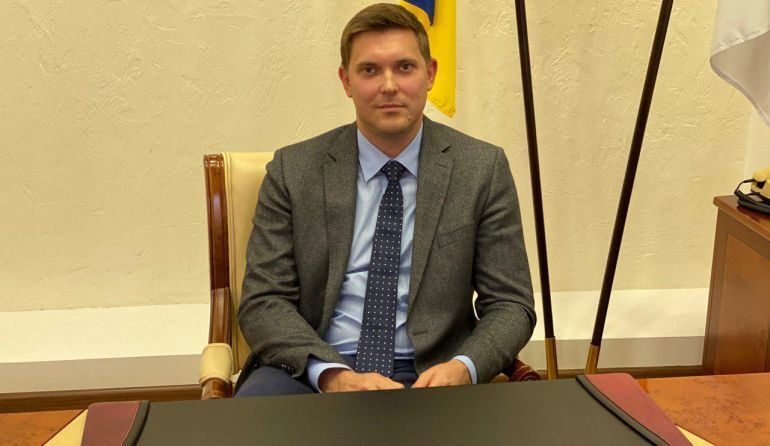
Thursday, 17:00, Odesa Regional State Administration. We are sitting in the reception room of the new head of the Odesa region, Maxim Kutsyi, also known as the “First Reception Room.” Two secretaries are simultaneously calling heads of departments and local officials.
“Hello. Maxim Vasilyevich is expecting you tomorrow at 10:30. Yes, an acquaintance meeting and information,” they repeat the same thing, changing the names and patronymics of the addressees. One of the officials on the other end of the line apparently asks what exactly information needs to be provided. “All of it. There were no clarifications,” one of the secretaries replies crisply. Meetings are scheduled half an hour apart and planned for the whole day: it is clear that the new governor is getting to work in the most active way. I imagine how the heads of departments will now call and pass the incoming request to their subordinates with the task of preparing work reports by morning. It seems someone will have a sleepless night.
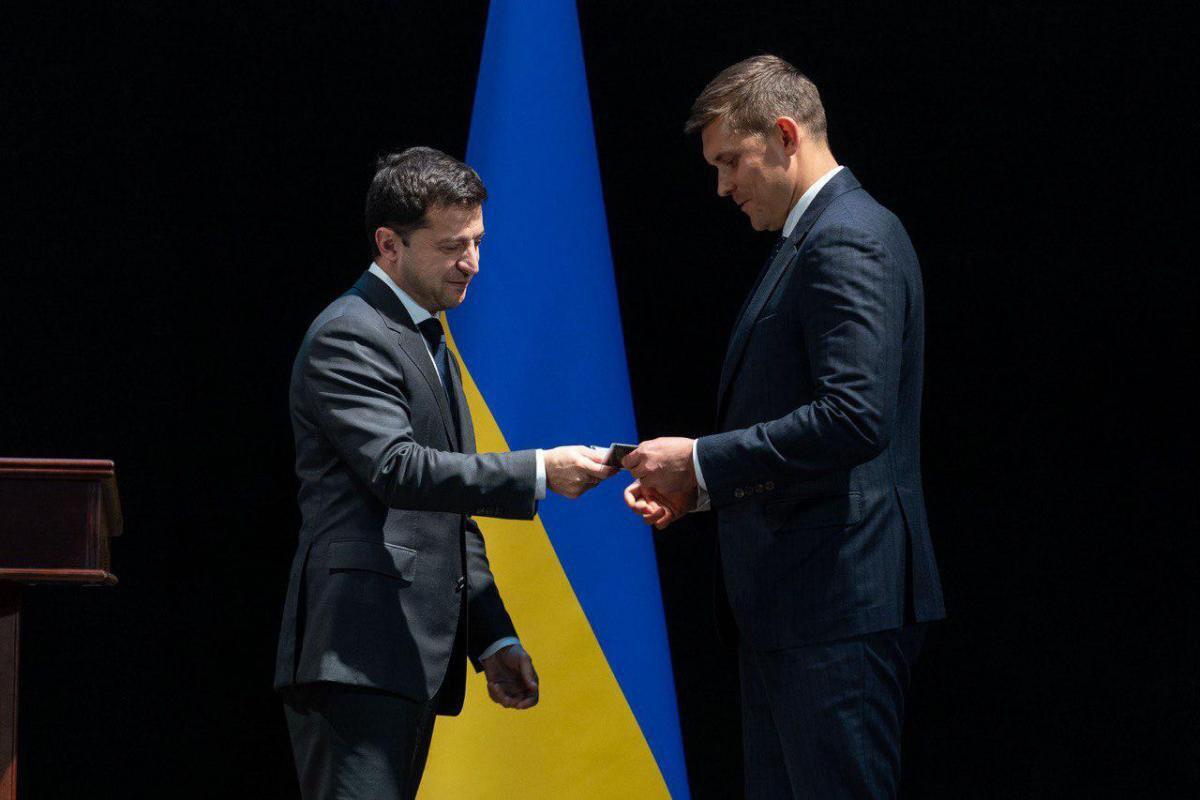
In the office, we are waiting for the new head of the Odesa region, Maxim Kutsyi. He is 36 years old. In the past he was a successful entrepreneur and investment banker. On Friday, October 11, Defender of Ukraine Day, President Volodymyr Zelensky introduced him to Odesans as the new head of the region. Present in the room are the president's adviser Igor Novikov, as well as several assistants. Igor Novikov, formerly an ambassador of Singularity University, an American organization whose faculty includes Larry Page and Elon Musk, has come to Odesa to help the new governor take over his duties. In the Office of the President, Novikov is responsible for relations with the United States; in particular, he organized Volodymyr Zelensky's visit to the UN summit in New York.
The Odesa region is one of the most difficult regions. During the time of former president Poroshenko, governors here changed several times: from former Georgian president Mikheil Saakashvili to Maxim Stepanov. Poroshenko did not get along with either of them: Saakashvili was deported from the country and stripped of citizenship, while Stepanov, dismissed before the second round of the presidential election, stated that he lost his post because he “failed to deliver the needed result in the elections” for Poroshenko. Such a statement hit Poroshenko's positions even harder.
Volodymyr Zelensky approached the issue differently in quality and demonstrated a different personnel approach: he put five candidates for the post of governor up for public discussion on the social network Facebook. Subsequently, he settled on the candidacy of Maxim Kutsyi.
In July, the president put five possible candidates for the post of head of the Odesa Regional State Administration up for public discussion. How did you end up on this list?
Maxim Kutsyi: I had not been acquainted with the president before. At present, the official adviser to the president, Igor Novikov, who has known me for a very long time, recommended my candidacy. He described me to the president from the best side.
Igor Novikov: In fact, you yourself made a good impression on the president.
Maxim Kutsyi: That was already after the first meeting, but at the time my candidacy was put forward, we had not met.
Why did the president focus on your candidacy in particular?
Maxim Kutsyi: He believed in me. As a citizen of Ukraine, I may have embodied the general mood of people and their level of trust in the authorities. In addition, I had sufficient management experience and a desire to do something for my Motherland.
I understand there was a conversation or a series of conversations with the president regarding your vision of the region and its development. How many such conversations were there?
Maxim Kutsyi: Two. There were two conversations before the appointment. And after that there was a thorough discussion.
What tasks did the president set before you?
Maxim Kutsyi: There are two main tasks. The first is to ensure economic growth in the region. The second is to raise the standard of living in the Odesa region.
Were there any priority areas on which the president focused attention?
Maxim Kutsyi: There are many problems in this region, but we see the issues of ecology, social welfare and, of course, infrastructure as priorities for ourselves.
Did you talk with Max Nefedov about the transformation of customs?
Maxim Kutsyi: I have not yet talked with Maxim. But a meeting with him is a priority in my calendar. Maxim has a clear action plan, and I plan to work closely with him in this area.
Does the president have some kind of probationary period or interim deadlines for you?
Maxim Kutsyi: The president has not set any probationary periods for me. But I have clearly defined KPIs and deadlines for achieving them for myself. If I fail to reach them, I will be ready to resign.
I just want to understand how much the Odesa region is a priority among all the regions for the president. How closely does the president follow the situation in the region? How often do you communicate?
Maxim Kutsyi: The president follows the situation in the Odesa region quite seriously. We are in constant contact, if not directly, then through the Office of the President and advisers. In addition, we pass information on to the Cabinet of Ministers and to the members of parliament from the Odesa region.
Igor Novikov: I would say, excessively constant contacts. I already feel like an Odesan.
Returning to your appointment to the post. How did your acquaintance with the regional administration staff go? Have you met the city mayor?
Maxim Kutsyi: I am still in the process of getting to know the staff of the regional administration. We have been continuing this process all week. Every day from morning until evening we are, in fact, immersing ourselves in the structure and apparatus of the regional administration.
Are no large-scale dismissals or personnel changes within the regional administration planned?
Maxim Kutsyi: Well, what does “large-scale dismissals” mean? Look, we are now at the stage of carrying out the first general audit of the administration's work. Next, we will become more and more integrated into the processes. If we identify any factors that indicate negligence, violations or abuse of powers, we will, of course, take appropriate decisions.
Have you already managed to get acquainted with the city mayor, Gennady Trukhanov?
Maxim Kutsyi: No. Unfortunately. Or “not unfortunately,” but I simply have not had time to get acquainted. Because of his absence. Gennady Trukhanov is officially on vacation now, which means he is somewhere not in Odesa. On the 14th we had a big holiday, Defender of Ukraine Day, and there were solemn events. The city council was represented there by his deputy.
But did he congratulate you? By phone? Did he try to find contact with you?
Maxim Kutsyi: No, nobody has reached out to us. At present we have not communicated with Trukhanov, neither in person nor by phone.
Who is your team now? Who came with you to the Odesa region for the post of head of the regional administration? Who are your deputies and what areas are they responsible for?
Maxim Kutsyi: I will present my team in the near future. After completing the general audit of the officials of the Odesa Regional State Administration, we will determine the areas and spheres of activity that each of the appointed deputies will oversee. The appointment of these deputies is currently in progress. They are all professionals: experienced lawyers, financiers and managers who have fairly positive and long experience of managing private companies in Ukraine, as well as experience working in international corporations and the state apparatus.
So the team that worked under the previous [head of the regional administration] is still in place?
Maxim Kutsyi: At present, yes. Our laws are set up so that hiring requires a certain procedure, which takes some time. Therefore, for now, the deputies and heads of management departments and other structural units are still the same people.
We talked about getting acquainted with the staff and whether you had managed to meet the city mayor, Gennady Trukhanov. Did any “supplicants,” “old acquaintances” or various representatives of the city's clans come to you at the time of your appointment asking you to solve something?
Maxim Kutsyi: I have no “old acquaintances.” Perhaps the previous heads of the regional administration had old acquaintances. But directly, straight up, nobody has come to me. Of course, someone greets me in the corridors every day and tries to hold short conversations.
There is quite little information about you in the media and on the internet. All the more interesting that you are becoming a speaker of interest for the media. When five candidates were being discussed, people started writing that you are Arsen Avakov's man. Do you know him, and what is your relationship?
Maxim Kutsyi: To tell the truth, shall I? (laughs). I am not acquainted with Arsen Borisovich, and the only thing that connects us is that I worked in the law enforcement agencies 15 years ago, and Arsen Avakov now heads the Ministry of Internal Affairs of Ukraine. That's the whole intrigue.
That was the main and only critical attack on you from your opponents. How do you assess the work of your predecessors, Saakashvili and Stepanov?
Maxim Kutsyi: I believe the residents of the Odesa region are best placed to assess their work, and I have other tasks in front of me.
You are 36 years old. From your declaration we know that before your appointment as governor you were engaged in entrepreneurial activity, and that you are an officially declared millionaire (you declared more than a million dollars in bitcoins and various cryptocurrencies). Tell us more about your life before the appointment and what you did.
Maxim Kutsyi: I am not an official millionaire. That is a declaration of my assets, not of money. Before this appointment I was engaged in entrepreneurial activity; I have a number of companies in which I was an owner or co-founder. These companies are in quite different areas, from consulting and construction to advertising services. I had experience working in large international companies. At one time I worked at Ernst&Young , which is one of the four largest global audit firms. I worked in a large investment and industrial group for quite a long period, where I headed various departments, from departments within the structure of the bank that was part of this investment group to the development direction of a network of medical clinics.
How did you come to invest in cryptocurrency? Was it your idea or did someone advise you?
Maxim Kutsyi: I decided to get involved in this project in 2013, and then again in 2015. My approach to this question, in terms of investment, is as follows: I invest and pay no attention to any fluctuations in value, exchange rate and so on. And after 7 or 10 years I exit the project.
Now, as the new head of the Odesa region, you bear enormous reputational responsibility, including not only as a member of the president's team, but your personal reputation is also at stake. How do you see yourself a year from now, and how do you want to write your name into the history of the Odesa region?
Maxim Kutsyi: My main goal is to make life for people in the Odesa region more comfortable, rather than getting into history textbooks. The administration has a great deal of work to do: from tourists resting on the beach to residents running their businesses. That is what we need to think about, not about writing our names into anything. And when we implement our plans, then Odesans themselves will assess our work.
Not the most accurate comparison, but the mayor of Kharkiv, Gennady Kernes, has Gorky Park. That is his calling card. Dnipro mayor Filatov is fighting for the Dnipro airport, which is his super-project. Is there a large-scale goal or idea that you would like to implement for the Odesa region?
Maxim Kutsyi: Odesa is geographically located in a place where it is possible to build a large transport hub that will attract a substantial amount of investment and create many jobs. In addition, Odesa and the region should draw the attention of large international companies so that they invest money here. We intend to show, using the example of the region, that the country really can change for the better.
How did your family take your appointment, and do you have enough time to spend with loved ones?
Maxim Kutsyi: Right now I have no personal time at all. I wake up at ten to seven and fall asleep at one in the morning. I do not even have the opportunity to see my relatives, and there is not even enough time for phone calls. Perhaps they will move from Kyiv to Odesa after some time so that we can be together. I have a small child: my son is only one year and two months old, and I very much want him to be proud of me when he grows up. My family knows how long I thought about it before taking the post of head of the region. Now my wife and relatives support the drive with which I took up the work, and I am very grateful to them for such support.

Russian Attacks in Dnipropetrovsk Region: Two Killed, Seven Injured

Defense Forces Strike Four Russian Drone Control Points in Past Day, Including in Berdiansk

Britain Threatens Sanctions on Kremlin-Linked People; Poland Ready to Hand Ukraine Ammunition

Russia says it has completed "planned exercises" in the Black Sea

MVD: Fake Riots With Prop Blood Were Being Prepared Near Presidential Office

Law Enforcers Name Another Klitschko Deputy as Suspect

Berlin Holds Protest Against War in Ukraine; EU Prepares for Possible Russian Halt of Gas Supplies
North Korea Fires Ballistic Missile Over Record Distance in Five Years
Irish Fishermen Force Russia to Postpone Naval Drills

US sanctions in case of invasion of Ukraine could completely destroy Russia's economy, NYT reports
