
In Poland, doctors let a pregnant woman die under the abortion ban. Residents protest

Thousands of Poles are demanding that abortion laws be eased.
On November 2, a 30-year-old woman died in Poland at 22 weeks of pregnancy. Despite the threat to her life, doctors waited for the fetus to die, but after the premature rupture of the amniotic membranes, the woman died.
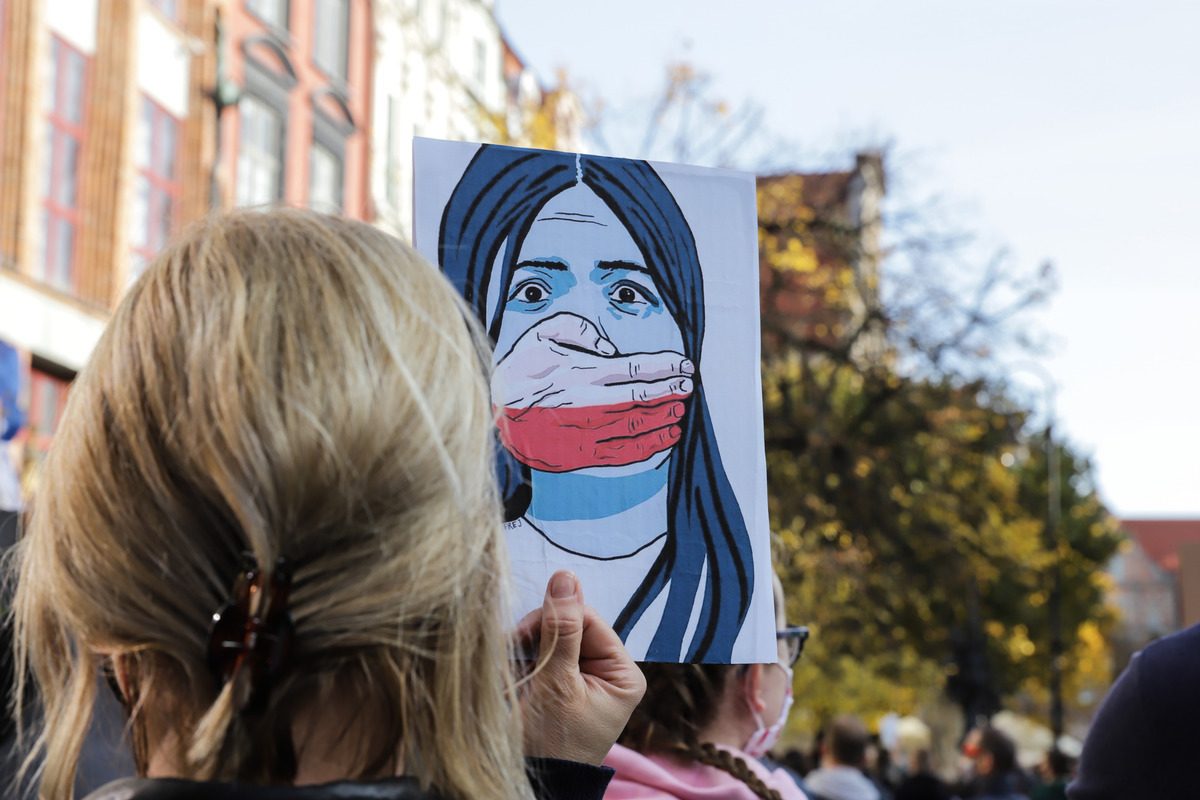
The cause of death was doctors’ refusal to perform an abortion, as the country had recently tightened its ban on terminating pregnancies. On November 6, thousands of Poles took to the streets in 70 cities and in the capital, Warsaw. They held up photographs of the deceased woman and chanted “Not one more,” demanding that abortion legislation be eased.
Yolanta Budzowska, the lawyer for the deceased woman’s family, said that the strict abortion restrictions in Poland were the reason for the death of pregnant Isabella: “Doctors waited for the fetus to die instead of urgently terminating the pregnancy, which could have saved the woman’s life. As a result, the fetus is dead, the patient is dead, septic shock.”
The woman became the first victim after the introduction of an almost complete ban on abortions in the country. She is survived by her husband and nine-year-old daughter. After Isabella’s death, two doctors were suspended at the hospital, and the city prosecutor’s office opened an investigation. The country’s authorities reject all accusations.
Under the new legislation, abortion in Poland is now permitted only in two cases: when the life or health of the mother is at risk, or when there is a high probability of severe fetal damage or an incurable disease that is dangerous to the life of the child or mother, as well as when the pregnancy resulted from rape.
In other cases, abortions are banned. This law took effect in January 2021. Previously, abortions in the country were performed in only three cases: due to fetal defects, a threat to the mother’s life, and pregnancy resulting from a crime. Now, abortions due to fetal defects and incurable disease have been declared unconstitutional.
The Constitutional Court explained its decision by stating that the presence of severe and irreversible fetal damage or an incurable disease that is life-threatening is not sufficient grounds for ending a human life during pregnancy. The Polish Constitutional Tribunal also called the justification for abortion based on fetal defects “eugenic.”
In October 2020, citizens of Poland took to the streets to protest the restriction of women’s right to abortion. Protesters threw stones at police officers, who responded with tear gas. Some people were detained during these clashes.
President Andrzej Duda commented on the protests and said that the decision needed to be adjusted: “Despite everything, I hope that the Constitutional Court will give time so that this provision can be refined.”
In November 2020, the Polish government decided to postpone the publication and enforcement of the supreme court ruling tightening the country’s abortion law after mass protests. However, the law took effect in January.

Russian Attacks in Dnipropetrovsk Region: Two Killed, Seven Injured

Defense Forces Strike Four Russian Drone Control Points in Past Day, Including in Berdiansk

Britain Threatens Sanctions on Kremlin-Linked People; Poland Ready to Hand Ukraine Ammunition

Russia says it has completed "planned exercises" in the Black Sea

MVD: Fake Riots With Prop Blood Were Being Prepared Near Presidential Office

Law Enforcers Name Another Klitschko Deputy as Suspect

Berlin Holds Protest Against War in Ukraine; EU Prepares for Possible Russian Halt of Gas Supplies
North Korea Fires Ballistic Missile Over Record Distance in Five Years
Irish Fishermen Force Russia to Postpone Naval Drills

US sanctions in case of invasion of Ukraine could completely destroy Russia's economy, NYT reports
