
Ukraine to Receive Innovative COVID-19 Drugs from US as Humanitarian Aid
A batch of Bamlanivimab and Etesevimab drugs has already been assembled and is on its way to Ukraine.
The US government will provide Ukraine with innovative drugs against the coronavirus worth $20 million as humanitarian aid.
We tell you which drugs Ukraine will receive and what is known about them.
New Drugs for Ukraine
Humanitarian aid with an equivalent value of nearly $20 million will arrive in the near future and will be distributed to regions by charitable foundations. These arrangements were finalized during the visit of Ukrainian President Volodymyr Zelensky to the US.
Viktor Liashko
Minister of Health of UkraineThe US government, together with the manufacturing company, will provide us with innovative drugs against COVID-19 as humanitarian aid. They are already registered by the FDA and are recommended for patients with mild and moderate severity, especially where there is a risk of progression to a severe form.
Thus, 20,000 vials of Bamlanivimab and 40,000 vials of Etesevimab will be sent to Ukraine. The drugs have already been loaded into cargo and are being transported to the airport for shipment to Ukraine.
Liashko said the drugs act directly on the virus: they bind to the virus's spike proteins, preventing it from entering the cell and subsequently multiplying, speed up recovery of patients with coronavirus, and prevent complications and hospitalization.
At the same time, the minister added that vaccination remains the only effective way to protect against coronavirus.
What else is known about the new drugs: use and research results
Bamlanivimab and Etesevimab are injectable drugs in 20 ml vials. They are used to treat mild and moderate coronavirus in adults and children.
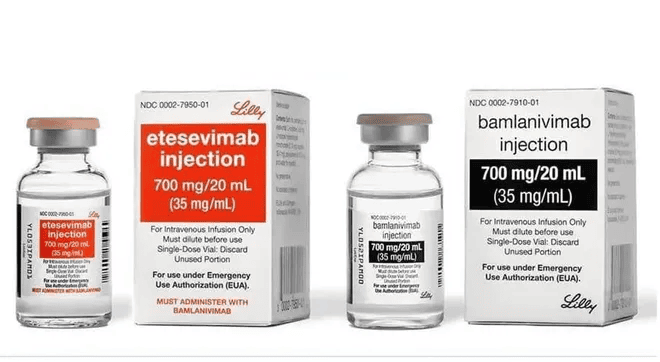
Clinical trials showed that Bamlanivimab reduces the chances of hospitalization or emergency care for patients at high risk of severe disease within 28 days of infection.
However, the drug is not authorized for those who have already been hospitalized with complications caused by coronavirus.
The drug Etesevimab is also used to treat mild and moderate COVID-19. These drugs can be administered together.
Studies showed that the use of the drugs reduced hospitalizations and deaths related to coronavirus by 87% in recently diagnosed patients at high risk of severe disease.
In total, among those who received an infusion of Bamlanivimab and Etesevimab, only 2.1% required hospitalization. Meanwhile, in the group that received a placebo (a substance without the drug), 7% of people ended up in hospitals with severe coronavirus.
Also, among patients who received the drug, there were no fatalities. Of the 517 people who received a placebo, 10 died from coronavirus.

Russian Attacks in Dnipropetrovsk Region: Two Killed, Seven Injured

Defense Forces Strike Four Russian Drone Control Points in Past Day, Including in Berdiansk

Britain Threatens Sanctions on Kremlin-Linked People; Poland Ready to Hand Ukraine Ammunition

Russia says it has completed "planned exercises" in the Black Sea

MVD: Fake Riots With Prop Blood Were Being Prepared Near Presidential Office

Law Enforcers Name Another Klitschko Deputy as Suspect

Berlin Holds Protest Against War in Ukraine; EU Prepares for Possible Russian Halt of Gas Supplies
North Korea Fires Ballistic Missile Over Record Distance in Five Years
Irish Fishermen Force Russia to Postpone Naval Drills

US sanctions in case of invasion of Ukraine could completely destroy Russia's economy, NYT reports
