
Both in War and Politics: How Is the Influence of Artificial Intelligence Growing?
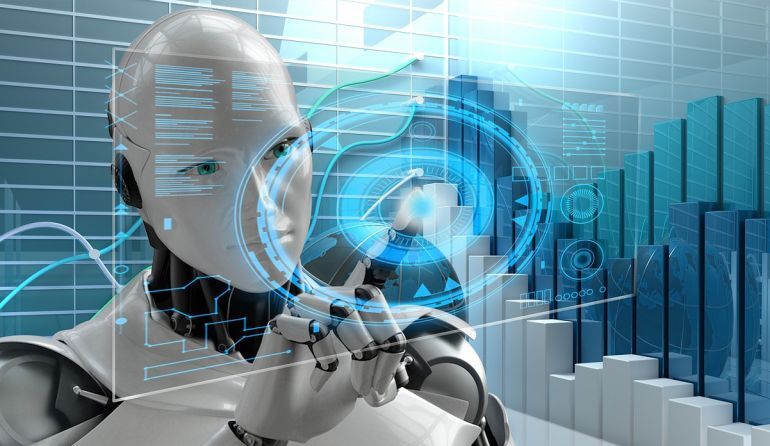
Elon Musk believes that artificial intelligence could unleash a Third World War.
The Pentagon is allocating almost a billion dollars for artificial intelligence for military purposes. AI experts are already being recruited into election campaign headquarters. In China, modern technologies are used to strengthen the authoritarian regime and censorship. In New Zealand, the world's first virtual politician is being created, and Musk believes that artificial intelligence could become a cruel dictator and even unleash a Third World War. We explain how artificial intelligence is already affecting the situation in the world.
Artificial Intelligence as a Weapon
"The US, Russia and China all agree that artificial intelligence will become a key technology in the future, on which national power will depend," says Gregory Allen, an employee of the independent think tank Center for a New American Security. Last year, the US Department of Defense created a joint algorithmic technologies group. Its tasks include introducing artificial intelligence and machine vision technologies into the Pentagon's use.
According to a decree signed by Donald Trump, the development of artificial intelligence is a priority of his administration's policy. Last year, the Pentagon approved the allocation of $885 billion for artificial intelligence for military purposes. Josh Sullivan, vice president of Pentagon contractor Booz Allen Hamilton, said these technologies should help the US successfully compete with Russia and China, since the use of artificial intelligence will simplify the work of the military and give them time to solve more important tasks. "Part of the task is to ensure our government has access to the best technologies and to apply them with all due responsibility for our citizens and fighters," Sullivan noted.
The US has also created the Joint Artificial Intelligence Center (JAIC), which will manage and coordinate AI pilot projects in the Pentagon, including personnel recruitment, their training, its own research, and protection against cyberattacks. It has set the task of widely using artificial intelligence systems in intelligence activities, for example, when analyzing images to prepare for operations and minimize risks for soldiers and civilians.
The use of AI can also improve the safety of aircraft, ships and other vehicles and improve their maintenance. For example, failures of critical parts can be anticipated with greater accuracy and timeliness. In addition, artificial intelligence is actively used in demining work, where it is applied to inspect suspicious objects and to defuse bombs of various configurations.
Semi-autonomous systems are already being used in combat. For example, close-combat weapon systems. They can independently search, find the enemy, assess the situation and strike the target. Scientists have also begun working on technologies that will allow systems to act not only according to a pre-developed plan, but also to develop their own action algorithm. These will depend on their own understanding of the situation around them and what is best to do right now.
Artificial Intelligence as a Tool for Strengthening Authoritarianism and Censorship
Artificial intelligence can also be used to harm. For example, in the fight against freedom. The Chinese government plans to use it to predict cyberattacks and rallies, as well as to strengthen internet censorship, which is already at a high level there. In Chinese cities, systems for facial recognition and other technologies based on artificial intelligence are being launched. The official reason is security. They were also used during the protests in Hong Kong.
The Chinese police cloud system is designed to search for seven categories of people, including those who "undermine stability." The country also seeks to create a system that will give every citizen and every company a social credit rating: everyone will have their own score, reflecting shopping habits, driving history and even attitudes toward politics. Almost like in Black Mirror.
At the end of last year, The Verge published examples of photos of people generated by Nvidia using artificial intelligence technologies. Journalists became concerned that AI fakes could affect society, since they could be used for disinformation and propaganda.
Artificial Intelligence in Politics
The 2012 US presidential election was the first when the influence of artificial intelligence greatly helped one of the candidates. It all began when Barack Obama appointed machine learning expert Rayid Ghani as the chief analyst of his campaign. His team gathered all information about voters into a single database, added data from social networks, and began predicting four factors about each voter: 1. What is the probability that he will vote for Obama? 2. Will he come to the polls at all? 3. Will he respond to a reminder to do so? 4. Will he change his opinion after a conversation on specific topics? Based on this, 66,000 election simulations were run every day. After receiving the results, volunteers were brought into the process — they knew whose home to go to, whom to call, what to say, and whom it was better not to bother. This helped Obama win a second term.
Such artificial intelligence systems will be used even more and more often in election campaigns and political initiatives that require processing large arrays of voter data. Modern systems are already capable of analyzing various data sets from many sources, learning from election to election and giving valuable advice. Analytical groups during the 2016 US presidential election used computer algorithms to analyze social media trends. The story of Cambridge Analytica and the hacking of Facebook users' personal data is still fresh in memory.
Another story that cannot be overlooked. In New Zealand, programmer Nick Gerritsen created the world's first virtual politician. It is a bot named Sam. You can chat with it through the Facebook Messenger app. The bot is a virtual female politician who will take part in the next general election in 2020.

Reaction
International diplomats and experts have been discussing the issue of autonomous weapons for several years. The level of these discussions has reached official UN consultations. Currently, 26 states support a preventive moratorium on autonomous weapons systems. They are backed by more than 230 organizations and about 3,000 entrepreneurs and scientists from around the world. Among them are Musk, founder of Tesla and SpaceX, and DeepMind, owned by Google. "The decision to take a human life should never be delegated to a robot," the letter says. Opposing the ban are states that are already actively investing in the use of artificial intelligence for military needs, for example, the United States, Israel, Russia and Great Britain. Representatives of the United States are trying to convince that autonomous weapons will help avoid "collateral damage." After all, a computer, unlike a soldier, can analyze the entire situation on the battlefield more quickly and make fewer mistakes.
One of the world's leading entrepreneurs and innovators, Musk is skeptical of AI not only in combat but also in political matters. He has said that artificial intelligence could create an "immortal dictator from whom there is no escape". Musk admits that authoritarian regimes could create artificial intelligence that is able to outlive individual leaders or parties and become a permanent source of oppression. According to him, competition in the field of artificial intelligence development could become the cause of the start of a Third World War.
Nicholas Wright, a lecturer at University College London, noted in a column for Foreign Affairs that countries with strong traditions of individual freedom will be able to resist such government initiatives, if they appear. He also noted that such threats may come not only from the state. "Oligopolistic technology companies concentrate power in their hands by absorbing competitors and lobbying for regulations convenient for their activities. However, society has already coped with such challenges after previous technological revolutions," he writes. And the strengthening of authoritarianism in other countries will help democracy become even more established where it already exists.
"Humanity tends to confine rivalry within certain frameworks: 'us' against 'them'; as a result, Western countries may redefine their attitude toward censorship and surveillance. Most people do not delve into the details of data policy and do not pay attention to the risks. But when these details become the basis of a regime in the real world, they will stop seeming boring and abstract. Governments and technology companies will have to explain the difference," the scientist believes.
Alexey Simonchuk

Russian Attacks in Dnipropetrovsk Region: Two Killed, Seven Injured

Defense Forces Strike Four Russian Drone Control Points in Past Day, Including in Berdiansk

Britain Threatens Sanctions on Kremlin-Linked People; Poland Ready to Hand Ukraine Ammunition

Russia says it has completed "planned exercises" in the Black Sea

MVD: Fake Riots With Prop Blood Were Being Prepared Near Presidential Office

Law Enforcers Name Another Klitschko Deputy as Suspect

Berlin Holds Protest Against War in Ukraine; EU Prepares for Possible Russian Halt of Gas Supplies
North Korea Fires Ballistic Missile Over Record Distance in Five Years
Irish Fishermen Force Russia to Postpone Naval Drills

US sanctions in case of invasion of Ukraine could completely destroy Russia's economy, NYT reports
