
"Water First": What Residents of the LPR Are Missing
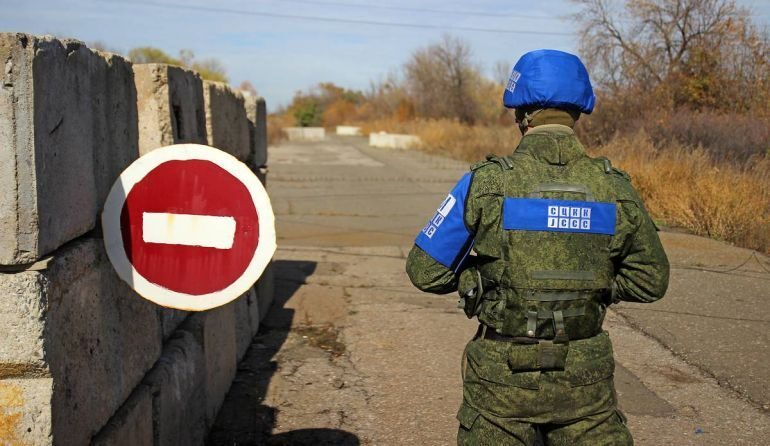
Based on the opinions of residents of the self-proclaimed republic.
For more than five years, eastern Ukraine has been in a state of war, and territories have been seized by the so-called LPR and DPR. At the same time, hundreds of thousands of Ukrainians live in the territories of the self-proclaimed states.
A correspondent for TK Media visited occupied Luhansk and Alchevsk and asked local residents what could make their lives better today.
Most of those surveyed mentioned the water supply problem to some degree. Water is supplied on different schedules in different cities and even districts. For example, in Alchevsk, cold water is turned on every other day in the evening or morning (depending on the district) for about 6-8 hours. There is no hot water in Alchevsk at all.
"We lack water above all. Me, my family, friends, and everyone I talk to," says 32-year-old factory worker Oleg. "Compared to this, other problems seem too minor to talk about."
But the problem is not only the schedule, but also constant breakdowns, due to which some districts remain completely without water for 3 or even 5 days.
"What is there to say. Have you been in the city long? Yesterday was my water day; it was supposed to be turned on at around 14:00 and off at 24:00," complains pensioner Tatyana. "But in the end it was not turned on at all. And the water utility, as always, says it's an accident."
Young people have already gotten used to the water, but are unhappy with the lack of other benefits of civilization.
"Water is half the trouble. We have no mobile internet, no bank cards or cashless payments, no McDonald's, no global clothing stores like Bershka, H&M, Adidas and the like," complains 20-year-old student Alina.
Ukrainian Vodafone and the local operator Lugacom operate in the territory of the LPR. In Luhansk, the local operator provides low-quality 2G and 3G, but in other cities it does not yet. Vodafone internet barely works anywhere.
Along with the water problem, most also mention the long-awaited peace on their native land.
"I am ready to endure this water on a schedule for the rest of my life, as long as peace comes soon. I have a lot of relatives in both Ukraine and Russia, and many no longer communicate with each other. I'm tired of all of this: the shooting, people dying, and not being able to simply get on a train and see my relatives as before," complains 64-year-old pensioner Klavdiya Ivanovna.
People also complain about wages, the absence of a banking system, and the prices of real estate and cars.
"I can't imagine how I am supposed to buy an apartment or, even more so, a car on my salary," says 27-year-old Alexei, sharing his concerns. "I have worked at the factory for 5 years and earn 14,000 rubles, which is still a normal salary for the city. A two-room apartment costs an average of $5,000, which is more than 300,000 rubles. How much would I have to save for it? And no one here gives loans."
"I have been unable to sell my apartment for 2 years. I bought it in 2012 for $12,000, and now I've set the price at 6. But still no one takes it, because almost no one needs it. And I'm not yet ready to sell for even less. Although, apparently, I'll have to," said 35-year-old Ilya.
Car owners recall the absence of vehicle insurance.
"Just yesterday I saw a situation from the balcony. A guy got into a brand-new jeep (by the way, I wonder where they get the money for these expensive jeeps here), when some clueless people rammed into him right in the yard in a "Kopeika"," says eyewitness Dmitry. "Well, and so what, it turned out they were drunk, so they called the cops. Now the guy has to pay for the car repairs himself and wait for good weather, until the court squeezes the damages out of these drunks. We don't have insurance, after all."
People of various professions complain about wages.
"In every city in the world, taxi drivers who work hard earn above the city average. Here I worked 2 days, 15 hours each (the curfew doesn't allow more), and got 1,800 rubles. Physically it is very hard to work this much, so at least one day off is necessary. In total, over 20 days I would earn 18,000 at best," shares the calculations of his income one of the local taxi drivers.
A curfew is in effect in the LPR from 23:00 to 04:00. According to locals, you can still be outside until midnight, but you have to head home: "an hour to disperse." After midnight, there should be no one on the streets, otherwise "they take you until morning, a fine of either 500 or 1,000 rubles."
"The curfew is infuriating. Cold weather is one thing, you can't hang around outside at night anymore. But what about summer? Let young people walk around and enjoy life; you have already made our childhood and youth harder than everyone else's," says a group of teenagers aged 15-16, outraged.
In summary, the local population of the LPR is dissatisfied with the water supply schedule, wages, the curfew, the absence of car insurance, the banking system, mobile internet and other benefits of civilization.
Earlier, TK Media wrote about how residents of the self-proclaimed LPR reacted to the "Steinmeier formula."

Russian Attacks in Dnipropetrovsk Region: Two Killed, Seven Injured

Defense Forces Strike Four Russian Drone Control Points in Past Day, Including in Berdiansk

Britain Threatens Sanctions on Kremlin-Linked People; Poland Ready to Hand Ukraine Ammunition

Russia says it has completed "planned exercises" in the Black Sea

MVD: Fake Riots With Prop Blood Were Being Prepared Near Presidential Office

Law Enforcers Name Another Klitschko Deputy as Suspect

Berlin Holds Protest Against War in Ukraine; EU Prepares for Possible Russian Halt of Gas Supplies
North Korea Fires Ballistic Missile Over Record Distance in Five Years
Irish Fishermen Force Russia to Postpone Naval Drills

US sanctions in case of invasion of Ukraine could completely destroy Russia's economy, NYT reports
