
Veteran of Ukraine's Anti-Terrorist Operation Detained in Greece Over Case Tried In Absentia in Lithuania for 1991 Events
He took part in the USSR operation that attempted to bring Lithuania back into its composition in early 1991.
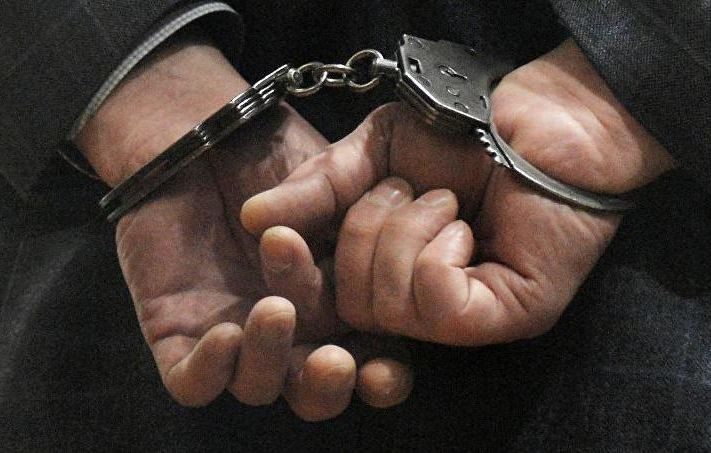
On September 14, Ukrainian citizen and ATO veteran Alexander Radkevich was detained at the border crossing in Greece.
It later emerged that Radkevich had been detained at Lithuania's request, where Alexander was sentenced in absentia in the so-called "January 13" case. The case concerns events of 1991, when Soviet authorities, sending troops into Lithuania, tried by force to bring the country back into the USSR.
During the military assault on the TV tower in Vilnius, 15 people were killed.
In March 2019, the Vilnius District Court sentenced 67 people for committing war crimes during the events of January 1991.
The human rights advocate notes that this is the same verdict under which former USSR Defense Minister Dmitry Yazov and former KGB officer Mikhail Golovaty were sentenced to 10 years.
Among those convicted, however, was Ukrainian citizen Alexander Radkevich, who at that time served in the 107th Motorized Rifle Division of the USSR Armed Forces and on January 11, 1991 was appointed tank driver-mechanic of a tank that was near the House of Press in Vilnius, where fierce fighting was taking place.
Alexander did not know about the verdict, although he voluntarily cooperated with the investigation and was questioned in 2014 as a witness by the Ukrainian prosecutor's office under the international legal assistance that Ukraine provided to Lithuania.
Later, Alexander went from being a witness to being a defendant. Radkevich is charged with "grave war crimes" (murder, inhumane treatment, use of prohibited methods of warfare) essentially only for being in Vilnius in January 1991 as a Soviet army serviceman, the lawyer noted.
At the same time, Radkevich's actions caused no harm to anyone, as is clearly seen from the verdict itself.
Olga Reshetylova
human rights advocateSuch an approach to justice is absolutely unacceptable. By the bitter irony of fate, the court proceedings in Vilnius took place in parallel with Russia's armed aggression against Ukraine. In Lithuania, the court was examining how Alexander was forced to end up in Vilnius, where, among other servicemen, he was compelled to be on the side of the aggressor, while in Ukraine, people were repelling a new armed aggression by Russia, and Alexander, instead of appearing before the court of a foreign country, took up arms to defend his own.
On October 20, Lithuanian Foreign Minister Gabrielius Landsbergis confirmed that Lithuania had issued a European arrest warrant for Radkevich and now asks Greece to extradite the Ukrainian citizen to it to serve his sentence.
Currently, the Ukrainian Helsinki Human Rights Union (UHHRU), as part of the project "Joining Efforts of the Public and State Sectors for Fair Justice for Defenders of Ukraine", has engaged three lawyers who are in contact with Greek lawyers to appeal the decision of the Greek court to extradite Alexander to Lithuania.
It is noted that "it is quite likely that it will not be in favor of the Ukrainian veteran" — in Lithuania, the court ruling has entered into legal force.
As is known, even after the detention, the lawyer provided by Lithuania for Radkevich challenged the verdict in an appeals court but was rejected. The lawyers engaged by UHHRU are considering an appeal to the European Court of Human Rights.
Besides Alexander, at least 10 other citizens of Ukraine were sentenced under this verdict.
Olga Reshetylova
They unwittingly became participants in Moscow's armed intervention in Lithuania, a friendly country to us, finding themselves in the wrong place at the wrong time. Perhaps, given the friendly relations, the shared tragic history of the two countries and a common vision of security challenges, Ukraine and Lithuania could reach a common understanding that Ukrainian citizens convicted by Lithuania have become hostages of circumstances, just as both our countries were hostages of the Soviet Union.
The human rights advocate also calls on Foreign Minister Dmitry Kuleba to raise this issue within the framework of the Lublin Triangle, and a positive decision in favor of Alexander Radkevich and other Ukrainian citizens "would become an indicator of the effectiveness of this format and evidence of a common vision of both the past and future of our countries".

Russian Attacks in Dnipropetrovsk Region: Two Killed, Seven Injured

Defense Forces Strike Four Russian Drone Control Points in Past Day, Including in Berdiansk

Britain Threatens Sanctions on Kremlin-Linked People; Poland Ready to Hand Ukraine Ammunition

Russia says it has completed "planned exercises" in the Black Sea

MVD: Fake Riots With Prop Blood Were Being Prepared Near Presidential Office

Law Enforcers Name Another Klitschko Deputy as Suspect

Berlin Holds Protest Against War in Ukraine; EU Prepares for Possible Russian Halt of Gas Supplies
North Korea Fires Ballistic Missile Over Record Distance in Five Years
Irish Fishermen Force Russia to Postpone Naval Drills

US sanctions in case of invasion of Ukraine could completely destroy Russia's economy, NYT reports
