
G20 Leaders’ Summit: Disappointment Over Russia and China’s Resolve, No Concrete Climate Commitments
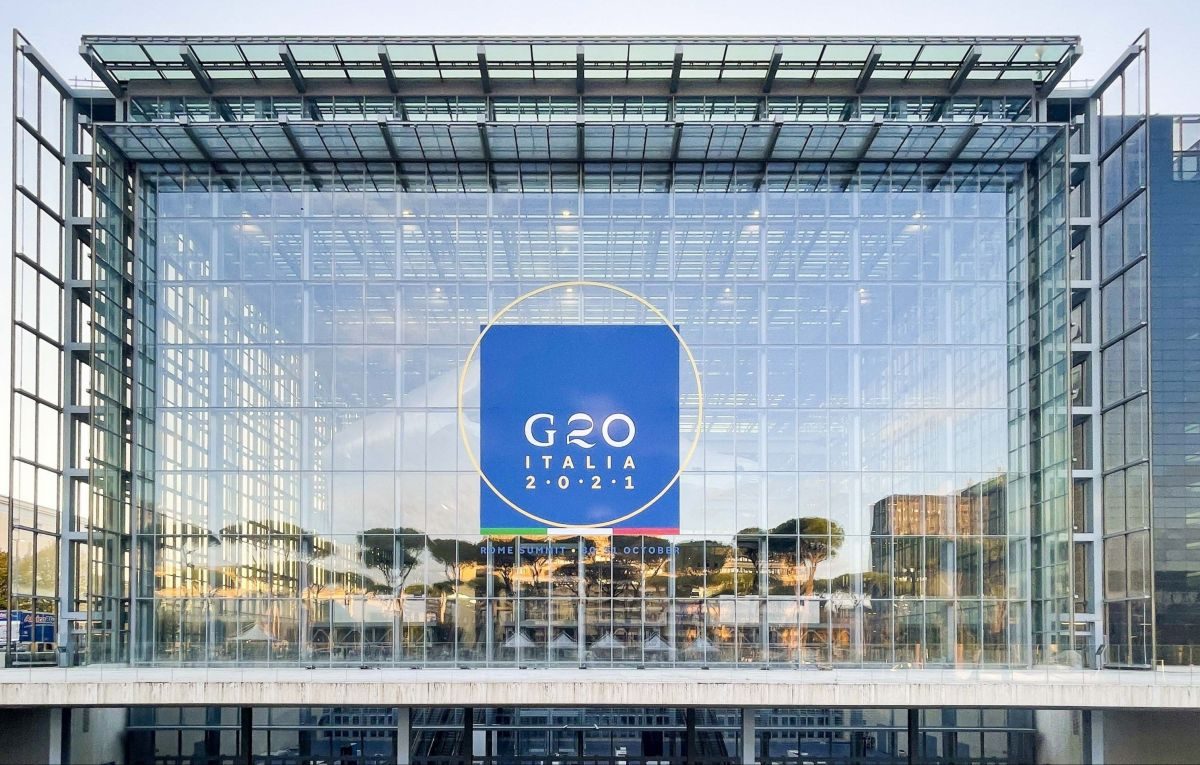
The final statement calls for “constructive and effective” action.
On October 30–31, the leaders’ summit of the Group of Twenty (G20) took place in Rome. We explain why it failed to meet expectations on combating climate change and who is disappointed by the insufficient resolve of Russia and China.
UN Secretary-General’s statement
UN Secretary-General António Guterres said the summit had failed to meet expectations on combating climate change.
António Guterres
UN Secretary-GeneralAlthough I welcome the G20’s reaffirmed commitment to finding global solutions, I am leaving Rome with unfulfilled hopes. But at least they have not been buried completely.
Greenpeace International Executive Director Jennifer Morgan also criticized the outcome of the G20 leaders’ meeting: “If the G20 was a dress rehearsal for the Glasgow climate conference, world leaders forgot their lines. Their communiqué was weak, lacking in ambition and vision, and simply inadequate for the moment.”
Biden’s disappointment
US President Joe Biden blamed Russia and China for disappointing levels of commitment by G20 leaders to combating climate change.
Joe Biden
US PresidentAs for disappointment, it is linked to the fact that not only Russia but also China has largely failed to show any commitments to combat climate change. There is a reason why people should be disappointed by this. I myself am disappointed.
G20 leaders, including Russian President Vladimir Putin and Chinese President Xi Jinping, jointly pledged to take more decisive action to limit global warming. However, they failed to reach an agreement on phasing out coal due to resistance from a small group of countries, including Russia and China.
Biden acknowledged progress but also named Saudi Arabia among countries still doing too little: “More needs to be done. But this will require us to keep focusing on what China is not doing, what Russia is not doing and what Saudi Arabia is not doing.”
The G20 leaders’ communiqué left much room for interpretation regarding who should bear the main burden. After the meeting ended, Chinese state media reported that the country’s president told fellow leaders that wealthier countries bear greater responsibility for cutting emissions.
Italy to triple contribution to climate change fight
Italy’s prime minister said the country will triple its contribution to financing climate change efforts to $1.4 billion a year over the next five years.
Mario Draghi
Prime Minister of ItalyI am pleased to announce that Italy will almost triple its financial commitments to $1.4 billion a year over the next five years.
Reuters reports that, according to think tanks, this sum is significantly smaller than the $100 billion fund that wealthy countries have promised to help developing countries cope with climate change.
According to estimates by the climate think tank ECCO, Italy’s “climate contribution” should amount to about $4 billion.
Final statement
G20 leaders agreed on a final statement calling for “constructive and effective” action to limit global warming.
Although countries pledged to end financing for overseas coal power, they did not set a timeline for phasing it out at home and softened the wording of their pledge to cut methane emissions (a potent greenhouse gas).
Frederike Roeder
Vice President of the sustainable development advocacy group Global CitizenThis was a moment for the G20 to act with the responsibility they bear as the largest emitters, but we are seeing only half-measures rather than concrete, urgent action.
The summit’s final document says current national emission reduction plans should be strengthened “where necessary,” and 2050 is not mentioned as the date for reaching net-zero carbon emissions.
G20 leaders recognized the “key relevance” of reaching net-zero emissions “by mid-century or thereabouts.” They removed the 2050 date, making the goal less specific.
The communiqué states: “We recognize that the impacts of climate change at 1.5°C are much lower than at 2°C. Keeping 1.5°C within reach will require meaningful and effective actions and commitments from all countries.”
Italy’s prime minister welcomed the final agreement and said that, for the first time, all G20 countries agreed on the importance of limiting global warming to 1.5°C.

Russian Attacks in Dnipropetrovsk Region: Two Killed, Seven Injured

Defense Forces Strike Four Russian Drone Control Points in Past Day, Including in Berdiansk

Britain Threatens Sanctions on Kremlin-Linked People; Poland Ready to Hand Ukraine Ammunition

Russia says it has completed "planned exercises" in the Black Sea

MVD: Fake Riots With Prop Blood Were Being Prepared Near Presidential Office

Law Enforcers Name Another Klitschko Deputy as Suspect

Berlin Holds Protest Against War in Ukraine; EU Prepares for Possible Russian Halt of Gas Supplies
North Korea Fires Ballistic Missile Over Record Distance in Five Years
Irish Fishermen Force Russia to Postpone Naval Drills

US sanctions in case of invasion of Ukraine could completely destroy Russia's economy, NYT reports
