
James Webb orbital launch set for December 25. What is known about the most expensive telescope in human history
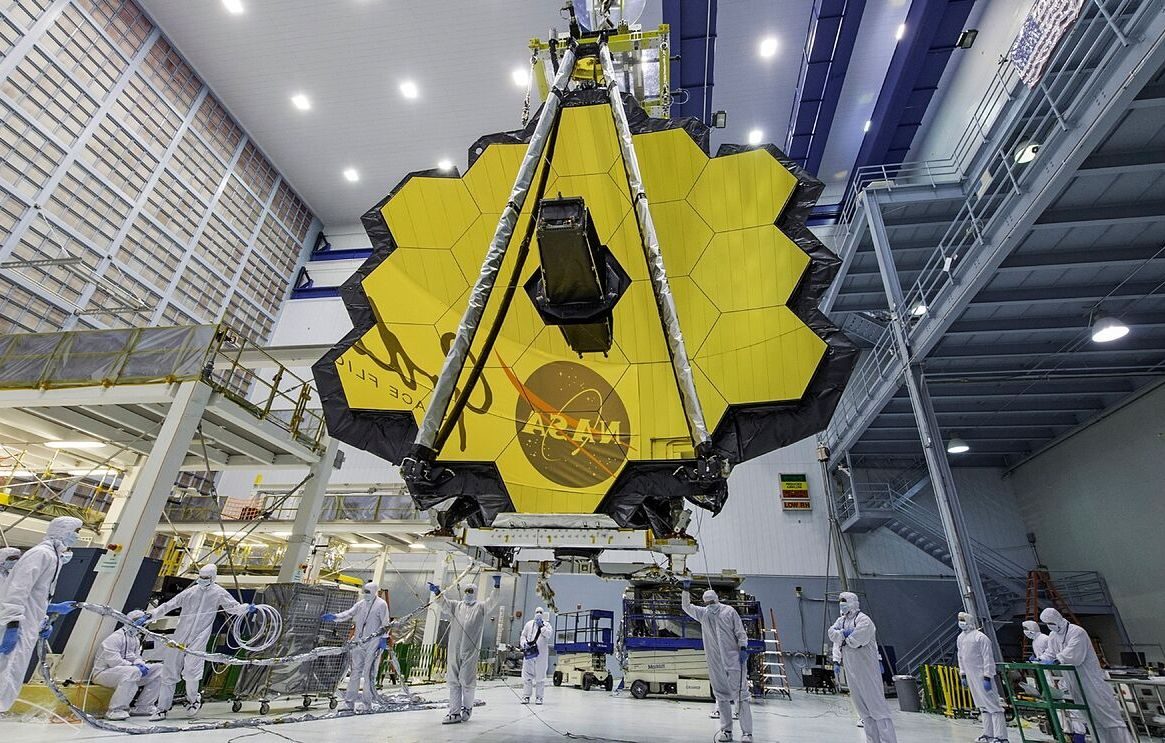
The telescope will help determine for the first time the composition of atmospheres of planets in other star systems and assess their suitability for life.
The most expensive telescope in human history, James Webb, will be launched into orbit on December 25, 2021, from the Kourou spaceport in French Guiana.
This space telescope is the most powerful of all instruments of its class. With its help, astronomers will study planets located beyond the boundaries of the Solar System.
Here are the details of the space telescope's launch and the mission James Webb must accomplish.
James Webb Launch
The launch of the James Webb space telescope is scheduled for December 25, 2021, at 14:20 Kyiv time. It will take place from the Kourou spaceport located in French Guiana, reported NASA. The European Ariane 5 rocket will carry the telescope to its destination.
The telescope was initially planned to be launched into space on December 18, then the launch was moved to December 22, and later to December 24. The latest postponement to December 25 was due to unfavorable weather conditions.
29 days after launch, the telescope is to arrive at the Lagrange point, the place where the gravitational forces of the Sun and Earth will proportionally affect the spacecraft so that it can remain stationary relative to them.
The distance between our planet and the telescope will be 1.5 million km. The projected period of operation in space is 5-10 years.
Telescope for $10 billion
The James Webb telescope is also called the next-generation orbital infrared observatory. It was created to replace the Hubble space telescope under the Flagship program ("Large Strategic Science Missions"), NASA's largest and most expensive program for studying the Solar System.
The idea of creating it emerged back in the 1990s. According to the first plan, the telescope was to be launched as early as 2010, but development and preparation dragged on for more than another 10 years.
Seventeen countries worked on the project under the leadership of NASA, and the European and Canadian space agencies also made significant contributions. The total project budget is estimated at $9.8 billion, and it will increase during the telescope's operation. It was named after the NASA administrator of the 1960s, James Edwin Webb.
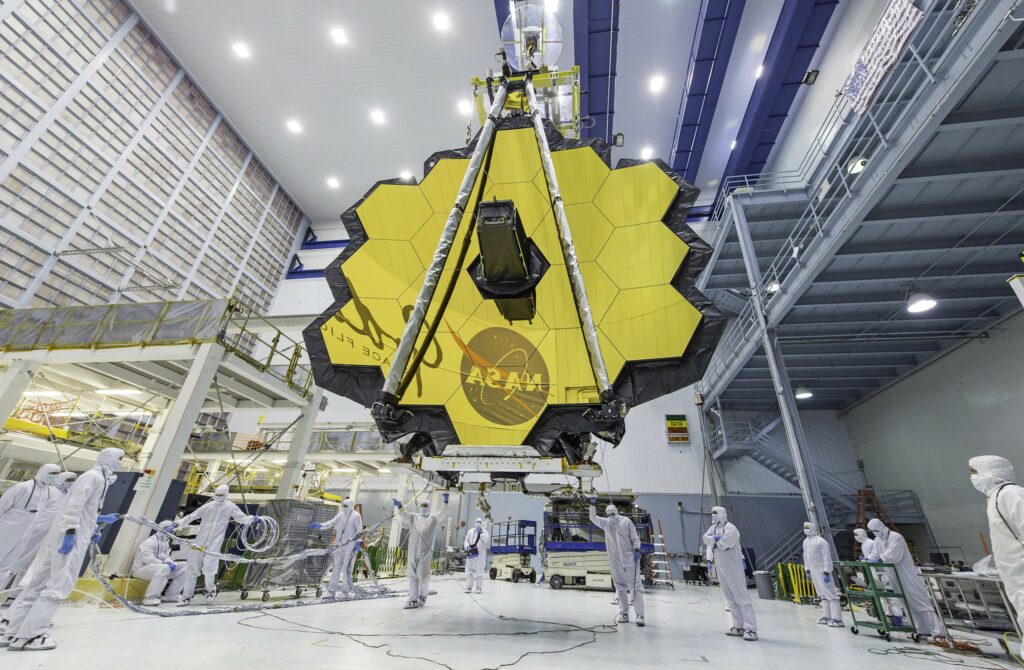
Scientists are confident that the telescope will help answer several important questions about the universe, from the formation of the first stars and galaxies to the search for life on planets far from the Solar System.
Equipment of the James Webb Telescope
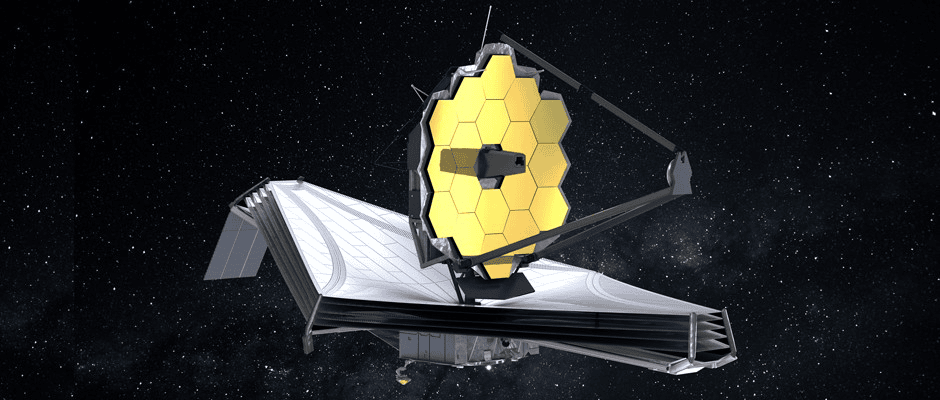
James Webb is equipped with a large mirror consisting of 18 golden hexagons, with a diameter of six and a half meters. The total collecting surface area is 25 m².
NASA states that it has 100 times better sensitivity and a wider range of wavelengths than its predecessor, Hubble.
Another important element of the James Webb telescope is its heat shield. It is larger than a tennis court (21.1 x 14.6 m), making it the largest among all spacecraft of the telescope class. The shield consists of five layers that are designed to protect the spacecraft from sunlight and keep it from overheating.
Once in orbit, the telescope must unfold the mirror and shield and calibrate all instruments before observations begin. The James Webb instrument suite includes:
- Near-infrared camera (NIRCam);
- near-infrared spectrograph (NIRSpec);
- Mid-infrared instrument (MIRI);
- Fine Guidance Sensor (FGS);
- Near-infrared imager and slitless spectrograph (NIRISS).
With the help of the telescope, astronomers will study exoplanets located far beyond the Solar System. The telescope will be able to determine the composition of their atmospheres and, in particular, establish whether conditions for life exist there.
In addition, the telescope is capable of seeing objects located up to 13.5 billion light-years away, which will allow us to understand what our Universe once looked like. The spacecraft is also able to observe black holes.

Russian Attacks in Dnipropetrovsk Region: Two Killed, Seven Injured

Defense Forces Strike Four Russian Drone Control Points in Past Day, Including in Berdiansk

Britain Threatens Sanctions on Kremlin-Linked People; Poland Ready to Hand Ukraine Ammunition

Russia says it has completed "planned exercises" in the Black Sea

MVD: Fake Riots With Prop Blood Were Being Prepared Near Presidential Office

Law Enforcers Name Another Klitschko Deputy as Suspect

Berlin Holds Protest Against War in Ukraine; EU Prepares for Possible Russian Halt of Gas Supplies
North Korea Fires Ballistic Missile Over Record Distance in Five Years
Irish Fishermen Force Russia to Postpone Naval Drills

US sanctions in case of invasion of Ukraine could completely destroy Russia's economy, NYT reports
