
“For the First Time in My Life I’ll Have to Cut Right on the Floor”. Details of the Murder of Saudi Journalist Khashoggi in Istanbul
If you thought this only happens in movies and TV series.
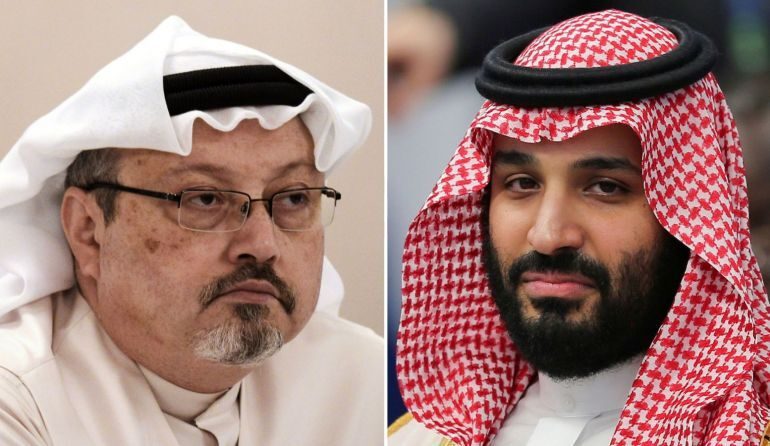
On October 2, 2018, journalist Jamal Khashoggi was killed at the Saudi Arabian consulate in Istanbul. The 59-year-old Khashoggi had previously worked at the Saudi embassy in London and had personally known Osama bin Laden, the leader of al-Qaeda, but in recent years he had openly opposed his country’s authoritarian regime and was a political émigré.
In Istanbul, Khashoggi was in voluntary exile, and he went to the consulate to obtain divorce documents before marrying Turkish national Hatice Cengiz.
BBC Panorama has reconstructed the events of Khashoggi’s death, whose last photo taken during his lifetime was snapped exactly a year ago at 13:14 at the entrance to the consulate of his home country. We retell it in chronological order, with direct speech from Khashoggi’s fiancée and from those who heard recordings from the consulate made by Turkish intelligence services.
The article describes scenes of violence in detail
Timeline of events
- September 28. Khashoggi and Cengiz first went to the consulate, where he was told to come back for the documents in a few days. As soon as Khashoggi left the building, consulate staff called Riyadh. “During the phone call, Khashoggi was spoken of as a man who was being sought,” — says human rights advocate and UN Special Rapporteur on extrajudicial executions Agnès Callamard, who heard recordings by Turkish intelligence from the Saudi administrative building. The call also concerned a top-secret mission that was a “national duty.”
- October 1. Three Saudi intelligence officers fly to Istanbul, two of whom worked in the administration of Crown Prince Mohammed bin Salman. “They may have inspected the consulate building and tried to figure out what could be done and what could not,” — Callamard suggests.
- October 2. Late night. Nine Saudi citizens arrive in Istanbul on a private plane and check into the Mövenpick hotel next to the consulate. Among them are forensic expert and pathologist Salah al-Tubaigy and the probable operation leader Maher Abdulaziz Mutreb.
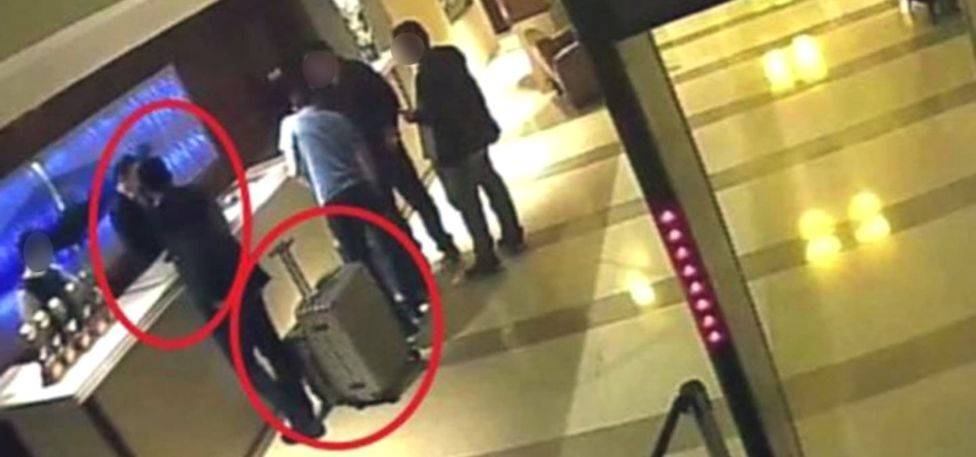
- October 2. Morning. At 09:55 Mutreb, who often travels with the crown prince, enters the Saudi Arabian consulate building. Soon Khashoggi receives a call from the consulate inviting him to come pick up the documents.
At this time, preparations for the murder are already underway at the consulate. The dialogue between Mutreb and al-Tubaigy is chilling. “He [al-Tubaigy] talked about how he performs autopsies,” — says British lawyer Helena Kennedy, who made detailed notes while listening to conversations of the Saudi killers. — You could hear them laughing. He said: “I usually play music when I cut up bodies. Sometimes I have a cup of coffee and a cigar in my hand.”
Al-Tubaigy knew perfectly well what he had to do. “For the first time in my life I’ll have to cut [the body] right on the floor. Even if you’re a butcher, you hang the carcass to dismember it,” — so he reasoned, according to Kennedy’s recollections. — “When will the sacrificial animal arrive?” — that is how they talked about him.”
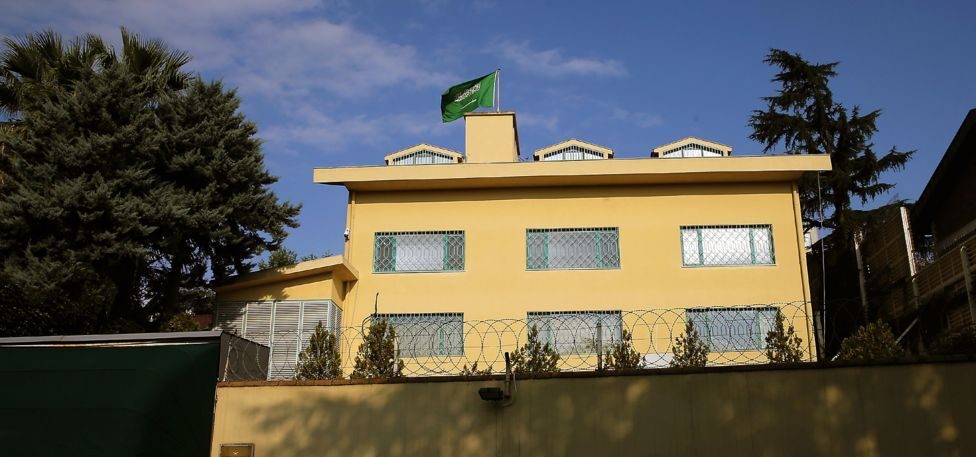
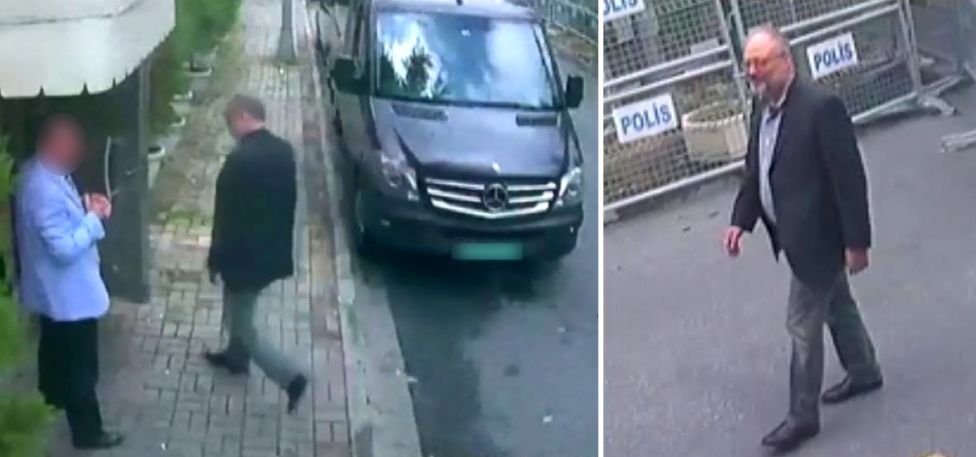
- October 2. Day. At 13:14 Khashoggi enters the consulate. “I remember we walked hand in hand, and when we reached the consulate, Jamal gave me his phone and said: ‘See you, darling, wait for me here,’” — recalls Cengiz. Recordings indicate that Khashoggi was met by an entire reception committee, which informed him of an Interpol arrest warrant against him and of the need to return to Saudi Arabia.
“There was a moment when you could tell from his voice how Khashoggi, a confident man, was overcome by fear—anxiety grew, horror grew—and he understood that something irreparable was about to happen,” — says Kennedy. Khashoggi asked twice whether he would be kidnapped and was surprised: “How can that be done in an embassy?” — adds Callamard. — The sounds that follow this dialogue suggest that at this point he was being strangled. Perhaps a bag was put over his head. His mouth was also covered—forcibly—perhaps with a hand or something else.” Then someone (probably Mutreb) says: “Let him start cutting.”
At around 15:00, while Cengiz was still waiting for her fiancé, several vehicles left the diplomatic mission’s premises and went to the consul general’s residence nearby. Three people entered carrying plastic bags and suitcases, which presumably contained Khashoggi’s body.
“I waited, waited, waited until 15:30. Then, when I realized the consulate had already closed, I ran to the gate and asked why Jamal hadn’t come out. The guard said he didn’t understand what I was talking about,” — recalls Hatice Cengiz.
At 15:53 outdoor surveillance cameras record two people leaving the consulate building. One of them is wearing Khashoggi’s clothes but different shoes, the second is in a hood and carrying a plastic bag. The next time they appear on surveillance cameras, the man posing as Khashoggi is already in different clothes. They return to the Mövenpick hotel by taxi.
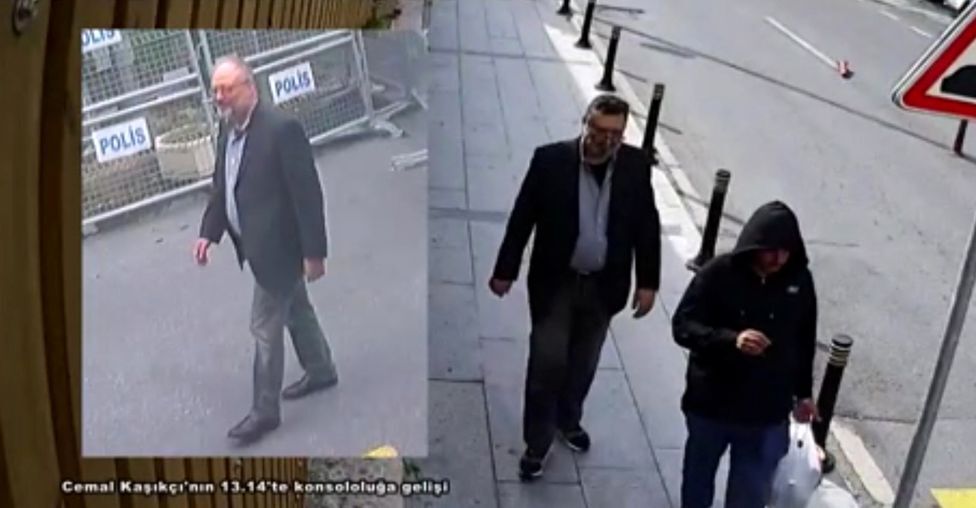
- October 2. Evening. In despair, Cengiz called Yasin Aktay, a member of Turkey’s ruling party, and told Khashoggi’s longtime friend that he had entered the Saudi Arabian consulate and had not come out. Aktay informed intelligence and the administration of Turkish President Recep Tayyip Erdoğan, but by 18:30 the group of Khashoggi’s killers was already flying to Riyadh.
- October 3. Turkey and Saudi Arabia, already amid media noise, issued contradictory statements: the Saudis said Khashoggi had left the consulate, while the Turks said he was still there.
For two weeks after Khashoggi’s disappearance, consulate staff, citing international law, did not allow Turkish investigators onto their premises. “By the time they were allowed into the consulate, there was nothing left there, not even any traces of Khashoggi’s DNA,” — says Callamard.
Turkish authorities eventually said Khashoggi had been killed, but Riyadh did not acknowledge this, promoting its own versions: from a fight in the consulate to a killing on private initiative. CIA Director Gina Haspel informed members of the Senate committee about what had happened, after which the US stopped providing military assistance to Saudi Arabia in the Yemen conflict.
In January the Saudis began a trial of 11 defendants in Khashoggi’s murder. Among these 11 are Mutreb and al-Tubaigy, but not Saud al-Qahtani—an influential adviser to Prince Mohammed bin Salman, who reportedly gave permission to solve the “Jamal problem.” Officially, Saudi Arabia condemns this “heinous murder” and claims the crown prince “has nothing to do with it.”

Russian Attacks in Dnipropetrovsk Region: Two Killed, Seven Injured

Defense Forces Strike Four Russian Drone Control Points in Past Day, Including in Berdiansk

Britain Threatens Sanctions on Kremlin-Linked People; Poland Ready to Hand Ukraine Ammunition

Russia says it has completed "planned exercises" in the Black Sea

MVD: Fake Riots With Prop Blood Were Being Prepared Near Presidential Office

Law Enforcers Name Another Klitschko Deputy as Suspect

Berlin Holds Protest Against War in Ukraine; EU Prepares for Possible Russian Halt of Gas Supplies
North Korea Fires Ballistic Missile Over Record Distance in Five Years
Irish Fishermen Force Russia to Postpone Naval Drills

US sanctions in case of invasion of Ukraine could completely destroy Russia's economy, NYT reports
