
Merkel Leaves After 16 Years as Chancellor: How the Farewell Ceremony Went and Why Germans Are Unhappy With It
Next week Olaf Scholz will take up his duties
Angela Merkel is leaving office after 16 years as chancellor, the farewell ceremony has already taken place, and next week Olaf Scholz will take up his duties. However, many Germans are dissatisfied with the chancellor's decisions. We explain what is wrong with the Angela Merkel era.
Farewell ceremony
On December 2, in a square in Berlin's government quarter, Angela Merkel sat in a black coat in a leather armchair. To her left sat Defense Minister Annegret Kramp-Karrenbauer, and to her right was a Bundeswehr general.
A German military orchestra performed in front of them. The musicians in uniform played a song about a young woman scolding her boyfriend for forgetting to bring color film for the camera on their vacation to the Baltic Sea.
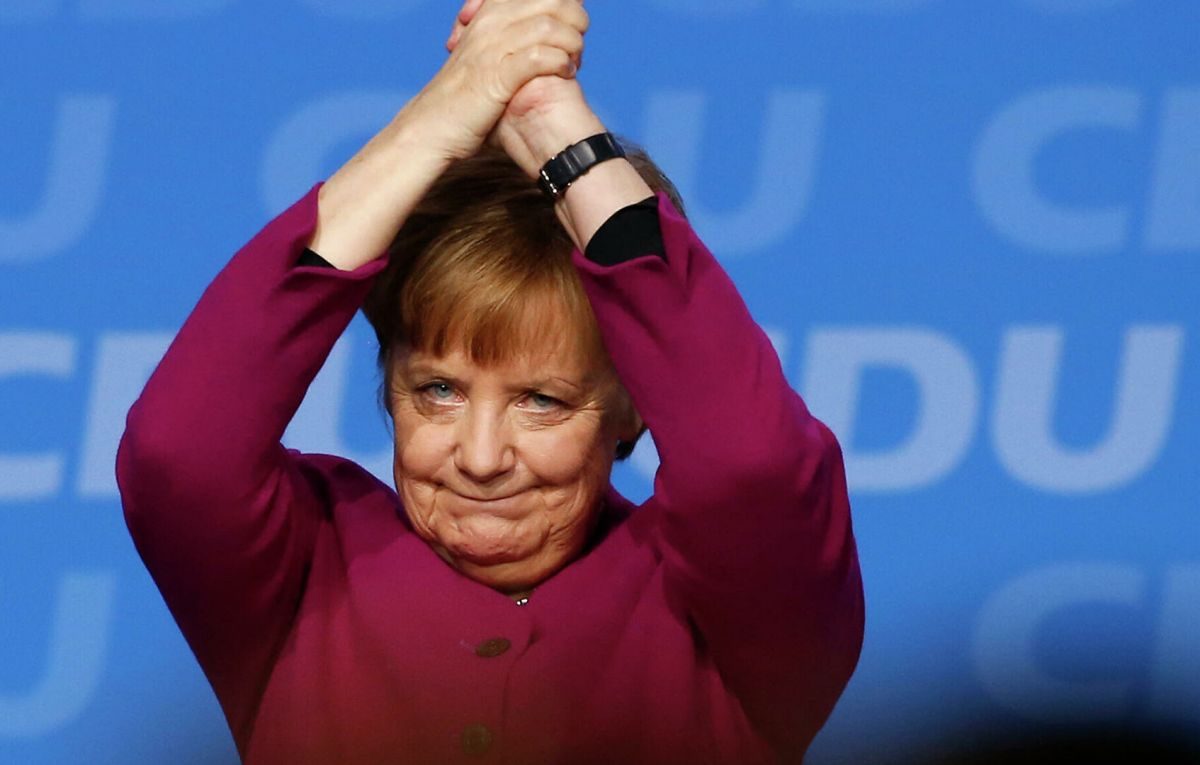
Sometimes Merkel's face seems to show sadness and bewilderment. Yet former chancellor Gerhard Schröder cried to Frank Sinatra's “My Way” at a similar ceremony 16 years ago. At the farewell ceremony for an outgoing chancellor, they can choose the repertoire the military orchestra will play.
Merkel's choice of song surprised Germans, as nothing had previously been known about the chancellor's fondness for German punk rock. Media outlets write about what this song reveals: even after 16 years in power, we know nothing about the person Angela Merkel. So why might she not go down in history as a great statesman?
Coronavirus pandemic
A Deutsche Welle journalist said: “Probably she overstayed a bit, and at the very end came the pandemic, and two years of general fatigue with it. So there is no sense of the grandeur of the event.”
Merkel is leaving the post of chancellor without a scandal, but against the backdrop of the fourth wave of coronavirus in Germany, with the highest infection rates since the start of the pandemic.
She came to the farewell ceremony straight from a crucial crisis meeting, at which a lockdown for the unvaccinated was effectively introduced in Germany and a decision was made to delegate to parliament the question of introducing mandatory vaccination.
In addition, the pandemic undermined one of Merkel's main achievements: Germany's economic strength. However, although she is objectively not to blame for the pandemic, toward the end of her chancellorship she had to hear a lot of criticism on other issues.
“Climate chancellor”
In the magazine Spiegel it is noted that Merkel should apologize for her government sleeping through the climate catastrophe, knowing about it and “doing nothing.”
Today's Greens consider Merkel to be a representative of the elites who helped bring the Earth closer to an imminent apocalypse. Yet the chancellor herself was environment minister in the 1990s and began talking about climate protection long before it became a trend.
She did not leave a successor
Germany's defense minister could have become chancellor, as Merkel herself prepared her for this by making her head of the party and declaring her the official successor. However, she failed to cope with the task and was unable to resolve the political crisis in the party's regional branch.
Another member of Merkel's team (Armin Laschet) lost the September Bundestag elections. Merkel was called a master of backroom intrigue, and her methods of eliminating rivals were called “scorched earth tactics.”
But in the end, the party simply has no strong or charismatic leaders left who could succeed her.
“Alternative for Germany”
If not for Merkel, there would be no right-wing populist party “Alternative for Germany” in parliament in 2021. For many years an unwritten rule applied: there should be no party in the German parliament to the right of the CDU/CSU conservative bloc led by Merkel.
She broke this rule when she shocked conservatives by abandoning nuclear power, abolishing conscription, and opening the borders to refugees in 2015.
Merkel's even more serious mistake is considered to be the Russian gas pipeline Nord Stream 2, into whose construction Germany became embroiled in 2015.
Germany has always advocated dialogue
Construction of Nord Stream 2 has been completed, but it has yet to start operating due to a lengthy certification process. It is unknown whether this project will bring any profit to Germany. However, it is already damaging the country's relations with the US, Poland and Ukraine and strengthening dependence on Russian authorities.
Relations between Russia and Germany are experiencing their most serious crisis in 30 years. Germany is trying to get Russian authorities to explain the poisoning of Navalny and demands his release, while Russia is declaring German NGOs undesirable and putting an end to the Petersburg Dialogue forum, which is important for both countries.
The maxim of Germany's entire foreign policy course is the continuation of dialogue at any cost. It showed during two recent phone calls Merkel had with Lukashenko, dedicated to the situation with refugees on the Poland–Belarus border. Many perceived the conversation as a sign of Merkel's weakness, but in Germany it is viewed differently.
Many consider Lukashenko's call an ordinary working moment. Merkel learned about the problem, called, and tried to resolve it.

Russian Attacks in Dnipropetrovsk Region: Two Killed, Seven Injured

Defense Forces Strike Four Russian Drone Control Points in Past Day, Including in Berdiansk

Britain Threatens Sanctions on Kremlin-Linked People; Poland Ready to Hand Ukraine Ammunition

Russia says it has completed "planned exercises" in the Black Sea

MVD: Fake Riots With Prop Blood Were Being Prepared Near Presidential Office

Law Enforcers Name Another Klitschko Deputy as Suspect

Berlin Holds Protest Against War in Ukraine; EU Prepares for Possible Russian Halt of Gas Supplies
North Korea Fires Ballistic Missile Over Record Distance in Five Years
Irish Fishermen Force Russia to Postpone Naval Drills

US sanctions in case of invasion of Ukraine could completely destroy Russia's economy, NYT reports
