
“Over 97% Accuracy”: Chinese Scientists Develop Digital “Prosecutor”
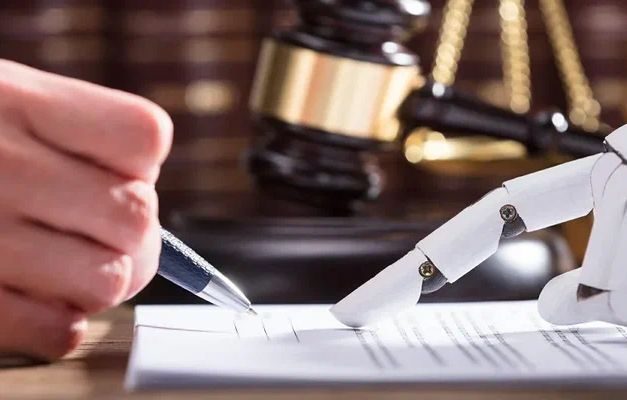
The system will make decisions on criminal case materials in the eight most common types of crime.
Researchers from China say they are the first in the world to have developed a “prosecutor” that can charge people with crimes using artificial intelligence, reports The Korea Times.
According to the researchers, the AI “prosecutor” can bring charges with over 97% accuracy based on an oral description of a case. The machine was built and tested by the People's Procuratorate of Shanghai's Pudong New Area, the country's largest and busiest district prosecutor's office.
AI “Prosecutor”
According to Professor Shi Yong, director of the Laboratory of Big Data Management at the Chinese Academy of Sciences, this technology could reduce the daily workload of prosecutors, allowing them to focus on more complex tasks.
“The system can to a certain extent replace prosecutors in the decision-making process,” Shi and his colleagues said in a paper published this month in the internal peer-reviewed journal Management Review.
The use of artificial intelligence technologies in law enforcement is growing worldwide. Some German prosecutors have used AI technologies, such as image recognition and digital forensics, to speed up and improve the accuracy of case processing.
Chinese prosecutors were the first to begin using AI in 2016. Many of them now use an AI tool known as System 206. The tool can assess the strength of evidence, arrest conditions and the degree of danger a suspect poses.
But all existing AI tools play a limited role because “they do not take part in the decision-making process on charging and [recommending] sentences,” Shi and his colleagues said.
Making such decisions would require the machine to identify and remove any content in case materials that is not relevant to the crime, without deleting useful information.
The machine would also need to convert complex, constantly changing human language into a standard mathematical or geometric format understandable to a computer.
Chinese internet companies have developed powerful natural language processing tools, but they often require large computers to which prosecutors do not have access.
The AI “prosecutor” developed by Shi's team could run on a desktop computer. For each suspect, it will bring a charge based on 1000 “features” extracted from a human-written case description, most of which are too small or abstract to make sense to people. System 206 then assesses the evidence.
The machine was “trained” on more than 17,000 cases from 2015 to 2020. At present, it can identify and bring charges for the eight most common types of crime in Shanghai.
These are credit card fraud, gambling, dangerous driving, intentional injury, obstruction of official duties, theft, fraud, and “picking quarrels and provoking trouble” — a catch-all charge often used to suppress dissent in the PRC.
Shi and his colleagues said the “prosecutor” will soon become more capable through updates. It will be able to recognize less common crimes and bring multiple charges against one suspect.
Problematic Issues
A prosecutor in the southern city of Guangzhou said he had some concerns about using AI to bring charges. “A 97 percent accuracy may be high from a technological point of view, but there will always be a chance of error,” said the prosecutor, who asked not to be named. “Who will take responsibility when that happens? The prosecutor, the machine or the algorithm developer?”
Direct AI involvement in decision-making could also affect the autonomy of the prosecutor. A Guangzhou prosecutor said most prosecutors do not want computer scientists to “interfere” in judicial decisions.
Another problem is that the “prosecutor” could only bring charges based on its previous experience. It could not anticipate public reaction to a case in a changing social environment.
“AI can help detect an error, but it cannot replace a human in making a decision,” the prosecutor said. Still, China is actively using AI in almost all government sectors to try to improve efficiency, reduce corruption and strengthen control.

Russian Attacks in Dnipropetrovsk Region: Two Killed, Seven Injured

Defense Forces Strike Four Russian Drone Control Points in Past Day, Including in Berdiansk

Britain Threatens Sanctions on Kremlin-Linked People; Poland Ready to Hand Ukraine Ammunition

Russia says it has completed "planned exercises" in the Black Sea

MVD: Fake Riots With Prop Blood Were Being Prepared Near Presidential Office

Law Enforcers Name Another Klitschko Deputy as Suspect

Berlin Holds Protest Against War in Ukraine; EU Prepares for Possible Russian Halt of Gas Supplies
North Korea Fires Ballistic Missile Over Record Distance in Five Years
Irish Fishermen Force Russia to Postpone Naval Drills

US sanctions in case of invasion of Ukraine could completely destroy Russia's economy, NYT reports
