
Rada to ask US to grant Ukraine non-NATO major ally status; ambassador criticizes initiative
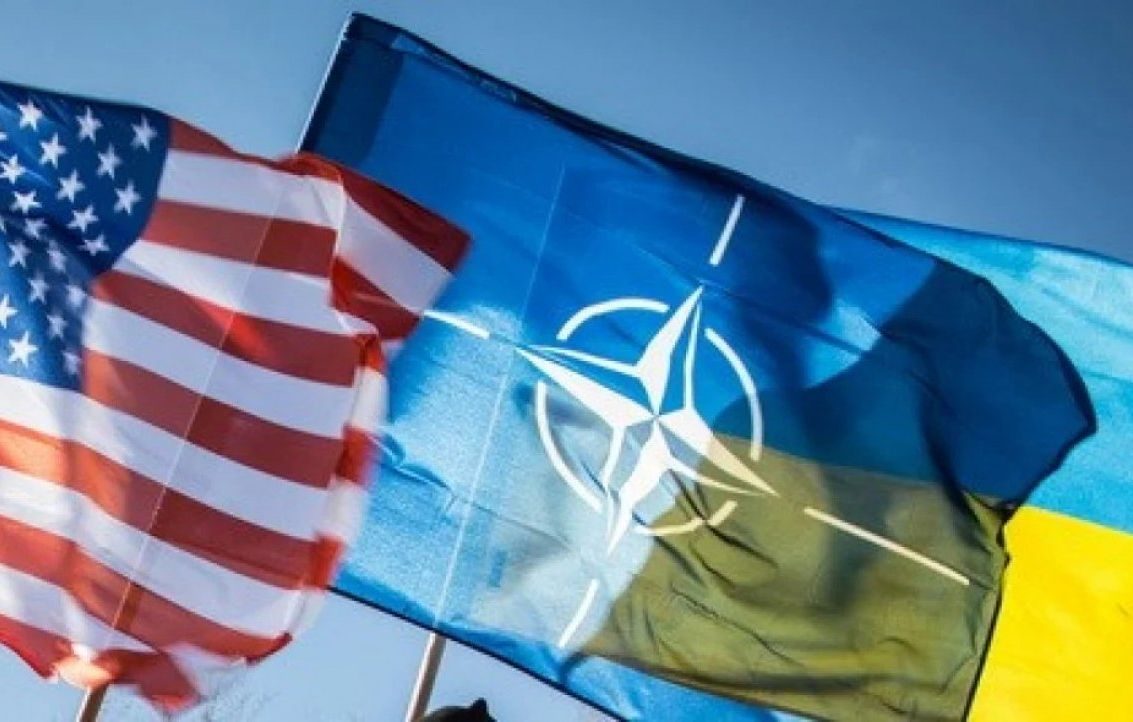
What this status means and why adopting it could contradict the Constitution.
Verkhovna Rada Speaker Dmytro Razumkov is convening an extraordinary session of parliament, at which deputies will ask the US to grant Ukraine the status of major non-NATO ally.
Ukraine's Ambassador to the US Oksana Markarova brought clarity to the process, explaining in detail the nature of this status and why it may run counter to Ukraine's Euro-Atlantic course.
Parliament's initiative
On September 8, the Verkhovna Rada, on Razumkov's order, will consider at an extraordinary session a draft resolution to appeal to the US Congress asking it to grant Ukraine the status of major non-NATO ally of the US (MNNA).
The resolution to appeal to the US Congress on granting Ukraine non-NATO ally status was supported by 153 deputies.
As the document shows, its initiator back in April was European Solidarity MP Oleksiy Honcharenko.
The explanatory note to the draft states that the goal of the resolution is "to activate mechanisms of strategic security guarantees to ensure the territorial integrity of the state and obtain adequate international military assistance".
Markarova's reaction
Ukraine's Ambassador to the US Oksana Markarova said that MNNA status is granted to states that cannot or do not plan to join NATO, which is "definitely not about Ukraine".
Markarova asked deputies who will consider the request to the US for granting Ukraine MNNA status to pay attention to this fact.
Oksana Markarova
Ukraine's Ambassador to the USUkraine has determined that our goal is — membership in NATO. This is the only systemic and institutional solution for our country's security, and this is written into our Constitution.
The ambassador also noted that Ukraine already has NATO's Enhanced Opportunities Partner (EOP) status, which "provides great opportunities for enhanced cooperation with the Alliance, improved interoperability and development of capabilities".
Oksana Markarova
Ukraine's Ambassador to the USThe US is a strategic partner that not only actively helps us develop our capabilities, provides funds and weapons, including lethal defensive ones, but with which, during President Zelensky's visit, we have just signed a very strong Framework Agreement between the Ukrainian Ministry of Defense and the Pentagon on the strategic foundations of defense partnership, which opens the door to specific large projects. And it is precisely these types of bilateral agreements that establish strategic partnerships with the US, both with NATO members and others.
In conclusion, the ambassador urged deputies to support the reforms and laws that Ukraine needs to implement in order to advance toward NATO.
What is known about MNNA
The US State Department website reports that MNNA status gives states "certain advantages in defense trade and security cooperation" and is "a powerful symbol of close US relations with these countries".
It is also reported that MNNA status does not entail any security commitments from the US to the ally, although it does carry certain economic privileges.
MNNA status gives allies the following privileges:
- The right to priority delivery of US surplus defense articles (for countries on NATO's southern or southeastern flank);
- The right to loan materials, goods or equipment for joint research, development and testing;
- The right to consider purchasing depleted uranium munitions;
- The right to conclude a memorandum of understanding or other agreement with the Pentagon for joint research projects in defense equipment and munitions;
- The right to receive funding for purchasing explosive detection devices and counterterrorism research and development under the State Department's Technical Support Working Group.
- The right of companies from the ally country to bid on contracts for maintenance or repair of Pentagon equipment outside the US;
- May be used to station on its territory US military reserve stocks stored outside American military bases;
- Allows concluding agreements with the US on jointly organizing exercises on a cost-sharing basis.
According to the State Department, the US currently has 17 major non-NATO allies: Afghanistan (until the Taliban takeover), Argentina, Australia, Bahrain, Brazil, Egypt, Israel, Japan, Jordan, South Korea, Kuwait, Morocco, New Zealand, Pakistan, the Philippines, Thailand and Tunisia.

Russian Attacks in Dnipropetrovsk Region: Two Killed, Seven Injured

Defense Forces Strike Four Russian Drone Control Points in Past Day, Including in Berdiansk

Britain Threatens Sanctions on Kremlin-Linked People; Poland Ready to Hand Ukraine Ammunition

Russia says it has completed "planned exercises" in the Black Sea

MVD: Fake Riots With Prop Blood Were Being Prepared Near Presidential Office

Law Enforcers Name Another Klitschko Deputy as Suspect

Berlin Holds Protest Against War in Ukraine; EU Prepares for Possible Russian Halt of Gas Supplies
North Korea Fires Ballistic Missile Over Record Distance in Five Years
Irish Fishermen Force Russia to Postpone Naval Drills

US sanctions in case of invasion of Ukraine could completely destroy Russia's economy, NYT reports
