
Switzerland Plans to Sell Capsules for Voluntary Euthanasia

Two prototypes of the Sarco capsule have been developed so far, and a third will be built in the Netherlands.
In Switzerland, Sarco's capsule for voluntary euthanasia has passed a legal review. The manufacturers said it could be used in the country as early as 2022.
Sarco hired a Swiss legal expert, who found that the technology does not violate any of the country's laws. However, other lawyers doubt his conclusions.
The nonprofit organization Dignitas, which provides support during euthanasia , said the capsule is unlikely to gain “wide acceptance.” Assisted suicide is currently permitted in Switzerland. In 2020, about 1,300 people made use of this option.
In Switzerland, “suicide” today can only be carried out with the help of a doctor who prescribes drugs to end life.
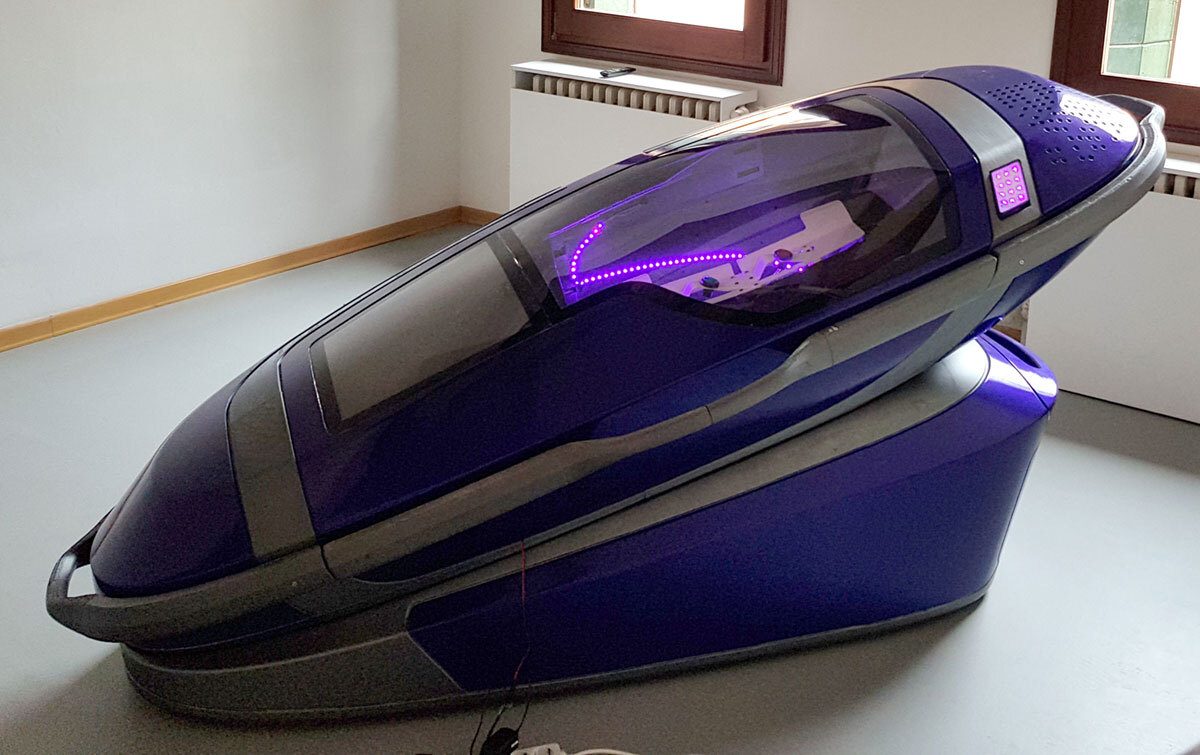
The euthanasia capsule works on a different principle. From the outside, the device resembles a plastic coffin, printed on a 3D printer, and it operates by filling its interior with nitrogen.
Philip Nitschke
creator of SarcoThe capsule is connected to equipment that fills its interior with nitrogen, rapidly reducing the oxygen level from 21% to 1% in about 30 seconds. The person will feel somewhat disoriented and may experience mild euphoria before losing consciousness. Death occurs as a result of hypoxia and hypocapnia, meaning oxygen and carbon dioxide deprivation, respectively. There is no panic and no feeling of suffocation. Death occurs within five to ten minutes.
The person who has decided to voluntarily end their life is expected to start the gas supply mechanism themselves. Death occurs as a result of lack of oxygen and carbon dioxide. The entire process lasts about 10 minutes.
Sarco asked Daniel Guerlimann, a lawyer and senior lecturer at the University of St. Gallen, to determine whether using the euthanasia capsule violates Swiss law.
The lawyer concluded that the capsule “is not a medical device,” and therefore the local law on therapeutic products does not apply to it. According to him, the device's operation does not violate regulations on the use of nitrogen, weapons, or product safety.
Doctor, lawyer and professor at the University of Zurich Kerstin Noëlle disagrees with him. In a comment to the Swiss newspaper Neue Zurcher Zeitung she said: “Medical devices are regulated by law because they must be safer than other products. The fact that a product is not beneficial to health does not mean that additional safety requirements do not apply to it.”
There are two organizations in Switzerland that provide voluntary end-of-life services: Exit and Dignitas. The procedure is carried out by specially trained staff in cooperation with doctors.
A Dignitas representative said: “In light of this established, safe and professional practice, we cannot imagine that a technologized capsule would generate interest or gain wide acceptance in Switzerland.”
If the capsule receives approval for use in Switzerland, it will not be sold in the usual way. The capsule's developer, Dr. Philip Nitschke, said he plans to allow anyone to download the design and print it themselves. This will be free of charge.
Nitschke's goal is to simplify the process of dying by removing the need for medical professionals to be involved. In an interview with the charity Exit International, which advocates for the legalization of voluntary suicide and which he founded, Nitschke said: “We want to remove any psychiatric checks and allow the person to control the process themselves.”
Philip Nitschke
creator of SarcoOur goal is to develop an artificial intelligence screening system to determine a person's mental capacity. Naturally, there is a lot of skepticism, especially from psychiatrists. But our initial conceptual idea is that a person will take an online test and receive a code to access the Sarco.
Philip has previously been criticized for the capsule's futuristic design and for glamorizing suicide. So far, two prototypes of the Sarco capsule have been developed, and a third will be built in the Netherlands.

Russian Attacks in Dnipropetrovsk Region: Two Killed, Seven Injured

Defense Forces Strike Four Russian Drone Control Points in Past Day, Including in Berdiansk

Britain Threatens Sanctions on Kremlin-Linked People; Poland Ready to Hand Ukraine Ammunition

Russia says it has completed "planned exercises" in the Black Sea

MVD: Fake Riots With Prop Blood Were Being Prepared Near Presidential Office

Law Enforcers Name Another Klitschko Deputy as Suspect

Berlin Holds Protest Against War in Ukraine; EU Prepares for Possible Russian Halt of Gas Supplies
North Korea Fires Ballistic Missile Over Record Distance in Five Years
Irish Fishermen Force Russia to Postpone Naval Drills

US sanctions in case of invasion of Ukraine could completely destroy Russia's economy, NYT reports
